
Anime is no longer a niche topic. It is part of everyday conversation in Japan, Brazil, the United States, and many other countries, with series like Fate/stay night, Nanatsu no Taizai, and Toradora! shared by fans all over the world. If you have ever wanted to talk about anime in Japanese with another otaku friend, you need more than a handful of words: you also need the right sentence patterns and the right tone. This article brings together a compact set of Japanese expressions, romaji readings, and English translations, so you can move from small talk to deeper topics like harem, mecha, or mahou shoujo without sounding like a textbook.
The list is designed as a quick cheat sheet: the most useful sentences first, then core vocabulary, and finally the main genre terms. If you want to dive deeper into otaku Japanese, you will also find links to more detailed glossaries at the end of the article.
Contents 3
Anime Conversation Phrases
The sentences below cover the situations you will run into most often: asking about someone's favorite anime, describing a scene, recommending a series, or simply saying that you cannot miss an episode. Each block shows the original Japanese script with romaji pronunciation, followed by the English meaning.
このアニメはクールですか。
Kono anime wa kūru desu ka?
Is this anime cool?
アニメを見ました。
Anime o mimashita.
I watched the anime.
フェイト/ステイナイトはクールなアニメです。
Feito/Sutei Naito wa kūru na anime desu.
Fate/stay night is a cool anime.
あなたの好きなアニメは何ですか。
Anata no suki na anime wa nan desu ka?
What is your favorite anime?
アニメを見ます。
Anime o mimasu.
I will watch anime.
好きなアニメは七つの大罪です。
Suki na anime wa Nanatsu no Taizai desu.
My favorite anime is "Nanatsu no Taizai".
アニメを見ながら食べます。
Anime o minagara tabemasu.
I watch anime while eating.
彼の漫画を貸しますか。
Kare no manga o kashimasu ka?
Do you lend your manga?
漫画を買いたい。
Manga o kaitai.
I want to buy a manga.
そのアニメは外国でも放送されています。
Sono anime wa gaikoku demo hōsō sarete imasu.
This anime is airing even in other countries.
このアニメ、子供時代によく見てたんだ。
Kono anime, kodomo jidai ni yoku miteta nda.
I used to watch this anime a lot as a kid.
私はアニメなしでは済ますことができない。
Watashi wa anime nashi de wa sumasu koto ga dekinai.
I cannot live without anime.
私は仕事の合間によくアニメを見ます。
Watashi wa shigoto no aima ni yoku anime o mimasu.
I often watch anime in between work.
Vocabulary
A few core words carry most anime conversations. Keep these handy and the rest of the phrases become much easier to remember.
- アニメ — Anime;
- 漫画 (マンガ) — Manga;
- ライトノベル — Light Novel (Japanese prose novels typically aimed at young adult readers, often adapted into anime or manga);
- 漫画家 — Mangaka (professional manga artist).
Genres
Genre labels are some of the first words Japanese fans use to describe what they are watching. Each term below can also be used as a tag in stores, on streaming platforms, and in conversation.
- Kodomo (子供) — anime aimed at children;
- Shounen (少年) — anime aimed at teen boys, usually action-driven (e.g. Dragon Ball, Naruto);
- Shoujo (少女) — anime aimed at teen girls, often centered on romance and personal growth (e.g. Sailor Moon, Fruits Basket);
- Seinen (青年) — anime aimed at adult men, typically with more mature themes (e.g. Ghost in the Shell, Berserk);
- Josei (女性) — anime aimed at adult women, often slice-of-life or romance with realistic settings (e.g. Nana, Chihayafuru);
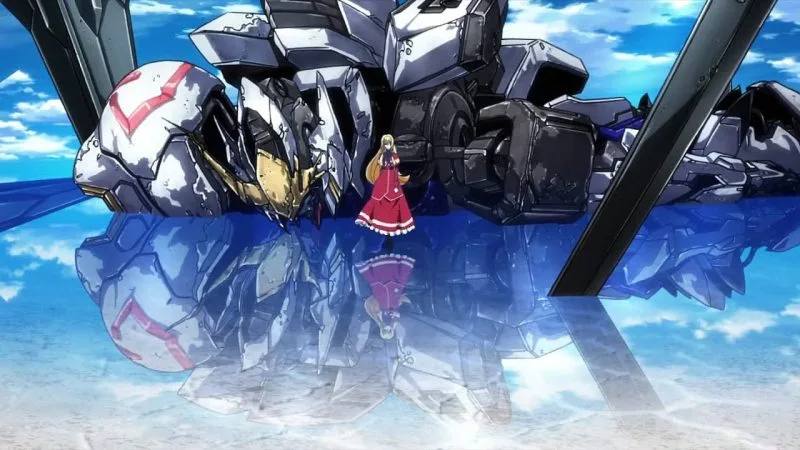
- Mecha (メカ) — short for "mechanical"; anime centered on robots and piloted machines (e.g. Gundam, Evangelion);
- Mahou Shoujo (魔法少女) — "magical girl"; young female characters with magical powers (e.g. Cardcaptor Sakura, Puella Magi Madoka Magica);
- Harem (ハーレム) — originally from Turkish, referring to a private section of a household; in anime, a genre where the protagonist is surrounded by characters of the opposite sex (e.g. Love Hina, The World God Only Knows).
That is the whole list. Keep it open next time you meet a fellow fan, mix and match the sentences with the genre terms, and the conversation usually takes care of itself. If you want a deeper glossary, the Otaku Vocabulary glossary breaks down dozens of words you will hear in real fan chats, and the Japanese curiosities from the anime Toradora! article shows how a lot of this vocabulary actually shows up in a real series. For a broader cross-lingual list, the Otaku dictionary in Portuguese covers the most-heard and most-used words among Brazilian fans. またね!!




Community
Comments
0 comments
There are no published comments in this language yet.
Send comment