
Raku ceramics are a Japanese pottery tradition closely associated with tea bowls. They began in Kyoto in the mid-sixteenth century, when Chōjirō made works aligned with the wabi ideal championed by tea master Sen no Rikyū. Their value lies in touch, restraint, and the way a single bowl changes a shared moment of tea.
The word “raku” is also widely used outside Japan for a fast firing method in which a hot pot is removed from the kiln and often exposed to reduction or controlled cooling. That process can create smoke marks and crackle patterns. It is compelling, but it should not be treated as a perfect synonym for Kyoto’s historical raku ware.
Contents 12
What makes pottery raku?
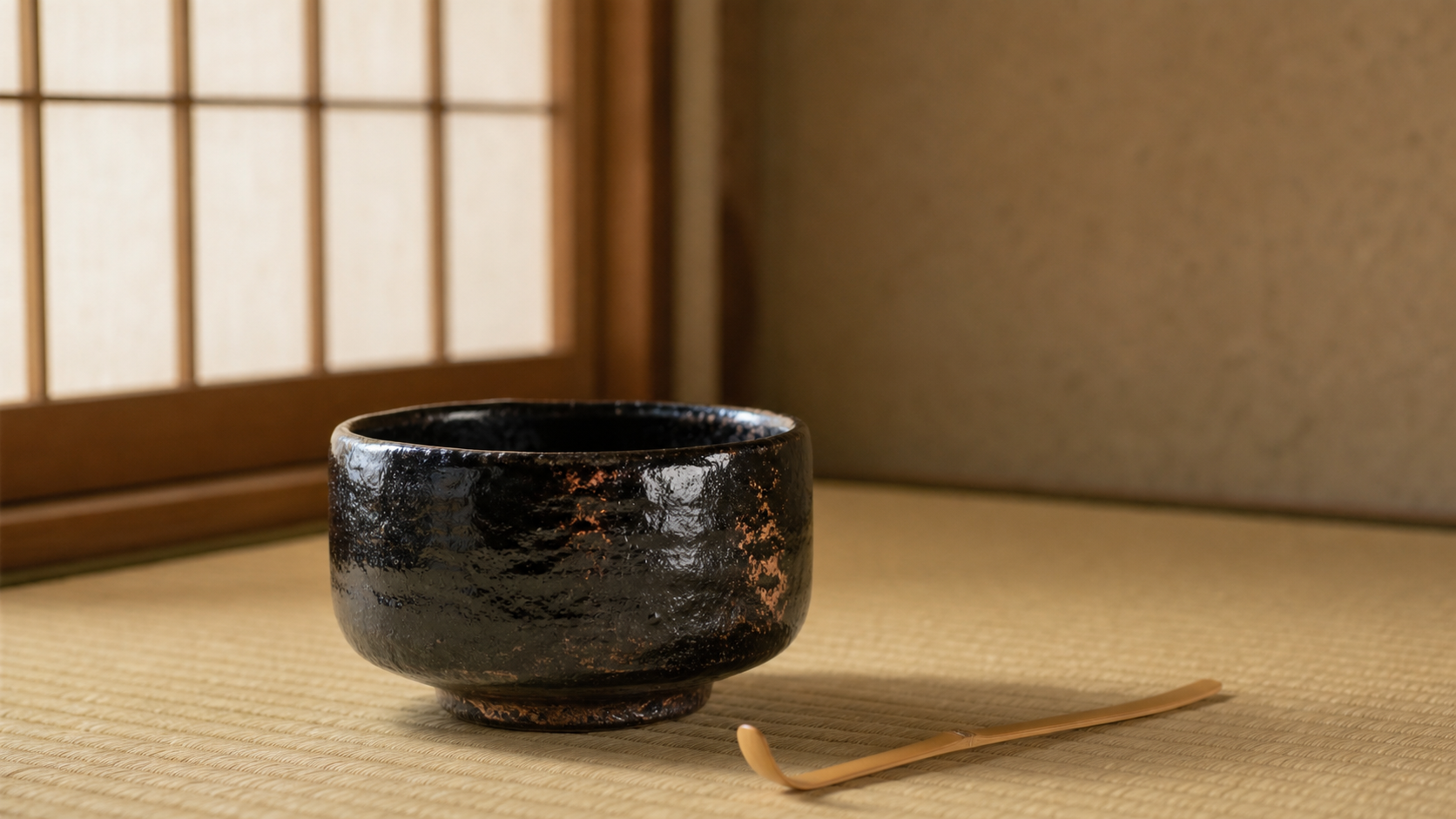
In its strict Japanese sense, raku-yaki (楽焼) refers first to a Kyoto tradition of tea bowls. The bowl is made to be held: its weight, rim, warmth and slight irregularities all matter. Rather than disappearing into the table setting, it becomes part of the encounter between host, guest and matcha.
The Raku Museum identifies Chōjirō as the tradition’s initiator during the Momoyama period. Its history places his first presumed tea bowl around 1579. The lasting idea is not a date but a shift in taste: tea culture found meaning in an intimate object whose surface and form invite close attention.
There is no single raku look
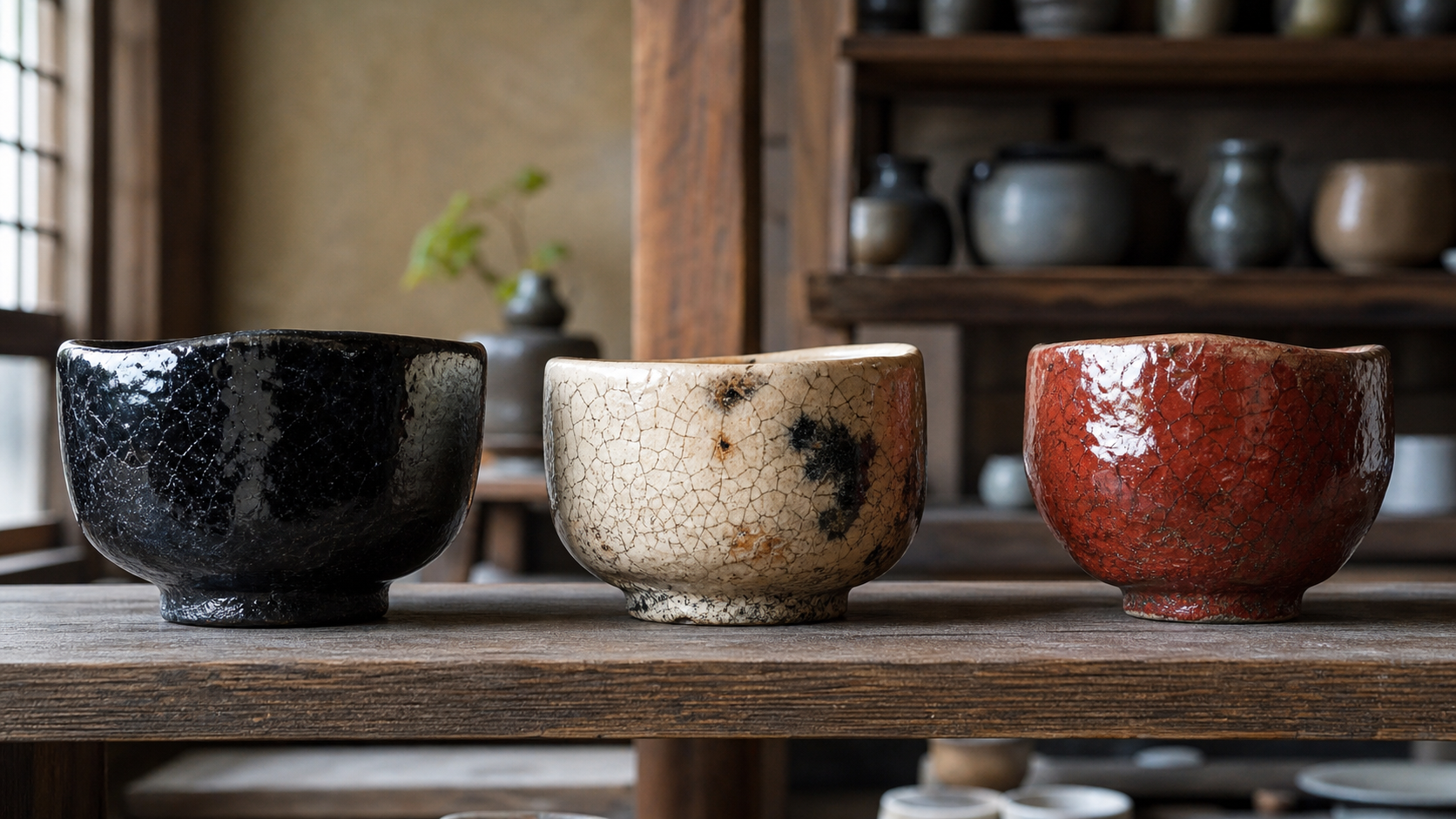
Black glaze, deep red glaze and crackle lines are familiar images, yet none is a universal rule. Clay, glaze, kiln atmosphere and the potter’s choices all change the result. One bowl may be spare and smooth; another may carry smoky marks, a rougher skin, or tonal changes that appear only when light moves across it.
Raku’s Kyoto roots
Kyoto already brought together workshops and ceramic knowledge when Chōjirō was working there. The Raku Museum traces technical roots to Ming-dynasty sancai ware and notes that related three-colour glazing was being made around Kyoto. Chōjirō’s contribution was not merely a glaze: it was a bowl shaped for the quiet concentration of tea.
That is why a raku bowl can look modest at a distance and feel layered in use. Tea utensils are chosen with the season, the guests and the occasion in mind. For the broader setting, see how the Japanese tea ceremony works; the bowl is not a decorative extra but a participant in the gathering.
Japanese raku ware and Western raku firing
Outside Japan, “raku” often refers to a twentieth-century popularized studio method: a glazed object is taken out glowing hot, then placed in combustible material or cooled in a controlled way. Reduction may darken unglazed clay and draw crackle in the glaze. It is a highly expressive method used in many ceramic classes.
Traditional Japanese raku has its own history in Kyoto, its connection with the Raku family, and its role in tea culture. Not every fast-fired pot is a Japanese raku tea bowl, and not every Japanese raku bowl has the dramatic smoke patterns people expect. Keeping that difference clear makes both practices easier to appreciate.
| Aspect | Kyoto raku ware | Western use of “raku” |
|---|---|---|
| Historical centre | Kyoto and tea culture | Contemporary studios around the world |
| Main focus | Bowl, touch and occasion | Surface experimentation and firing effects |
| Typical result | Varies by work and lineage | Smoke, reduction and crackle often appear |
| Common mistake | Thinking it only means rapid firing | Calling every result Japanese raku ware |
What to notice in a raku tea bowl
- How it sits in the hand: the form should ask to be held, not only displayed.
- The rim: small variations affect the first contact with tea.
- The surface: soot, pores and shifting shine tell a firing story better than a flat colour can.
- The foot: the base reveals finishing decisions and the bowl’s construction.
- The season: in tea culture, colour and texture can be chosen for weather and occasion.
Why potters are drawn to raku firing
Because the kiln stops being invisible. Removing a hot object makes change visible: colour shifts, smoke acts on the surface, and the glaze is still moving. It is easy to see why raku firings draw a crowd at a studio.
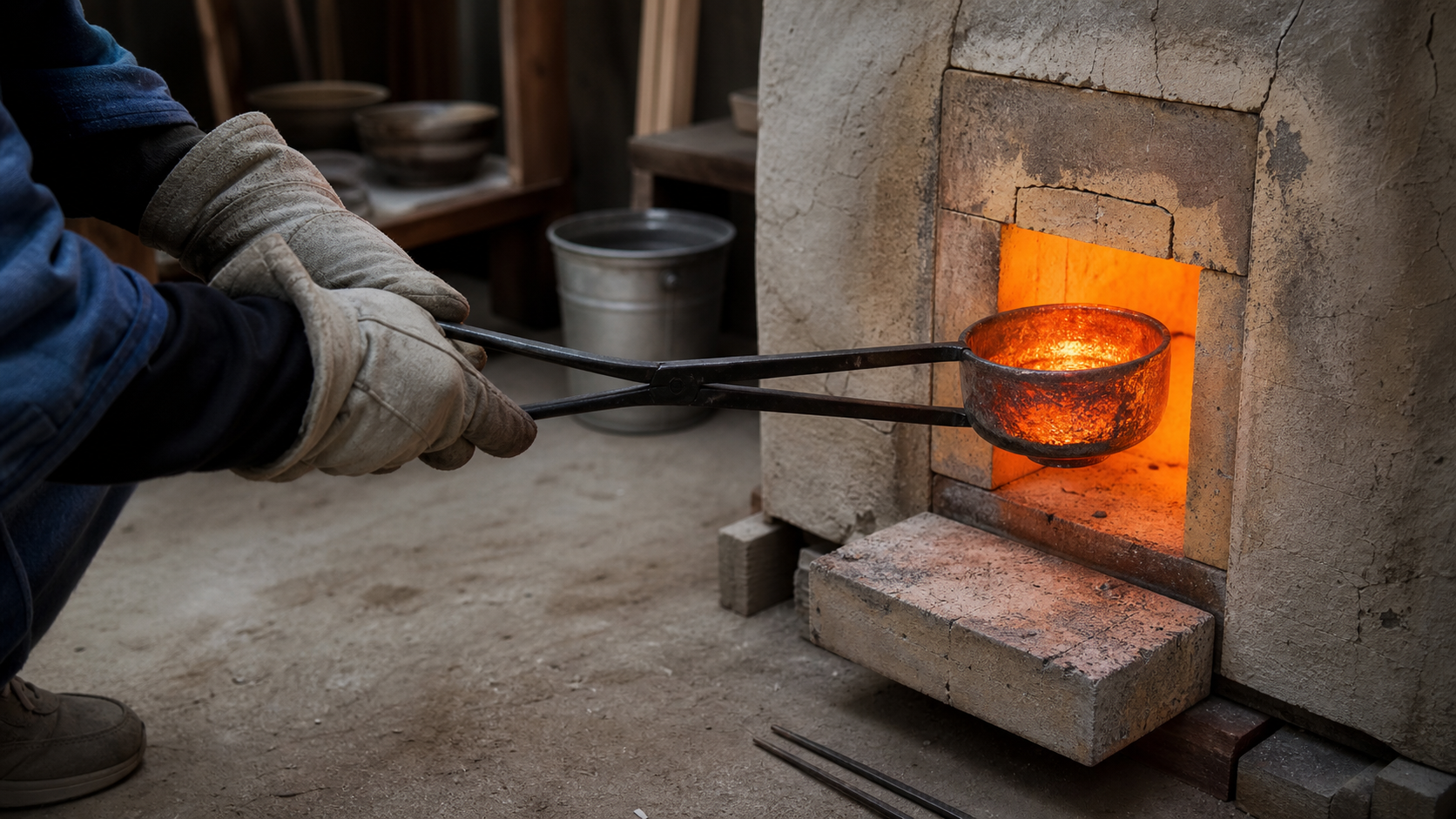
Still, the tradition is more than a spectacle. Its quieter lesson comes after firing: holding a bowl, noticing an uneven rim, seeing the same glaze respond differently every time. That is the point at which raku turns from an effect into an object worth returning to.
Are raku bowls safe for tea?
It depends on the individual work and the potter’s guidance. A vessel intended for food or drink needs suitable clay, glaze and firing; a decorative work may not. Colour and crackle alone cannot answer the question, so ask the maker whether the piece is made for beverages and how it should be cleaned.
Frequently asked questions
Does raku mean “pleasure”?
The character 楽 can carry meanings such as pleasure, comfort or ease depending on context. The name of the pottery tradition has its own Kyoto history, so translating it only as “pleasure” leaves out too much.
Does every raku piece crackle?
No. Crackle is one possible glaze and firing effect, especially familiar in some contemporary Western raku. It is not a requirement for every raku work.
Can I try raku firing at home?
It is not an improvised home activity. Kilns, incandescent work, smoke and combustible materials require proper space, equipment and instruction. A well-equipped pottery workshop is the sensible place to experience it.
A bowl that asks for attention
Raku does not need to be flawless to stay with you. It grew from a tea culture where a bowl carries traces of fire and the maker’s hand. Look beyond symmetry and ask a more useful question: what would it be like to drink tea from this particular bowl today?



Community
Comments
0 comments
There are no published comments in this language yet.
Send comment