
Byodoin Temple in Uji is the kind of place that seems to quiet down on its own. Many people know it because of the 10-yen coin, but the real appeal is the whole setting: history, architecture, pond, museum, and the atmosphere of a city famous for tea.
If you are building a Kyoto itinerary, it makes sense to pair Byodoin with a walk around Uji and with our Kyoto guide. It also helps to read about Japanese tea types, because the city makes much more sense once you understand the role of matcha there.
Contents 11
What is Byodoin
Byodoin began in 1052, when the former villa of Fujiwara no Yorimichi was turned into a Buddhist temple. The following year brought the Phoenix Hall, known in Japanese as Hōō-dō, built to house the Amida Buddha statue carved by Jōchō.
That matters because the complex captures the spiritual worldview of the Heian period very well. The original hall still survives, which is rare in Japan, and that is why Byodoin is remembered as a World Heritage site and a window into aristocratic aesthetics of the time.
Why Phoenix Hall stands out
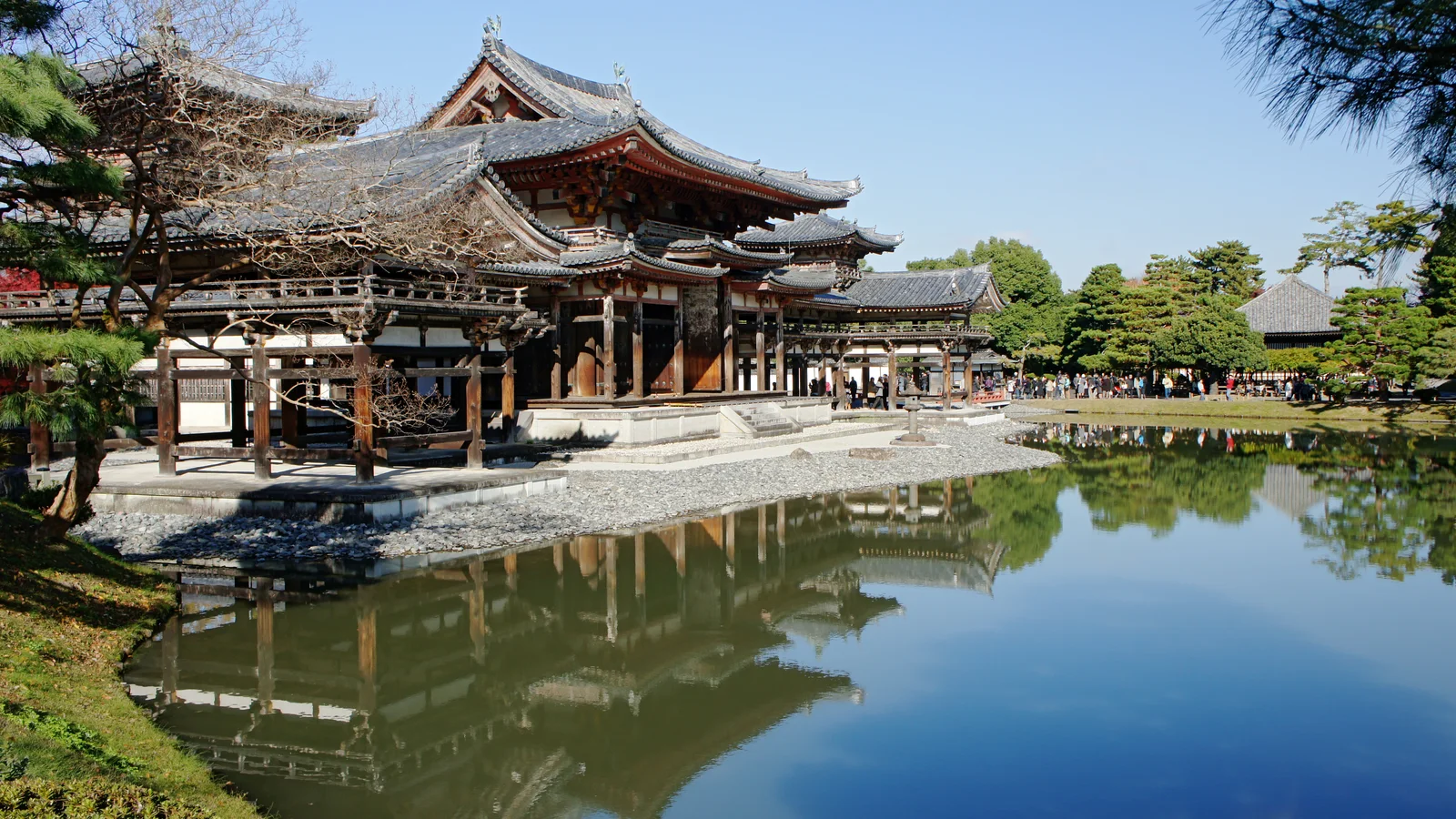
The hall sits over water and creates the mirror-like scene that became the temple's signature image. Its shape suggests a phoenix with open wings, and the roof ornaments reinforce that idea. It is not only beautiful; it was designed to convey peace, symmetry, and the Pure Land ideal.
Inside it rests one of the most important works of Japanese sculpture. That is why, even on a short visit, Phoenix Hall is usually the moment people remember most vividly.
How to visit without rushing
The garden opens at 8:45 and admission ends at 5:15 p.m. Hoshokan, the temple museum, is open from 9:00 a.m. to 5:00 p.m., with last entry at 4:45 p.m. The interior visit to Phoenix Hall costs 300 yen per person, runs from 9:30 a.m. to 4:10 p.m., and is organized in small groups every 20 minutes.
If you want the visit to feel relaxed, plan at least 40 to 50 minutes for the outside area and a little more if you include the museum and a tea break in Uji. It is a short stop on the map, but full of details once you slow down.
FAQ
Is Byodoin worth visiting?
Yes, especially if you want to see one of Kyoto's most elegant symbols away from the obvious, crowded temple routes.
Do I need to book the interior?
Usually not, but arriving early helps because the groups are limited and the schedule can fill up sooner than expected.
Can I combine it with a Uji day trip?
Absolutely, and that is actually the best way to do it: temple, museum, tea and a calm walk through the town in one route.
If you like temples in Japan, Byodoin is the kind of place that blends beauty, history and local context without trying too hard. To finish the day, head back toward Kyoto or stay a bit longer in Uji with a good tea and an easy walk.
What you actually see there
In practice, the visit is not just about looking at one beautiful building from a distance. You walk through the garden, circle the pond, see Phoenix Hall from its best angle, visit the Hoshokan museum, and understand why so many people connect the place with the image on the 10-yen coin. If the name Hōō-dō sounds unfamiliar, there is nothing complicated about it: it is simply the main hall, and the postcard image of the complex.
This is the kind of temple that rewards a slower look. It is not a place to tick off in ten minutes. The more attention you give to the water, the rooflines, and the way the building sits inside the garden, the more the visit comes together.
Getting there from Kyoto
Byodoin stands in Uji, south of Kyoto, and it works very well as an easy half-day trip. According to JNTO, you can leave Kyoto Station on the Nara Line and reach Uji in about 20 minutes by rapid train or around 30 minutes by local train. From there, the walk to the temple is short and straightforward.
That easy access is part of the appeal. Uji is close enough to fit into the same day, yet it already feels different from central Kyoto. If you are staying in Kyoto and want a calmer morning or afternoon, this is one of the simplest detours to add to your plan.
How much time to set aside
If your plan is only to see the exterior, take a few photos and move on, one hour can work. But that is also the rushed version of the experience. The better pace is around 90 minutes to 2 hours, so you can enjoy the garden, visit the museum, try for the interior view of Phoenix Hall, and still leave a little time for Uji itself.
If you enjoy tea, Japanese sweets, or quieter shopping streets, it is worth leaving extra time after the temple. The most common mistake is treating Byodoin like a quick stop between Kyoto and Nara, when it works much better as a place to slow down.
Who will enjoy it most
Byodoin is especially rewarding for travelers who like Japanese architecture, Heian-period history, gardens, and quieter walks. It also works well for people who have already seen several Kyoto temples and want something beautiful without the same crowded rhythm. It is not the loudest or flashiest stop on the trip, and that is exactly why many people end up liking it more than expected.
Even with a tight itinerary, it still fits nicely into a half day in Uji. The most natural combination is temple, green tea, a short walk through town, and an easy return to Kyoto.




Community
Comments
0 comments
There are no published comments in this language yet.
Send comment