
Have you ever wondered what the letter "L" looks like in Japanese? Generally, this letter is represented by the hiragana family of "ル". Contrary to what some may think, the Japanese language does not natively have the letter "L", so they replace the L with "R".
In other words, that unfunny joke that Brazilians often make with Asians about "chicken pastel" only works with Chinese people. The Chinese who cannot pronounce "R", while native Japanese would say "PASUTERU DE FURANGO".
In the Japanese alphabet, there is no letter that corresponds to the "L" sound. This happens because Japanese, which uses the writing systems of hiragana, katakana, and kanji, does not have a sound that exactly represents "L".
To adapt foreign words that contain "L", the Japanese generally substitute this sound with "R", which is the closest sound available in the Japanese language.
In this article, we will examine how the "L" sound is integrated into Japanese, the phonetic adaptation, examples of modified foreign terms, and other curiosities related to the language.

Contents 11
The Letter "L" in Japanese
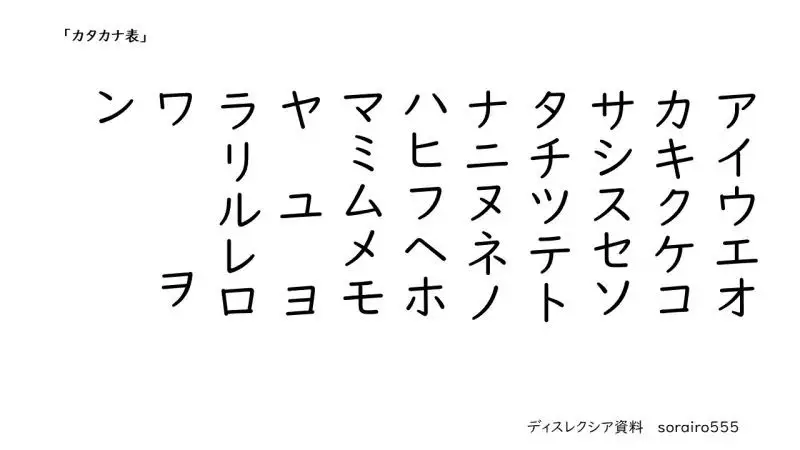
In Japanese, it is not just the katakana "ル" that is used to represent the "L" sound in foreign words; the entire kana family of the "R" line (ラ行) is used for this adaptation. The Japanese syllabary is composed of syllables, not isolated sounds like in some other languages. This means that each kana represents a combination of consonant + vowel, and not just a single consonantal sound.
For example, to adapt foreign words with the "L" sound, the Japanese use kana such as "ラ" (ra), "リ" (ri), "ル" (ru), "レ" (re), and "ロ" (ro), replacing "L" with "R". This adaptation is necessary because Japanese does not have isolated sounds equivalent to "L", and the syllabic structure of the language requires that these sounds be integrated within the existing phonetic rules. Therefore, a word like "Light" becomes "ライト" (Raito), using the "ラ行" to imitate the "L" sound.
Converting "L" to "R"
Generally, the transformation of syllables with "L" in Japanese works as follows:
- LA > RA (ラ)
- LI > RI (リ)
- LU > RU (ル)
- LE > RE (レ)
- LO > RO (ロ)
- L > RU (ル)
The Pronunciation of "L" or "R" in Japanese
The pronunciation of the Japanese "R" is an intermediate sound between "L" and "R". It is produced with the tongue lightly touching the roof of the mouth, near the front teeth, similar to the sound of "d" or "l" slightly rolled.
This pronunciation is softer and less vibrant than the Portuguese "R". For example, in words like "ラーメン" (Rāmen), the pronunciation of "ラ" is something between "ra" and "la", which may sound different to speakers of languages that clearly distinguish between the "R" and "L" sounds.
Words with "L" in Japanese
The best way to understand the letter "L" in Japanese is through examples of foreign words that are written with "L". Let's see how these words have been adapted to Japanese writing:
- エレベーター (Erebētā) - Elevator
- コントロール (Kontorōru) - Control
- バレーボール (Barēbōru) - Volleyball
- フィルム (Firumu) - Film
- ゴール (Gōru) - Goal
- パネル (Paneru) - Panel
- オリジナル (Orijinaru) - Original
- エレクトリック (Erekutorikku) - Electric
- ガール (Gāru) - Girl
- ラベル (Raberu) - Label
- メタル (Metaru) - Metal
- モジュール (Mojūru) - Module
Most of the words above were derived from English, note that the letter "L" was replaced by the katakana "ル".

Japanese Names with L
Another way to understand how to adapt the letter "L" to Japanese is through the adaptations of names, let's see some foreign names with "L" written in Japanese:
- レオナルド (Reonarudo) - Leonardo
- エリザベス (Erizabesu) - Elizabeth
- アレックス (Arekkusu) - Alex
- ルーカス (Rūkasu) - Lucas
- ミカエラ (Mikaera) - Michaela
- カルロス (Karurosu) - Carlos
- アリス (Arisu) - Alice
- オリバー (Oribā) - Oliver
- ラウラ (Raura) - Laura
- ダニエル (Danieru) - Daniel
- ローレンス (Rōrensu) - Lawrence
- サミュエル (Samyueru) - Samuel
- ヘレン (Heren) - Helen
- ローラ (Rōra) - Lola
- ガブリエル (Gaburieru) - Gabriel
FAQ - Frequently Asked Questions
Why is there no letter “L” in Japanese?
Is it difficult for Japanese people to learn to pronounce “L”?
Are there other letters that also do not exist in Japanese?
How do Japanese people learn foreign words with “L”?
Is it common to see foreign words in daily Japanese life?
I hope this article has answered all your questions regarding the letter "L" in Japanese! If you liked it, don't forget to share and check out our Japanese course at Suki Desu.







Community
Comments
0 comments
There are no published comments in this language yet.
Send comment