
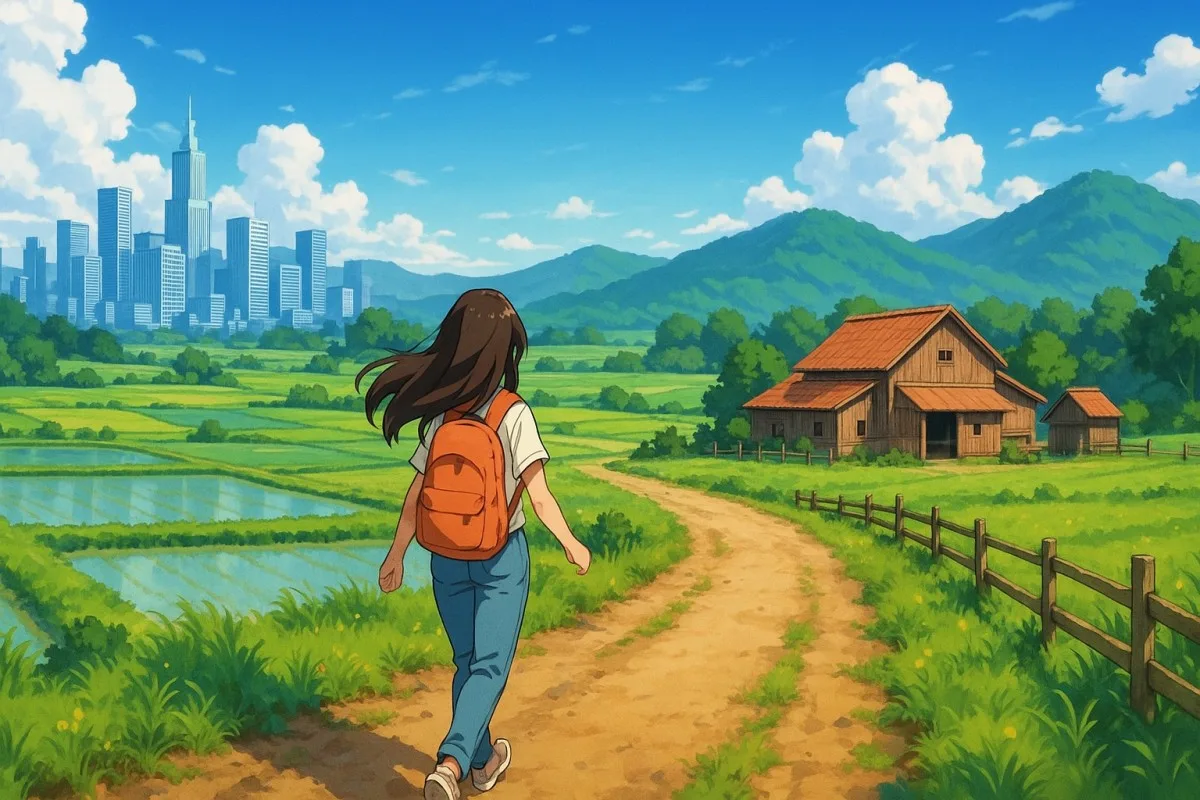
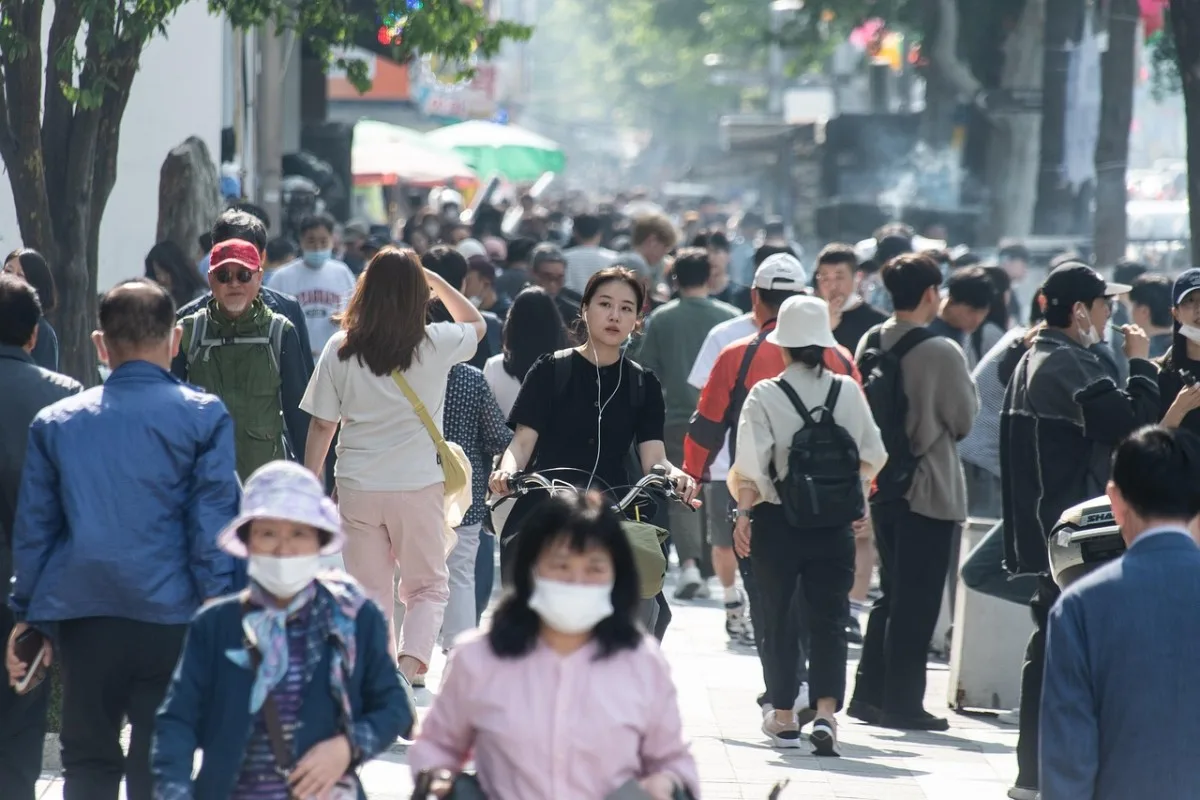
On a Monday morning in Gangnam, the subway cars fill up before 8 a.m., offices hum under fluorescent light and a small apartment costs more per square meter than a detached house in the countryside. For an entire generation of Koreans, that daily squeeze has started to feel less like city life and more like a contract they did not sign. Their answer, increasingly, is Kwichon (귀촌): the deliberate move from a Korean megacity to a rural town, village or farming area, often with no intention of going back.
The word looks small, but the pattern behind it is not. In the years since the pandemic, hundreds of thousands of Koreans have weighed the cost of renting a studio in Seoul against the cost of buying a house in Gangwon or Jeolla, and a growing share of them have chosen the second option. Some keep their old jobs and work remotely, with mountains instead of meeting rooms in the background. Others open a small café in a former schoolhouse, plant garlic on a hillside, or simply retire to a quieter life that the city no longer offers. Kwichon has become a way of naming all of it, the choice, the trade-offs and the new kind of Korean life that emerges when the city stops being the only stage.
Contents 15
What is Kwichon?
The Korean word Kwichon (귀촌) translates literally as “return to the village.” In everyday use it describes anyone who leaves a major city, most often Seoul, Busan, Incheon, Daegu or Daejeon, and settles in a rural area of South Korea, whether or not they have a farming background. A similar word you will hear is Gwinong (귀농), “return to farming,” which is reserved for people who actually take up agriculture as their main work. Kwichon is the wider umbrella, and Gwinong is one possible branch underneath it.
It also helps to separate Kwichon from two related ideas that often get mixed in:
- Gwichon (귀향) — return to one’s hometown, usually a place where the family has roots. Kwichon does not require a family tie; people move to a village they have no ancestral link to.
- Tosiljip (토요일집) — a “weekend house” used for short stays and rural getaways. Kwichon is a full relocation of daily life, not a second address.
In practice, Kwichon sits somewhere between those poles. A thirty-something designer in a Seoul studio can sell her apartment, buy a hanok in a small county, keep her remote job, learn to make kimchi from the neighbors and still be a textbook case. There is no single official definition, and that is part of why the term has spread so quickly: it flexes to fit the actual lives people are living.
A short history of Korea’s return-to-the-countryside movement
Korea’s rural-urban imbalance is not new. For decades the country has poured population, investment and attention into Seoul and the surrounding Gyeonggi region, leaving provincial towns with aging populations and shuttered schools. Kwichon is, in many ways, the cultural response to that long-term tilt, and it has come in waves.
The first wave (roughly 2000–2010)
Long before the term was fashionable, a small number of urban Koreans, often in their forties and fifties, started moving to the countryside looking for space, cleaner air and a break from the long working hours of office life. Some were motivated by the 1997 financial crisis aftermath, others by a slow-burning sense that the city was no longer paying them back. Government programs quietly began to support these early movers with rural settlement advice and small grants, but the numbers stayed modest.
The second wave (2020 onward)
COVID-19 changed the math almost overnight. With offices empty and Zoom calls replacing commutes, white-collar workers suddenly discovered that “the office” could be a desk facing a rice field. Korean media started running feature after feature on young families, freelancers and remote workers who had decamped to Gangwon, Chungcheong and Jeju. Government bodies such as the Korea Rural Community Corporation expanded their Return to Land Comprehensive Centers (귀농귀촌 종합센터), which act as one-stop advisory hubs for people considering the move, from housing listings to farming training.
Around the same time, a parallel rural tourism economy took off. Country cafés, guesthouses, design-forward pensions and weekend craft workshops gave villages a new commercial identity. Villages such as Damyang (bamboo), Hadong (tea), Yangpyeong (pottery and crafts) and Cheongsong (apples) became recognizable names to Seoulites, who now visit them on short trips before deciding to move there for good. Kwichon and rural tourism feed each other: visitors become candidates, and candidates open the cafés that the next wave of visitors will photograph.
Who actually returns to the countryside?
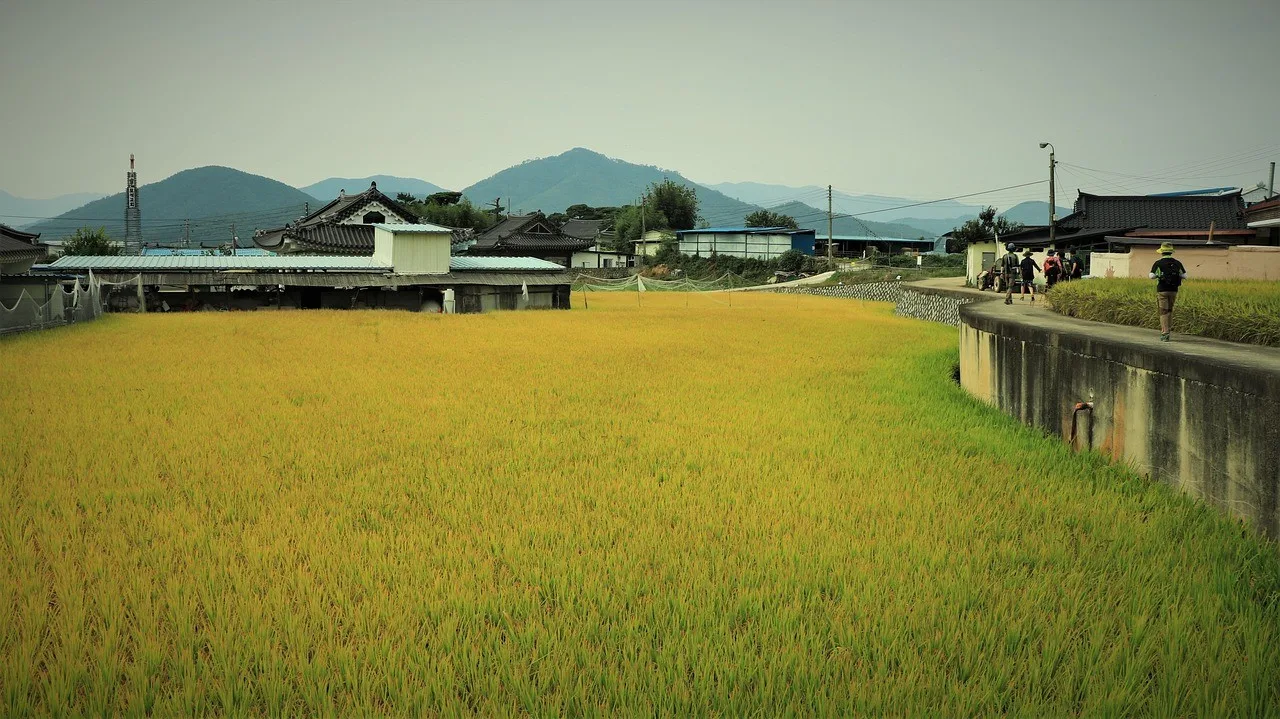
Kwichon is no longer a single demographic. The people making the move now come from a wide slice of Korean society, and a small but growing number of foreign residents in Korea are starting to join them.
- Remote-working professionals. Developers, designers, marketers, translators and analysts whose jobs became fully or mostly remote after 2020. For them, Kwichon is essentially a lifestyle upgrade with the same paycheque.
- Young families with children. Parents worried about fine dust, cram-school pressure and tiny apartments, looking for a house with a yard, a quieter school and a more relaxed daily rhythm.
- Retirees. People in their fifties and sixties trading a paid-off Seoul apartment for a rural home, often using the difference to fund a comfortable retirement or to start a small farm.
- Creative workers. Writers, ceramicists, illustrators, musicians and small-studio artisans who have always needed space, light and quiet more than they need a metropolitan address.
- Returning rural Koreans. People who grew up in the countryside, moved to the city for school or work, and decide to come back once their careers settle, sometimes with their own children in tow.
- Foreign residents. A small but visible community of expats and international couples, often teaching English or working remotely for overseas companies, who are quietly trading Itaewon or Hongdae for a village in Jeju or the south coast.
What ties these groups together is not income or age but a shared feeling that urban Korea has stopped offering them what they actually need, and that rural Korea can.
Where do returners actually settle?
Korea is small, but the regional differences matter a lot. Kwichon destinations tend to cluster in five broad areas, each with its own pull.
Gangwon-do
The mountains, rivers and ski country of Gangwon, especially around Pyeongchang, Chuncheon and the east coast, are the classic Seoul escape. Weekend homes turned permanent homes, a strong café and pension scene, and a relatively easy KTX or car ride back to the capital keep Gangwon at the top of the list.
Chungcheong-do
The Chungcheong provinces sit right in the middle of the country, with quick access to both Seoul and Daejeon. Towns such as Goesan and Jecheon attract people who still need to commute occasionally or want a shorter drive to the capital.
Jeolla-do
Jeolla-do, in the southwest, is the heartland of traditional Korean agriculture, food culture and slower folkways. Cities like Gwangju, Jeonju and Suncheon anchor a region where life is more affordable and the food is a draw on its own.
Gyeongsang-do
The southeast, including Gyeongsangbuk-do and Gyeongsangnam-do, runs warmer and drier, with a strong rural identity, agricultural traditions and a reputation for being culturally distinct. Places like Andong, Gyeongju and Hapcheon are recurring Kwichon destinations.
Jeju-do
Jeju is its own category. Island life, mild weather, a deep café and pension culture, and an active international community make it both the most romantic and the most expensive version of Kwichon. The Youngsan River area and the south coast, while not Jeju, share some of that coastal, slow-paced appeal.
The real challenges and rewards of Korean country life
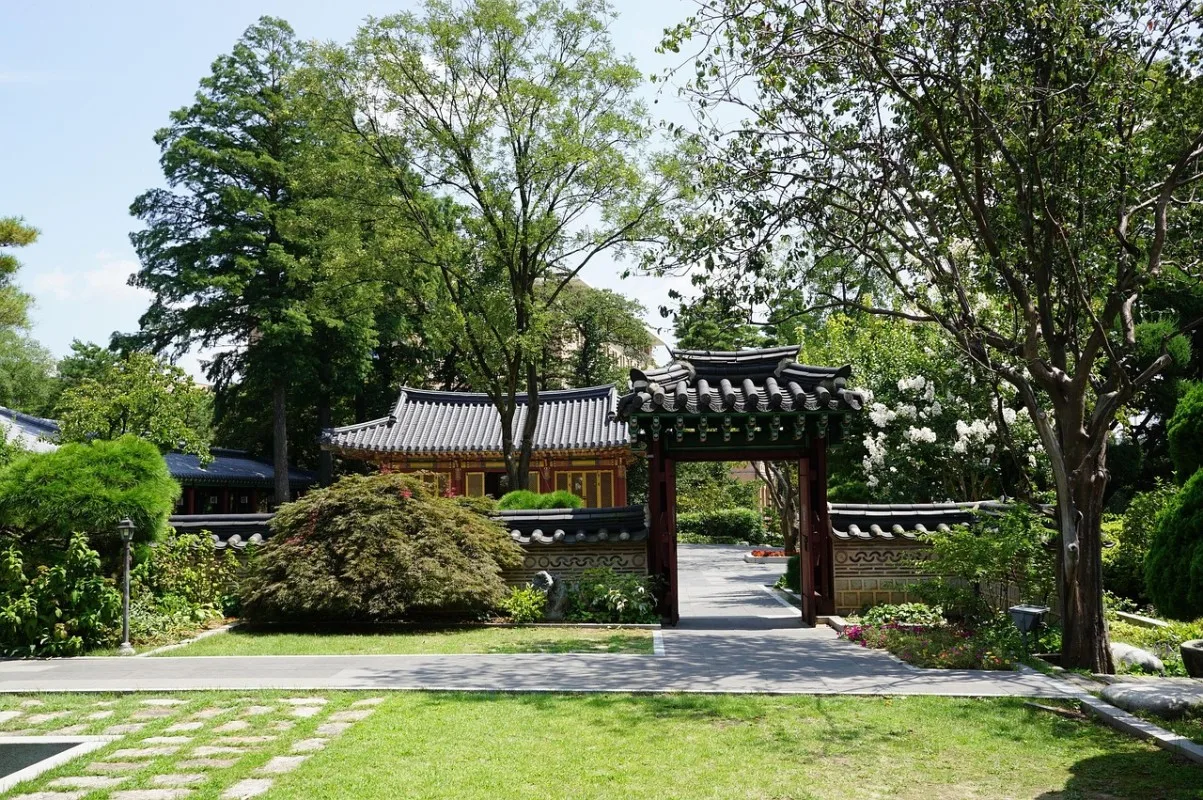
No honest picture of Kwichon is all pastoral. The same move that gives someone a garden and clean air also closes some doors that the city used to open.
The challenges
- Fewer local jobs. Outside Seoul, Busan and a few other hubs, non-remote professional work is genuinely scarce, and salaries tend to be lower even when the cost of living is too.
- Healthcare access. Korea’s top hospitals and specialists are concentrated in the capital, which matters for anyone managing a chronic condition or planning a family.
- An aging population. Many villages skew heavily older, which can make it harder to find peers, schools for children or simply a bus that still runs late.
- School and infrastructure pressure. Rural schools continue to close as young families leave, and public transport, broadband reliability and delivery coverage can lag behind Seoul in surprising ways.
- Culture shock. Slower service, fewer late-night options, stricter social norms, and a real difference in pace can unsettle even committed city refugees during the first winter.
- Social integration. Long-term villagers can be welcoming, reserved or simply cautious. Building trust with older residents often takes more patience than the glossy K-Drama version of rural life suggests.
The rewards
- Lower cost of living. A house that would be a down-payment problem in Seoul becomes a realistic purchase, and the everyday cost of food, transport and services often drops with it.
- Better air and more space. Cleaner air, lower density, and the simple luxury of a yard, a garden or a view of mountains, something most Seoul apartments will never offer.
- Real community ties. Neighbors who know your name, share their kimchi and turn up when something happens, a very different social texture from the anonymity of a large apartment complex.
- Authentic food and traditions. Local markets, seasonal produce, regional dishes and village festivals that have largely disappeared from the big cities.
- Connection with nature. Walking distance to hiking trails, rivers, orchards and the sea, often in the same afternoon.
- Telework, finally on your terms. For anyone whose job is genuinely remote, Kwichon turns work-from-home into work-from-a-village, with a commute measured in steps to the kitchen.
Kwichon and Korea’s future
South Korea is one of the most urbanized countries in the OECD, with roughly four out of five Koreans living in cities and the Seoul metropolitan area alone accounting for close to half of the national population. That imbalance is not just a statistic, it shapes housing prices, traffic, mental health and the political weight of the capital. Kwichon sits inside a much larger policy conversation about whether Korea can rebalance itself without leaving its provinces to slowly empty out.
Several initiatives point in that direction. The Innovation Cities (혁신도시) project, launched in the 2000s, moved parts of central government agencies out of Seoul, partly to seed activity in regional centers. The broader policy of regional balanced development (지역균형발전), coordinated through bodies under the Ministry of Land, Infrastructure and Transport, has tried to channel investment, jobs and infrastructure into provincial regions. Subsidies for new rural settlers, support for rural pensions and cafés, and one-stop “check-in centers” (체크인센터) for newcomers are all small pieces of that larger push.
None of this guarantees a permanent shift. Kwichon is partly a product of remote-work policies that future governments, or future recessions, could change overnight. The trend is also visible elsewhere, in Japan’s I-turn movement to regional cities, in rural revitalization efforts in China, and in American moves to smaller towns, and whether it lasts in Korea will depend as much on the quality of rural life as on tax breaks and subsidies.
What is already clear is that Kwichon is no longer a quirky side story. It is one of the more interesting answers a small, fast, hyper-connected country has come up with to a question other societies are also asking: what do you do when the city is winning, but the city is also breaking you? For an increasing number of Koreans, the answer is to pack a car, drive south or east, and find out what village life actually feels like.



Community
Comments
0 comments
There are no published comments in this language yet.
Send comment