
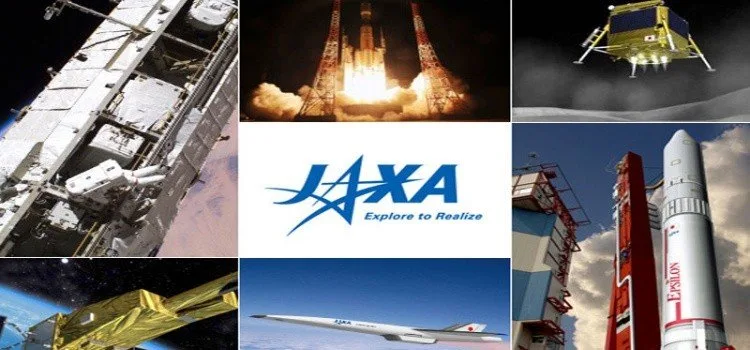
If you are interested in space exploration, you keep coming back to one agency: JAXA, the Japan Aerospace Exploration Agency, the national space agency of Japan. It handles technological development, launches satellites into orbit, explores the universe, and runs complex missions - from asteroid exploration to long-planned crewed journeys to the Moon and Mars. With the motto One JAXA and the slogan Explore to Realize, the agency unites what Japan has built up in space competence over decades. This article traces how JAXA was founded, which rockets and missions it operates, what its scientific achievements are, how it works with NASA and ESA, and what it plans for the decades ahead.
Contents 11
What is JAXA?
The Japan Aerospace Exploration Agency, or JAXA, is the national space agency of Japan. It was founded on 1 October 2003 as an independent administrative institution, bringing all of the country's civil space activities under one roof. Its headquarters sit in Chofu, near Tokyo, supported by the Tanegashima Space Center for rocket launches, the Tsukuba Space Center for research, and the Sagamihara Campus for probes and propulsion.
JAXA runs astrophysical and planetary research, develops rockets, places reconnaissance, weather, and communications satellites into orbit, manages astronaut programs within the International Space Station (ISS), and runs its own missions such as the Hayabusa 2 asteroid sample-return. It reports to Japan's Ministry of Education, Culture, Sports, Science and Technology (MEXT), and on defence and security matters to the Prime Minister's Office.
History of JAXA: three organizations become one
JAXA was formed on 1 October 2003 from the merger of three predecessor institutions, brought together on the same day to form a single new agency. Before the merger, Japan had run its space activity through three parallel structures - each with its own history, technology, and budget.
The Institute of Space and Astronautical Science (ISAS) handled scientific space and planetary research, using small solid-fuel rockets for astrophysics missions. The National Aerospace Laboratory of Japan (NAL) focused on aviation research, engines, and aerodynamics. The National Space Development Agency of Japan (NASDA), founded in 1969, developed large liquid-fuel rockets, placed communications and weather satellites in orbit, and built the Japanese Experiment Module (Kibo) for the ISS. NASDA also trained Japanese astronauts, who later flew aboard U.S. Space Shuttles.
In 2012, new legislation widened JAXA's mandate: the agency could also pursue space applications with a security dimension alongside purely peaceful uses - for example, early-warning systems for rocket launches. Political oversight partly shifted from MEXT to the Prime Minister's Office, where a dedicated National Space Policy Secretariat was set up.
JAXA rockets: H-IIA, H-IIB, Epsilon, and H3
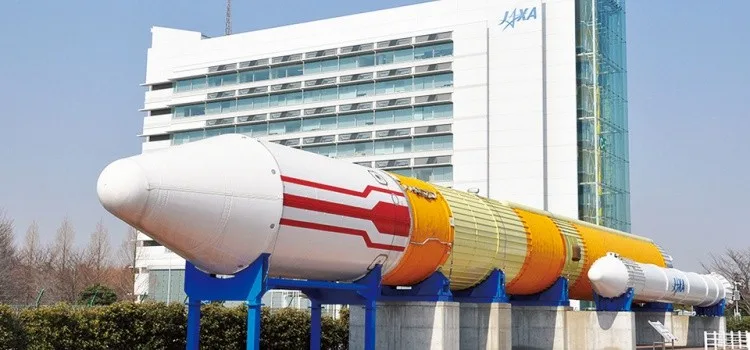
JAXA uses a family of launch vehicles that grew out of the NASDA and ISAS traditions. For medium and heavy payloads, the H-IIA is the workhorse of the fleet, complemented by the more powerful H-IIB for cargo flights to the ISS. Both trace back to the former NASDA programme. For scientific missions - for instance in X-ray astronomy - JAXA uses the leaner Epsilon rocket, evolved from ISAS' solid-fuel heritage. The newest generation, the H3, is set to gradually replace the H-IIA from the 2020s onward, enabling more cost-efficient launches.
Japan has a long history of building its own rockets. In 1970, the country placed its first satellite, Ōsumi, into low Earth orbit, using ISAS' small L-4S solid-fuel rocket. NASDA initially licensed American models. From 1994, the liquid-fuel H-II was built in Japan itself - but two launch failures in the late 1990s drew sharp criticism of the reliability of Japanese launchers.
The first space mission under the JAXA name was an H-IIA launch on 29 November 2003, which ended in failure. After a roughly fifteen-month pause, the next H-IIA successfully lifted off from the Tanegashima Space Center on 26 February 2005, placing a satellite into orbit. Since then, the H-IIA has built a long string of successful missions.
Scientific achievements of JAXA
Long before 2003, ISAS and its predecessors had built a substantial scientific programme that JAXA has carried forward. In the 1980s and 1990s, Japan was internationally visible in X-ray astronomy: a series of X-ray satellites delivered data on black holes, neutron stars, and active galaxies. The country also made a pioneering contribution to space-based radio interferometry with the HALCA mission, which pushed Very Long Baseline Interferometry (VLBI) into orbit. Further strengths include solar observation, magnetosphere research, and infrared astronomy.
One of the best-known JAXA achievements is the Hayabusa 2 asteroid mission. Launched in 2014, the probe reached asteroid Ryugu, collected surface samples, and brought them back in a re-entry capsule in 2020 - the world's first successful return of material from a near-Earth asteroid. The predecessor Hayabusa (launched 2003) had delivered a trickle of dust from asteroid Itokawa after a string of setbacks, laying the ground for its successor. With Martian Moons eXploration (MMX), JAXA is already planning the next sample-return - this time from one of the two moons of Mars.
Another milestone was the Venus orbiter Akatsuki, which finally reached Venus in 2015 after a failed first attempt years earlier and began studying the planet's atmosphere. In 2008, JAXA received the John L. "Jack" Swigert Jr. Award for Space Exploration from the Space Foundation - a recognition that put the Japanese space programme on the international map.
Kibo and the International Space Station
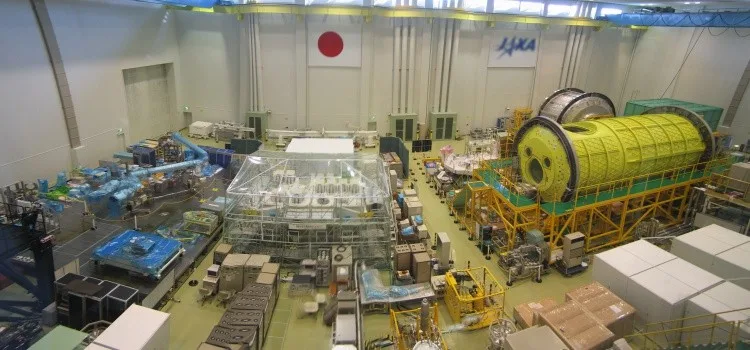
JAXA is one of the most important international partners of the ISS. Its contribution is the Japanese Experiment Module - Kibo ("Hope") for short - the largest single module of the space station. Kibo consists of a pressurized module, a logistics section, an external platform for experiments exposed to space, and a small robotic arm. It supports material science, biology, astronomy, and Earth observation, and Japanese astronauts regularly run Kibo experiments on board, often in cooperation with European and other partners.
Beyond Kibo, JAXA contributes to ISS resupply flights with the H-II Transfer Vehicle (HTV), affectionately known as Kounotori - "white stork". These uncrewed cargo capsules carry propellant, food, spare parts, and experiments to the station. With this role, Japan is one of the countries that actively keeps the ISS flying - alongside the United States, Russia, Europe, and Canada.
Human spaceflight: astronauts and their missions
Japan has a small but experienced astronaut corps, although it has never developed its own crewed spacecraft: every Japanese spacefarer has flown through international cooperation. The first Japanese citizen in space was journalist Toyohiro Akiyama in 1990, sponsored by the Tokyo Broadcasting System (TBS), who reached the Mir station aboard Soyuz TM-11. Akiyama spent more than a week in orbit - the flight was the Soviet Union's first commercial space mission, bringing in roughly USD 14 million.
The first Japanese professional astronaut was Mamoru Mohri, who flew aboard Space Shuttle STS-47 in September 1992, partly funded by Japan. After him came Chiaki Mukai, Koichi Wakata, Akihiko Hoshide, and others, who flew mainly on U.S. Shuttle missions and later on Soyuz capsules to the ISS. In 2014, Koichi Wakata became the first Japanese commander of the ISS - a symbol of the country's growing standing among spacefaring nations.
For a long time, Japan pursued plans for its own crewed spacecraft - the HOPE-X project, for example, was developed for years before being shelved. Today, JAXA focuses on international cooperation, in particular the NASA-led Artemis programme. As part of that partnership, a Japanese astronaut is expected to walk on the lunar surface in the late 2020s - the first Moon landing by a Japanese astronaut in history.
International cooperation: NASA, ESA, and beyond
JAXA works closely with NASA, the European Space Agency (ESA), the Indian ISRO, the Canadian CSA, and others. Major areas of cooperation include the ISS, asteroid research, Earth observation, climate science, and new technologies. With NASA, JAXA partners on the Artemis programme, the Lunar Gateway, and future Mars efforts. With ESA, the two agencies share missions such as BepiColombo to Mercury and regularly exchange satellite data.
A notable case of bilateral cooperation is the relationship with France: CNES and JAXA operate joint instruments on Japanese and European satellites and share expertise in asteroid and planetary science. JAXA also exchanges data and runs training programmes with smaller Asian agencies such as South Korea's KARI and Thailand's GISTDA. Japan is a founding member of the International Space Exploration Coordination Group, which coordinates the largest exploration missions worldwide.
Future missions: the Moon, Mars, and the next sample-return
The coming years are set to be defined by two flagship efforts: a possible lunar outpost and a sample-return from Mars. With Martian Moons eXploration (MMX), JAXA aims to fly to the Mars moon Phobos, collect surface samples, and bring them back to Earth. The launch is planned for the second half of the 2020s. MMX would take the scientific baton from Hayabusa 2 and help answer whether Phobos is a captured asteroid or a fragment of Mars.
In June 2014, Japan's Ministry of Science and Technology announced it was seriously studying a mission to Mars. In the years that followed, the idea of an uncrewed Mars exploration took shape, conceived as a stepping stone toward long-term lunar settlements. In parallel, Japan is contributing to Artemis, building supply and habitat modules for the Lunar Gateway, and developing the Lunar Cruiser, a pressurized rover designed jointly with Toyota.
On Earth observation, JAXA is also expanding its capabilities. Follow-on satellites of the weather satellite Himawari and the carbon-dioxide observer GOSAT will keep delivering data on climate, environment, and natural disasters - a field in which Japan has a long tradition.
JAXA and Japan's tech industry
JAXA is not just a driver of research but also a major industrial customer. Through large contracts awarded to firms such as Mitsubishi Heavy Industries (rockets and launches), NEC and Mitsubishi Electric (satellites), and a wide network of mid-sized suppliers, billions of yen flow into Japan's aerospace sector. Every rocket, satellite, and experiment pulls in universities, research institutes, and private companies.
This work produces a steady stream of spin-offs: materials developed for rockets end up in cars and trains, image processing built for Earth observation is used in disaster relief, and robotics from Kibo research feeds into everyday assistive systems. JAXA releases part of its patents openly, so that small and medium-sized businesses can benefit too. For the Japanese economy, the agency is a strategic hub linking science, industry, and international visibility.
Uchuu Kyoudai: JAXA in anime
If you want to learn more about the lives of Japanese astronauts and the work of JAXA in narrative form, the manga and anime Uchuu Kyoudai ("Space Brothers") is a surprisingly faithful entry point. The series follows two brothers, Mutta and Hibito: Hibito becomes an astronaut and prepares for a lunar mission, while Mutta loses his job, rediscovers the childhood dream he shared with his brother, and applies to JAXA in his late twenties.

The series shows, across long story arcs, how demanding the selection, training, and scientific work inside the astronaut corps really are - from survival drills and language lessons to medical tests. Uchuu Kyoudai has been officially recognized by the Japanese space agency: a real JAXA mission has carried the anime's name, and members of the astronaut team have appeared in cameos. If you are interested in the human side of JAXA, Uchuu Kyoudai is an unusually well-researched companion to this article.
Conclusion: a compact agency with global reach
Compared with NASA or ESA, JAXA is a small agency, but it carries an outsized scientific profile: asteroid sample-return, X-ray astronomy, interplanetary probes, and a fully operational module on the ISS - all from a country whose civil space budget sits well below that of the largest spacefaring nations. Japan has chosen a collaborative path: instead of building its own large-scale structures, JAXA focuses on targeted missions with international partners and on close integration with domestic industry. The coming years will show whether the first Japanese astronaut on the Moon, a sample from the Mars moon, and the new H3 rocket reshape the picture. In the meantime, it is worth keeping an eye on JAXA - one of the institutions where the technological and scientific identity of Japan comes together most clearly.






Community
Comments
0 comments
There are no published comments in this language yet.
Send comment