

Do you know about Japanese gangs and delinquents? There are several types of them that even received names and titles like Yankii, Bosozoku, and Sukeban. In this article, we will explore everything about Japanese delinquents, mainly focusing on those mentioned.
Some do not belong to gangs and may act differently on the streets or engage in bullying at schools. It doesn’t matter if a Japanese delinquent is a school bully, a gang member, or a biker. Let’s look at different types!
They all end up having things in common and still differ quite a bit from Western delinquents. Some may not seem like delinquents or act that way, so we need to observe and get to know them.
Animes, doramas, and movies often depict the style and appearance of a standard delinquent and how they usually behave. They tend to convey a sense of anger and cannot control themselves. Some often dye their hair, sport outrageous hairstyles, and wear bleached and unusual shirts.

Table of Contents
Types of Delinquents in Japan
Delinquents in Japan are often referred to as yankii (ヤンキー), a reference to the word yankee that Americans use to refer to citizens of various ethnicities. Probably, the Japanese adopted this word due to the peculiar trends of the Japanese delinquent subculture.
Yankii was once used in Japan to refer to the poor from Kansai in 1975. Soon the term was also used to refer to Japanese who imitated Americans, until it finally focused on defining rebellious youth who do not follow school norms and standards. The film Kamikaze Girls (Shimotsuma Monogatari) portrays the life of Yankii well.
There are various subcultures, gangs, and types of delinquents that can be categorized and listed. Below we will briefly share some terms from the Japanese language and what type of delinquent each term refers to.

- Bosozoku – Wild biker gangs;
- Bancho – A leader of a group of delinquents;
- Tsubari – Term used for bad boys from the 1970s;
- Sukeban – Refers to a group of delinquents, women, or a boss;
- Yakuza – Refers to the Japanese Mafia;
- Gyaru – A fashion and culture style that can be somewhat aggressive;
- Hashiriya – Literally means street racer, a movement similar to bosozoku;
- Ijime – Literally means bullying, something that happens in Japanese schools;
- Furyo – Also means delinquent or some bad person;
- Chinpira – Small yakuza, yakuza apprentice, punk, delinquent, girl delinquent;
Identifying Gang Youth in Japan
There are so many characteristics about Japanese youth gangs that it becomes difficult to accurately describe all the details. You can easily identify a young person belonging to a group of delinquents by observing their behaviors.
The yankii or any other gang subculture tends to squat and assume a position called unko zuwari or yanki zuwari. It looks like a fecal position where the person sits with their butt on the ground and legs spread, showing some kind of attitude. You have probably seen this in some anime.
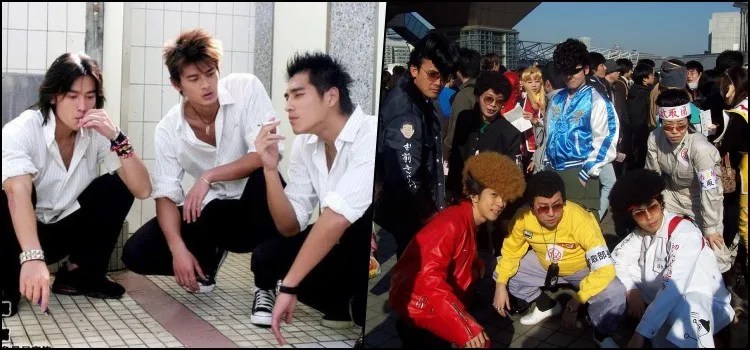
Delinquents who follow a culture often wear bandanas, surgical masks, excessive piercings, and jewelry. Additionally, some tuck their pants into their boots or roll them up to the knee.
Others even make scars and tattoos to appear hardcore. Female delinquents often wear a disheveled school uniform, scarf, loose socks, and very short or long skirts.
The behavior of Japanese delinquents is what you would expect: they like to fight, disturb the peace, and do not get along with society. Their main interests involve baseball, motorcycles, fighting, and martial arts.
A person does not necessarily need to have a certain appearance or style to be a delinquent; you will notice it by their attitude. The Yakuza do not usually get along with young delinquents; they consider themselves professionals, while the youth just want to act punk.
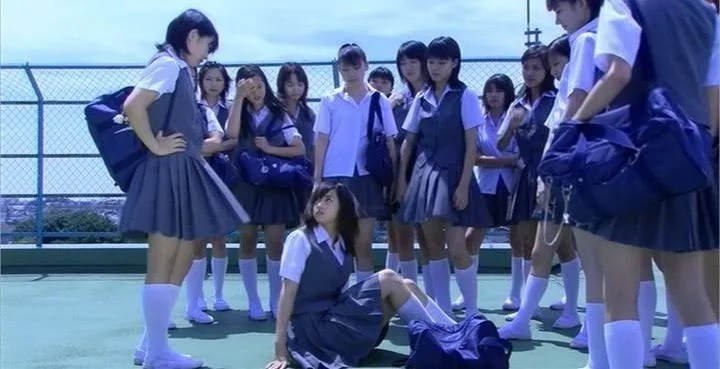
Even nice and fun people can be considered delinquents in Japan. Anyone who does not obey the rules, cannot get along with others, or seems different is often called furyou (不良), which can be translated as something not good, bad, inferior, and delinquent.
We recommend reading:
Bosozoku – The Japanese Rebel Youth
Have you heard of the Japanese rebel youth called bosozoku? It would never cross your mind that a disciplined country with a strong millennial culture like Japan would have a subculture of delinquents roaming the country causing chaos, disturbing the peace, and giving police trouble. This is a stereotypical view of bikers claiming to have a good cause!
Well, Japan also has its own group of rebellious youth who go around causing mischief. These are the Bosozoku, a gang of motorcyclists who customize bikes, go around committing traffic violations linked to the Yakuza. In this article, we will detail what bosozoku are and their activities:

Origin and Activities of Bosozoku
The term bosozoku (暴走族) was created in the 70s and literally means “out of control tribe.” They emerged in the 50s when Japan was recovering from the war and the automotive industry was growing. Lower-class youth banded together to express dissatisfaction with Japanese society at the time, forming a motorcycle gang for that purpose.
At that time, they called themselves kaminari zoku. The motivation behind it all was basically that typical rebellion against societal norms. However, as bosozokus are young people below the legal age (which is 20 years in Japan), some ignored the fight for freedom and became bosozoku just to be part of a group.

You know that youthful need to be part of a collective? Well, that’s it. They are just a Boys’ Club. However, it was in the 80s and 90s that they gained notoriety by committing serious acts of vandalism and confronting the police.
Of course, they claim to do all the mentioned acts for a good cause, which seems cool, but I personally do not sympathize with people who commit a wrong to justify or fight others. Maybe I am speaking a bit negatively about bosozokus, but I hope you do not feel offended by that.
In 1982, there were 42,510 bosozokus, and they used to roam the streets in large numbers. Their activities consist of causing trouble, making noise with their bikes, violating traffic laws, racing, among other antics to attract society’s attention.
Bosozoku are a family and have principles like Yakuza members.
How do Bosozoku Dress?
They usually wear a uniform consisting of a jumpsuit like those worn by manual laborers or a Tokkou-fuku (特攻服), a type of military coat issued with slogans written in kanji. They wear baggy pants and a pair of combat boots to match. They decorate their bikes to the point that they look like they came from some samba school or from Bom Dia & Cia.
Currently, bosozoku are almost extinct for those who enjoy silence. It all started in 2004 when the Japanese government enforced traffic laws to give police more power to make arrests. In 1982, there were over 40,000 bosozoku, but by 2004 the number was less than 10,000.
Government measures drastically reduced the participation of motorcycle gangs. As a result, in 2011, the number of 9,064 bosozoku was recorded. Nowadays, bosozoku travel in small groups, and instead of riding motorcycles, they usually ride scooters.
Nowadays, some neighbors still get bothered by the noise of bosozoku at night. They are well portrayed in animes, doramas, and Japanese movies. It is believed that the daily distractions of the modern world have contributed to discourage youth from getting involved with motorcycle gangs. Most spend money on games and live in their rooms watching anime.
From a dangerous gang, bosozoku have transformed into a friendlier neighborhood group, but they are still noisy and have their objectives. Have you ever met a bosozoku? What is your experience with these wild bikers? We appreciate comments and shares.
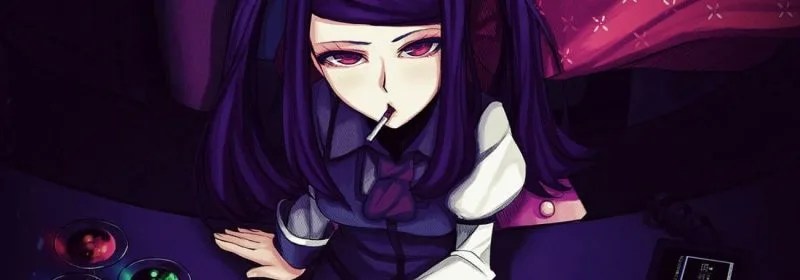
Sukeban – The Gangs of Japanese Girls
Have you heard of the Sukeban [スケバン|女番], the gangs of Japanese girl delinquents? To be more precise, this term refers to the leader of this group. These groups were very popular in the last century. Today they are practically extinct.
This term was first used in the late 60s. In the Yakuza and other gangs in Japan, women’s participation was almost not allowed. This led them to create their own. Currently, Sukeban act more as a stereotype or fashion among youth. But in the past, it was not just that.
A writer named Jake Adelstein, an expert on crime in Japan, comments on the emergence of Sukebans. He says that due to the male-dominated culture in Japan, women sought to find their space. The world was talking about feminism and liberation, which may have led these women to feel entitled to rebel like the male gangs. We will learn more about Sukebans in this article.
The Sukeban Lifestyle
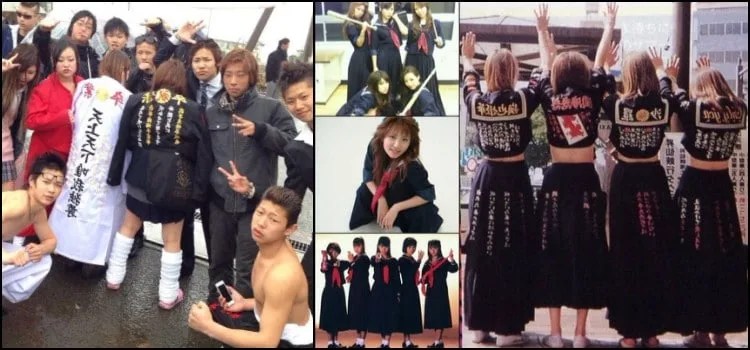
Unlike other gangs (mostly with male members) that committed crimes and promoted fights between rival groups, Sukeban were different. They maintained and followed an organized and strict code of justice. Each group of girls had a hierarchy and their own punitive means. These girls had moral values and held firmly to them.
In general, they were indicated by having dyed hair or some shiny and different hairstyle. And most always wore their school uniforms most of the time. Provocative clothing and heavy makeup were frowned upon. Initially, the gangs started with small groups of girls, entering schools with knives and cigarettes. But soon they grew in number and level of criminality. The groups varied between 50 to 80 girls. However, a certain group known as the Alliance of Delinquent Women of Kanto claimed to have about 20,000 members.
The Sukeban phenomenon reached its peak in the 70s, with the emergence of the most feared group of girls. This group was called K-Ko the Razor, coming from Saitama, Tokyo. This name refers to the weapon they used, a razor for cutting throats. They would wrap it in a cloth and place it between their breasts. No other group was more recognized than this one, even reaching the status of urban legend.

Rules, Punishments, and Fame
Among the Sukeban groups, there were many rules. And breaking these rules was not good at all, potentially resulting in “lynching.” Lynching involved various degrees of different punishments. Starting from a “light” punishment like applying a cigarette to bare skin, to applying a lit cigarette to intimate parts, considered a “medium” punishment.
The causes for these punishments are numerous and distinct, varying from gang to gang. These can include showing disrespect to older members. Talking to enemies and being caught with drugs were also valid for punishment. But the most common cause for lynching was for messing with the opposite sex.
Cheating on a boyfriend would certainly lead to lynching. These girls acted and seemed older than they really were. Another surprising fact is that they were super conservative when it came to dating, romance, and sex. However, over time, the gangs diminished, and the participants integrated into society.
Even so, since then, the media has taken great advantage of this. Various movies, animes, mangas, and even games have been created around Sukebans. Even today, traces and influences of them can be noted in pop culture and everyday Japanese life.

Leave a Reply