
When someone hears “Ichigo”, it’s almost automatic to think of strawberries. Especially if you are an anime fan or have visited Japan, this word appears everywhere. But the curious thing is that ichigo goes far beyond the fruit. Depending on the writing and context, it can mean completely different things — all with very interesting symbolic meanings.
Therefore, in this article, we will explore the different meanings of “Ichigo” in Japanese, dividing each section with one of these interpretations.
Contents 6
Strawberry in Japanese
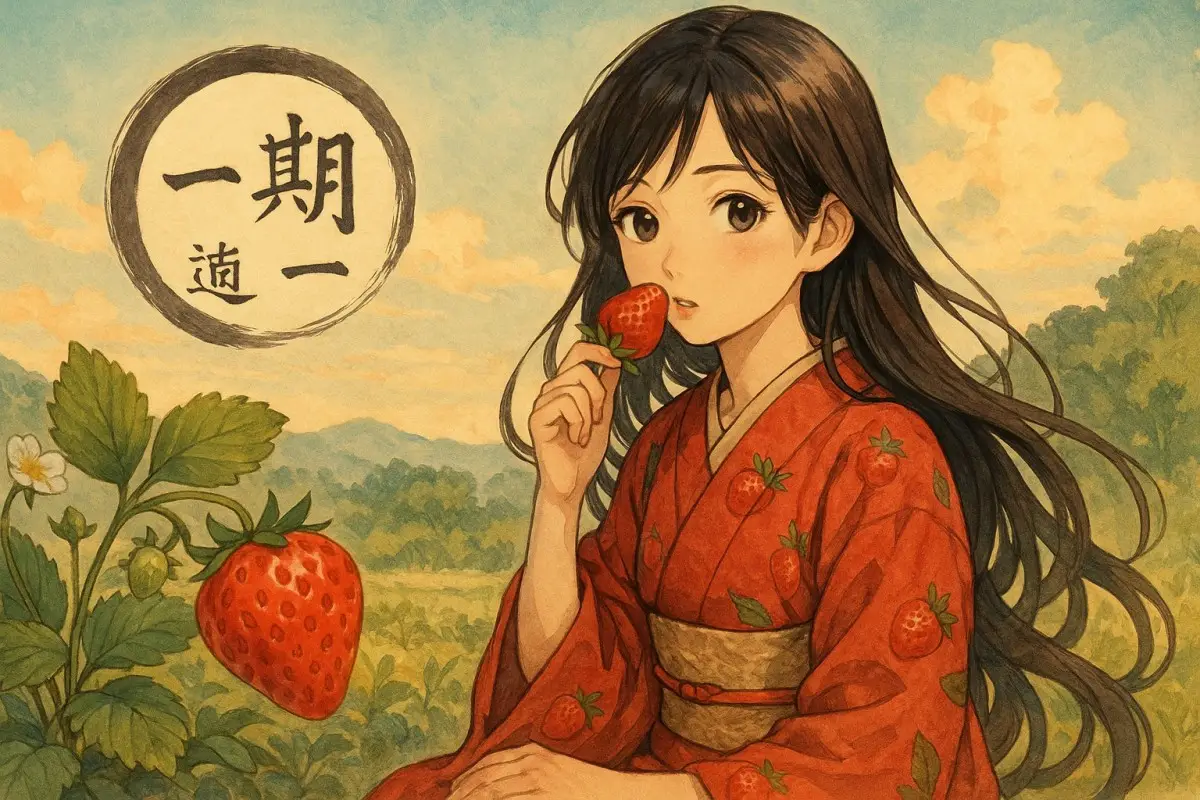
The most common and direct way to understand ichigo (いちご) is as "strawberry". In everyday Japanese, this is the most frequent writing and pronunciation, especially among children, cuisine, and pop culture.
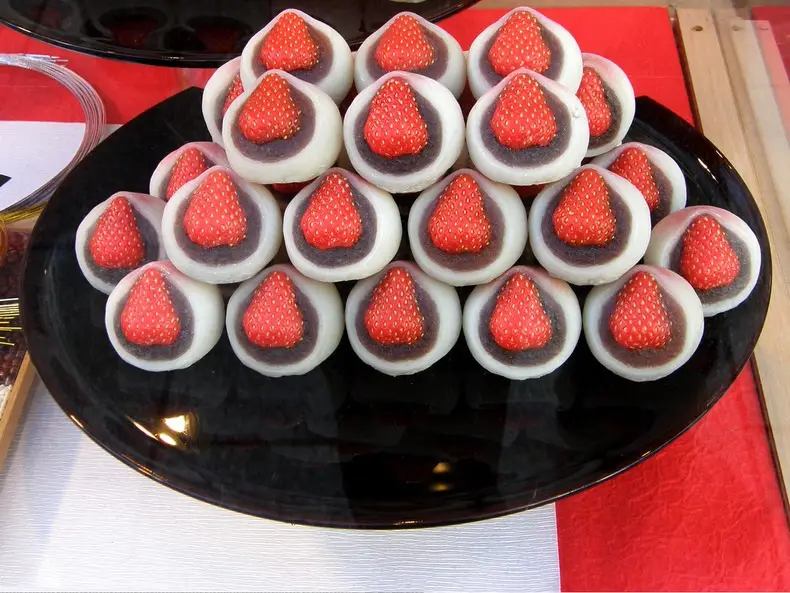
The strawberry in Japan, by the way, is a national obsession. There are entire cafes dedicated to ichigo, and Japan cultivates unique varieties like Tochiotome and the rare White Ichigo, a super sweet and expensive white strawberry.
But why are strawberries so special in Japan? Simple: they represent sweetness, delicacy, and are also symbols of femininity in many contexts — which explains their use in brands, fashion, and even character names.
Although “ichigo” means strawberry, the kanji for “strawberry plant” [苺] is rarely used. It is complicated and not very functional. Therefore, even on packaging and menus, the hiragana version predominates.
Ichigo as First
Here we start to enter the territory of proper names. A famous example is the character Kurosaki Ichigo from the anime Bleach. The kanji used in his name is 一護. Breaking down the ideograms:
- 一 (ichi) = one
- 護 (go) = protect, protection
In this context, the meaning is far from fruits. It can be interpreted as “the one who protects a single thing” or symbolically as “primordial protector”. But there is an interesting theory: the name was chosen ambiguously just to play with the idea of “strawberry”, creating a contrast between the appearance of the name and its symbolic strength.
And there’s more. Depending on the form of writing, ichigo can be read as "first number of a cycle", something important in rituals, ceremonies, and even in spiritual meanings. Variations like first child using the kanji 子 are common.
Ichigo as Character or Brand Name
In the world of anime, Ichigo appears frequently. Besides Kurosaki Ichigo, we have characters like Momomiya Ichigo from Tokyo Mew Mew, whose personality is linked to sweetness — reinforcing the meaning of strawberry.
In brands, the name also appears as a symbol of youth and delicacy. Many candy or cosmetics companies aimed at young audiences use Ichigo in their names to evoke softness and purity.

Ichigo as a Metaphor for “Once in a Lifetime” (一期一会)
This is perhaps the deepest and least obvious meaning. Ichigo Ichie (一期一会) is a Zen Buddhist expression that can be translated as “once, a meeting” or “unique encounter in life”.
Each ideogram has weight:
- 一期 (ichigo) = a cycle of life
- 一会 (ichie) = a meeting
Together, they form the idea that each encounter between people is unique and will not be repeated in the same way. This concept is widely used in the tea ceremony, where the present moment is valued as unrepeatable.
It may seem too philosophical, but think: how many times have you been with someone, thinking you would have other chances, and never saw that person again? Exactly. Ichigo Ichie is a constant reminder that nothing repeats itself in the same way.
This concept has been gaining strength in the Western world, especially in mindfulness and minimalism practices. If you enjoy living with more presence, this is an expression that deserves space in your mind.
Ichigo as a Cycle of Life
Besides its use in expressions like Ichigo Ichie, the kanji 一期 (ichigo) alone can mean “a cycle of life”. This appears in more philosophical or spiritual contexts.
You find this term in farewell ceremonies, Buddhist rituals, and even in thank-you letters. It represents the idea of a complete moment, something that had a beginning, middle, and end.
This reading of ichigo is not common in everyday life, but it exists. And it brings an important reminder: each phase of our life has its own value, even if it is brief.
Conclusion
Ichigo can also literally be the reading of the numbers one and five. Of course, it is usually pronounced differently as juugo [十五], but if the numbers are read separately, you might end up hearing an ichigo.
Ichigo is a word with many faces. It can be a fruit, a name, a symbol of protection, or even a spiritual teaching. And the beauty lies precisely in this: Japanese is a language where identical sounds hide completely different meanings, depending on how you write and use them.






Community
Comments
0 comments
There are no published comments in this language yet.
Send comment