
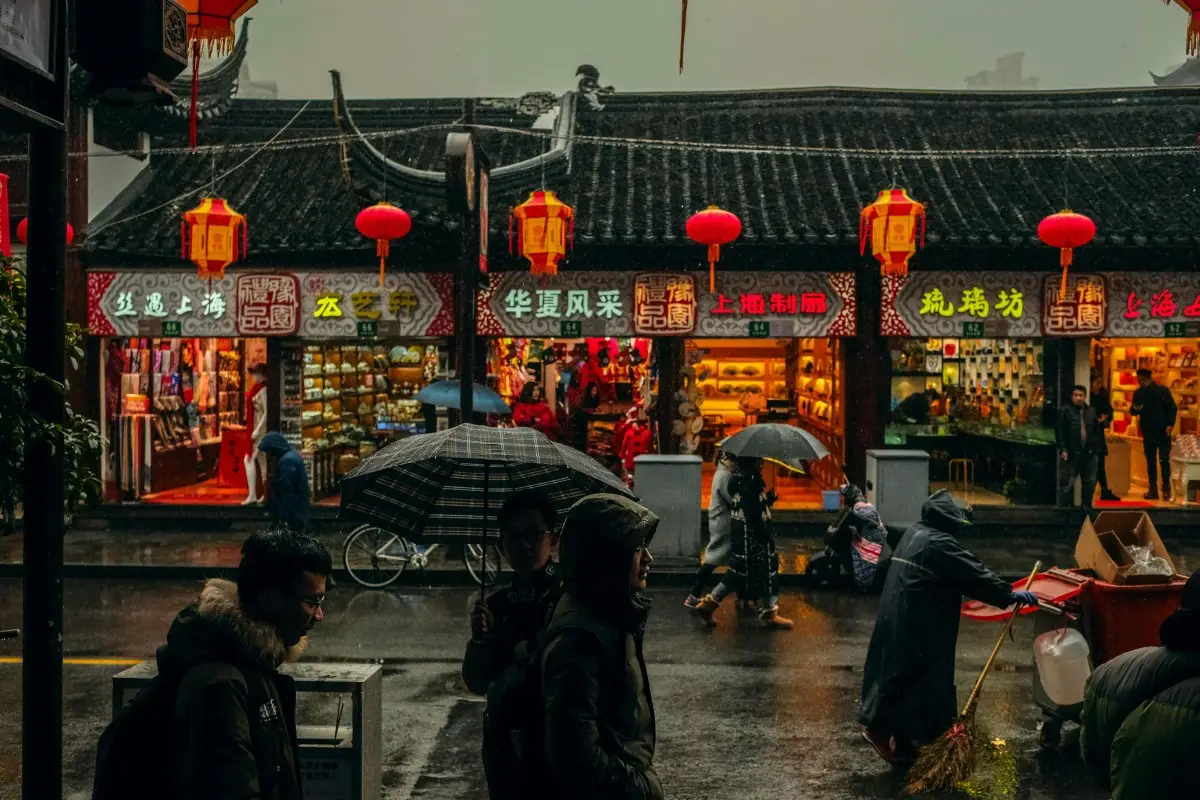
Online, the rumor keeps coming back: China supposedly gives free houses to its entire population. One number is real, though: about 90% of urban households in the People's Republic of China own their home. At first glance, that sounds like a socialist dream come true. The short answer, however, is: no, China does not give away housing. Anyone trying to buy property there runs into one of the most expensive, complex and, for outsiders, often contradictory housing markets in the world.
To understand how a country with a communist founding story reached such a high ownership rate without actually giving anything away, you have to look at what happened behind the scenes in recent decades, and why the system is now creaking at the seams.
Contents 5
Chinese home ownership: 70-year usage rights
At the heart of the Chinese model sits the concept of chǎnquán (产权), usually translated as "property right". When you buy an apartment in China, you do not actually own the land underneath it. You buy a usage right to the land, and that right is granted for a fixed period of 70 years. The building is yours. The plot it sits on is yours only for a limited time. When the 70 years expire, the usage right is usually renewed, sometimes for a fee, sometimes for free. As long as you are alive, the apartment works almost like real ownership: you can sell it, rent it out, leave it as an inheritance or give it away.
To see where that high ownership rate comes from, you have to go back to the economic reforms that started in 1978. Before that, the danwei system (单位) was in place. The state-owned enterprise you worked for did not just give you a job, it also gave you a home. Rent was symbolic, personal freedom was close to zero, and the space itself was tiny.
The real push came in the 1990s. The Chinese government privatized state housing on a large scale and let workers buy the apartments they already lived in at very low prices. It was a mass transfer of public housing into private hands. Tenants became owners almost overnight. That generation is the one carrying the famous 90% figure today. For younger Chinese, though, that door has been firmly shut for a long time.
The Hukou system and its impact on housing
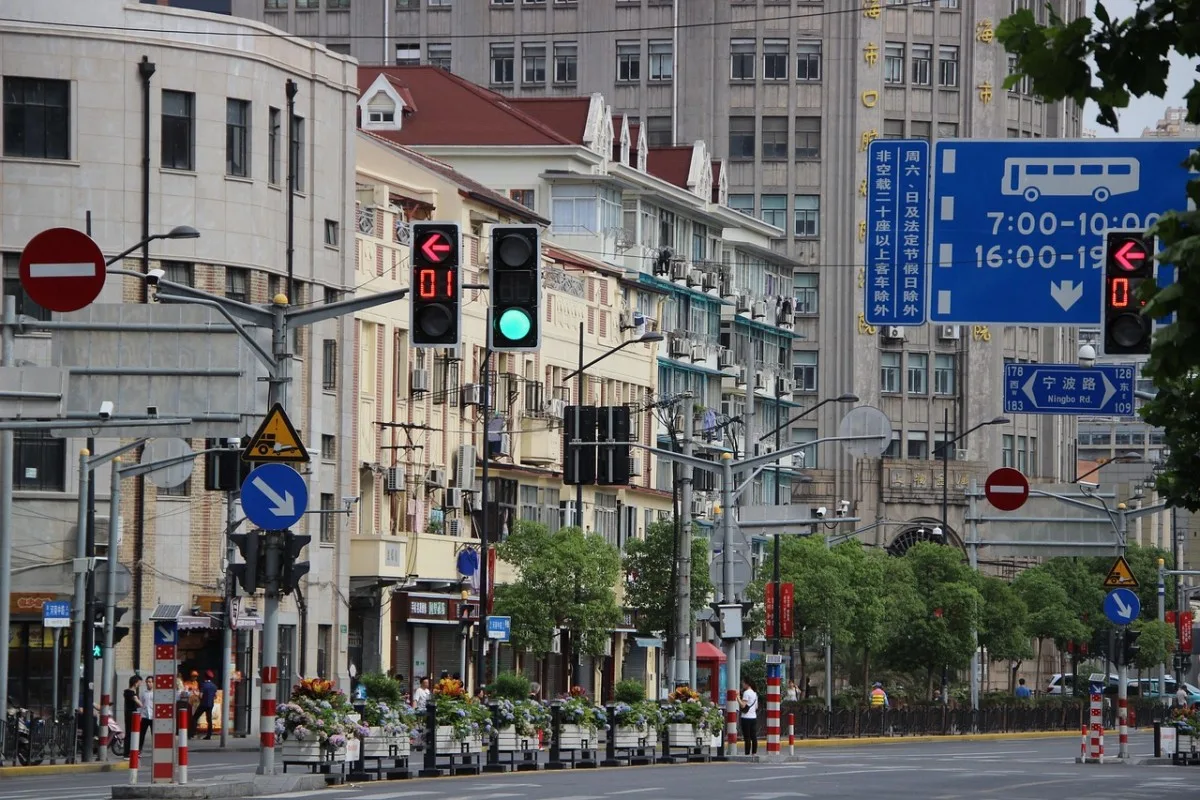
Today's Chinese housing market is a hybrid that exists almost nowhere else. It is neither fully public nor fully private. It is split into three large slices, and each of them interacts with a fourth, often invisible layer: the hukou (户口), the household registration that decides where you officially belong.
On top sits the commercial market, where the upper-middle class and wealthy buyers shop. In Shanghai, Beijing, Shenzhen and a handful of other cities, prices per square meter have climbed to levels that make New York or London look almost reasonable in comparison.
Below that, affordable housing programs are aimed at lower-income households. The word "affordable" is misleading, though: buyers still need savings, mortgage access and a long list of eligibility checks that read like a fine-tooth comb.
And then comes the hukou barrier, which is the part most surface-level analyses tend to skip. To access most state support, you need an urban hukou in the city where you live. China's migrant worker population is usually estimated at around 290 million people. If you are one of them and you left the countryside to work in a city, you are, on paper, a foreigner in your own country. Without the right hukou, the social housing system simply does not see you. The same registration that ties you to a birthplace also locks you out of subsidized housing, local public schools and a large share of city-level benefits.
Social housing programs in the PRC
China does have a real social housing system. It is just not as generous as the rumor suggests, and it is fragmented across city-level programs that change often. Three categories matter most.
Ānjì jiàshì fáng (经济适用房), or "affordable housing", is the most common subsidized ownership program. Developers build the apartments under government-set price caps, and buyers get a partial discount on the market price. The catch: the property is treated as a separate, restricted category on the housing registry, and when you sell it later, a share of the capital gain usually goes back to the government.
Liánzū fáng (廉租房), or "low-rent housing", is the public rental tier aimed at the lowest-income urban households. Rents are heavily subsidized, in some cases close to a symbolic amount. The program is run locally, the waiting lists are long, and the stock is small compared to the number of people who technically qualify.
Gòngyǒu chǎnquán (共有产权), or "shared ownership", is a more recent scheme. The buyer and a state entity co-own the same apartment, usually in a 50/50 or 70/30 split. The buyer pays only their share up front and lives in the full apartment, but when they sell, the government takes its percentage of the resale price. It is, in effect, a middle ground between renting and full ownership.
None of these programs is free. All three still require savings, stable income, paperwork and, in most cities, the right hukou.
The real estate crisis: 2020 to present
Perhaps the clearest sign that the housing system is not a planned giveaway is the wave of so-called "ghost cities" and unfinished projects that have piled up since 2020. The commonly cited estimates put the amount of unsold, empty housing stock in China at around 6 to 7 billion square meters, which is the kind of figure that is hard to visualize without a map.
That surplus is the side effect of an economy where bricks and concrete became the family safe. With the stock market volatile and other investment channels limited, Chinese households poured savings into property, often buying apartments they did not even plan to live in. The result is the paradox visible from the outside: skylines full of dark windows in one district, while in another, families on local salaries are priced out of the smallest two-bedroom unit.
Evergrande, once the country's largest developer, was the first big name to crack. By the time its restructuring was laid out in 2023, the company was sitting on roughly 300 billion US dollars in liabilities, with hundreds of thousands of presold apartments still unfinished. Country Garden followed with its own payment crisis in 2023, and several other large developers have come close to or crossed default since then. The fallout is not only financial. Across the country, buyers who paid for apartments years ago are still waiting for keys to a building that is half a scaffold.
The government has been trying, in slow motion, to engineer a soft landing. Recent measures include a "whitelist" of unfinished projects eligible for new bank financing, and pilot programs to convert stranded commercial property into rental housing for young workers in large cities. The official message has shifted: it is no longer enough to build. The state has accepted that it also has to make sure the people who work in a city can afford to live in it.
Buying vs renting for foreigners in China
For most of the 2010s, buying property in China as a foreigner was, in practice, very hard. You generally needed to have lived and worked in the country for at least one year, the list of eligible property types was short, and the upfront cash requirement was steep. In 2023, Beijing effectively closed that door further: starting that year, foreign buyers have not been allowed to buy residential property in China at all, on the grounds that the housing market is for Chinese residents first.
Renting, on the other hand, has kept moving in the opposite direction. Long-term rental apartments, professional landlords and dedicated rental platforms have grown fast in tier-one cities, and rents are still a fraction of monthly mortgage payments in the same neighborhoods. For expats, students and anyone on a multi-year assignment, renting is now the default and, in most cases, the only realistic option.
So, is the "free housing" rumor true? No. What China has built is something stranger and harder to summarize: a country where owning a home is the social default, but where getting there, and staying there, is shaped by a 70-year usage right, a household registration system, a small set of subsidized programs, and a real estate market that has spent half a decade trying to deflate without crashing. The 90% figure is real. The free part was never part of the deal.



Community
Comments
0 comments
There are no published comments in this language yet.
Send comment