
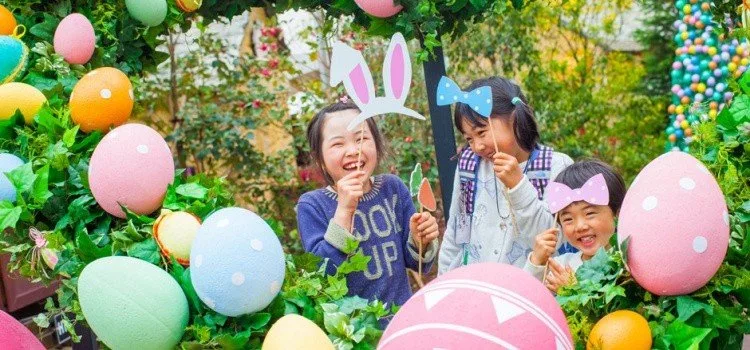
Easter in Japan is not as popular as in other countries, many people are not even aware of its existence. This is because the number of Christians in Japan is less than 5%. In this article, we will talk a little about this holiday in Japan.
Ironically, Christmas, despite being a Christian holiday, is widely talked about and celebrated in Japan, albeit in a different way. So why is it not the same with Easter in Japan? Why is it not as popular?
Easter in Japanese is called fukkatsusai [復活祭] where fukkatsu means resurrection and sai means festival. The holiday can also be referred to as “iisutaa” [イースター] derived from the English “easter”.
We recommend reading: Christmas in Japan – How do the Japanese celebrate Kurisumasu?
Table of Contents
Easter is unknown to the population
Christmas has become quite popular in Japan and has turned into a kind of Valentine’s Day and a very commercial holiday due to various aspects discussed in the recommended article.
On the other hand, Easter has not become popular even commercially, there are few products for sale, and some Japanese people have no idea what it is about. Some even confused the English word “easter” with star.
This holiday did not work out well because the Japanese do not usually exchange gifts on commemorative dates. They already exchange gifts quite a bit when visiting or as a form of thanks, even on Japanese Christmas, it is not common to exchange gifts.
The only date that popularized the exchange of gifts was Valentine’s Day and White Day. This is one of the main reasons we find almost no Easter products for sale like in other holidays that dominate Japan.
Valentine’s Day in Japan already involves the exchange of chocolates and takes place in February and March. What about another holiday involving chocolates? Not to mention that at the beginning of April, another event called Hanami takes place.
Growth of Easter in Japan
Interest is increasing every year, some stores are making Easter-themed products and sweets and are achieving results. Most of the time these stores have some international connection, or are large brands.
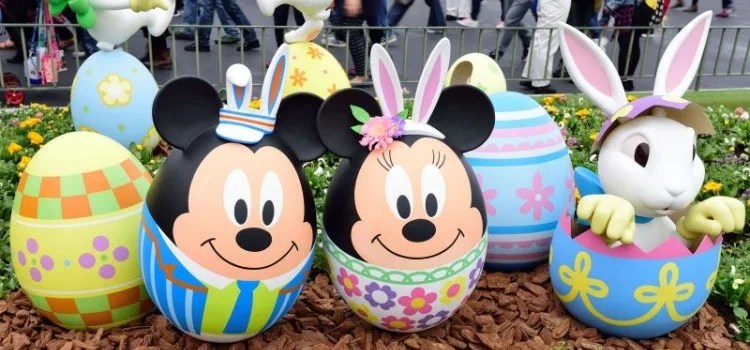
Disney is one of those helping Easter spread in Japan through its special events, other events also take place such as Uki Uki Easter in Sengawa in Chofu – Tokyo.
Easter is basically a date to celebrate the resurrection of Jesus Christ. However, unfortunately, this date has become something commercial and full of non-biblical traditions. I personally find the connection of the holiday with rabbits and chocolates absurd.
Each country has its own way of celebrating, some countries do not even eat Easter eggs but other dishes. Similarly, I believe that Christians in Japan have their own way of celebrating without being influenced by commercial marketing.
Japanese Vocabulary ABOUT EASTER
- 復活祭 – Fukkatsu-sai – Easter
- イースター・Iisutaa – Easter
- ハッピー イースター – Happii Iisutaa – Happy Easter
- イエス キリスト – Iesu Kirisuto – Jesus Christ
- チョコレート – Chokoreeto – Chocolate
- うさぎ – Usagi – Rabbit
- 卵 – Tamago – Egg
Fertility Festival in Japan
The Fertility Festival in Japan is known as “Kanamara Matsuri”, also called the “Steel Phallus Festival”, which is celebrated in Kawasaki, in early April. The festival is known for its processions with large phallus statues, symbolizing fertility and male virility.
Both festivals take place at the beginning of April and celebrate fertility and life. In the “Kanamara Matsuri”, participants carry phallus statues and celebrate male fertility, while at Easter, the eggs symbolize fertility and the rebirth of life in spring. The rabbit, which is also a symbol of Easter, represents fertility and new life.
Despite the cultural and religious differences, we can see that there is a certain convergence of themes and symbols between these two celebrations, especially regarding the idea of fertility and rebirth.
Leave a Reply