
Breaking down songs was meant to be a series, but so far only one article has appeared: 光るなら, written when my knowledge was still limited. This time we return to the series with Amefurashi no Uta, the rain song from Soredemo Sekai wa Utsukushii. The song is slow, the pronunciation is clear, and the grammar it uses appears in many other Japanese songs.

Contents 10
The song and the anime
Soredemo Sekai wa Utsukushii (それでも世界は美しい) is a 2014 anime based on the manga by Dai Shiina. The story follows Nike, a princess of the Rain Duchy who can summon rain by singing, and Livius, the Sun King. Amefurashi no Uta appears in key scenes and mixes Japanese with English, as anime songs often do.
The song is not a major hit, and the style may not be to everyone's taste. We chose it because it is slow and articulates the syllables clearly, which makes it useful for pronunciation and vocabulary.
Why the lyrics work for learning
The text uses simple Japanese with structures that appear constantly: the たい form for desires, ように for a wish or a hope, the -te form to connect actions, and a final の with an explanatory tone. The vocabulary comes from nature, feelings and relationships.
Repetition helps as well: the chorus returns several times and fixes the structures without conscious memorization. If you listen to the whole song and then repeat it verse by verse, the particles start to sound familiar.
First verse: sorrow rising
今日生まれた 悲しみが 空へ舞い上がる means «the sorrow born today rises into the sky». 今日 (kyō) is «today», 生まれた (umareta) is the past form of 生まれる, «to be born», and 悲しみ (kanashimi) is «sorrow». The particle が marks the subject, 空 (sora) is «sky», and 舞い上がる (maiagaru) describes something rising as if swirling upward.
The image matters: sorrow does not stay still, it rises. That link between emotion and movement is typical of the lyrics and helps you remember the verb 舞い上がる with a mental picture.
Desire and fate
あなたを守りたい 運命に触りたい means «I want to protect you, I want to touch fate». あなた is «you», 守りたい (mamoritai) is «want to protect», 運命 (unmei) is «fate» and 触りたい (sawaritai) is «want to touch». The たい form attaches to the stem of the -masu form: 守ります → 守りたい.
The structure appears twice in a row, which makes it easy to memorize. In the chorus, the personal wish (to protect) sits beside a larger idea (fate), and that tension is the emotional center of the song.
The English chorus
Like many anime songs, the lyrics include an English line: «It's a tender rain / Singing in the rain». It is not a translation of the Japanese, but a stylistic contrast that reinforces the image of rain. For learners, it is a good chance to notice how a song can mix two languages without losing coherence.
The English line does not prevent you from understanding the Japanese text, but it is worth knowing that not everything in the song is Japanese and that English passages are not always translated literally.
Nearness and certainty
あなたのもとへ この歌が 届きますように means «may this song reach you». もとへ means «to where someone is», この歌 is «this song», and 届きますように expresses a wish with ように. This structure is very useful: it can express a hope that something happens, from hoping for rain to hoping someone recovers.
Another line, こぼれた涙 胸のくぼみを 喜びで満たしたいの, means «the tears that spilled, the hollow in my chest I want to fill with joy». こぼれた is «spilled», 胸 (mune) is «chest», くぼみ is «hollow» and 満たしたい is «want to fill». The final の adds an explanatory or emotional tone common in songs and in feminine speech.
The vocabulary to keep
From this song it is worth keeping: 空 (sora, sky), 風 (kaze, wind), 雨 (ame, rain), 涙 (namida, tear), 胸 (mune, chest), 守る (mamoru, protect), 触れる (fureru, touch), 届く (todoku, reach) and 喜び (yorokobi, joy). They appear in songs, anime and everyday conversation.
If you want to look up 空 or 届く in more detail, a dictionary such as Jisho gives readings, examples and compounds. For grammar, read an introduction to the たい form and the ように structure before returning to the song.
Singing without stumbling
Read the lyrics aloud first and mark the pauses. The Japanese of the song contains long vowels (舞い上がる, 満たしたい) and sounds that are held; exaggerate the length at first so your ear gets used to it. Then listen to the original and repeat a single line rather than the whole song.
The small っ (tsu) marks a short pause: it does not appear in こぼれた, but it does in words like ずっと. Practice those pauses by clapping or tapping the table lightly before you sing. Speed comes naturally once the pronunciation is stable.
What the text says
The song speaks of sorrow that becomes rain, the wish to protect the person you love, and the hope that the song reaches them. The story is simple: an emotional plea with images of sky, wind and water.
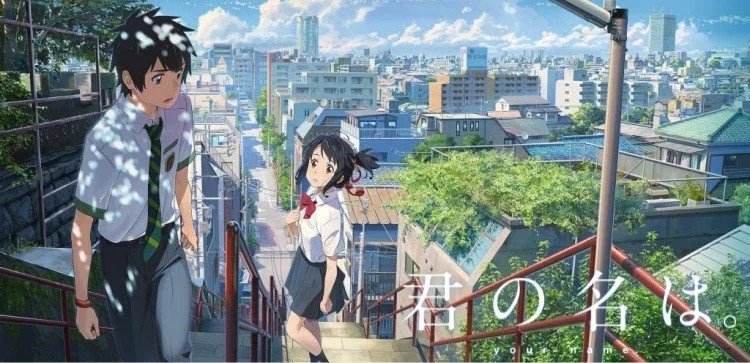
More song analyses in the articles on Ichiban no Takaramono, Zankoku na Tenshi no Teeze and Sparkle from Your Name.
Conclusion
Amefurashi no Uta is a plain song with very useful structures: たい, ように, the -te form and the final の. Working through it verse by verse trains pronunciation, vocabulary and grammar at the same time. The real challenge lies in repeating the song patiently, not in the text itself.




Community
Comments
0 comments
There are no published comments in this language yet.
Send comment