
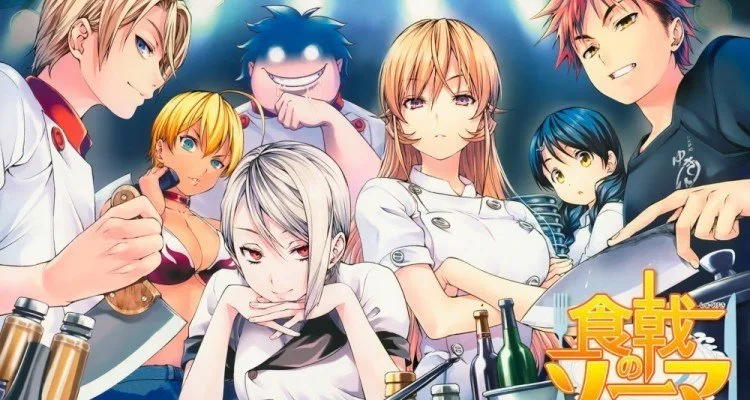
Shokugeki no Souma (食戟のソーマ) is a cooking manga written by Yuto Tsukuda and illustrated by Shun Saeki. Its great hallmark is that it conveys emotion and fighting spirit – so much so that it became one of the cornerstones of Shonen Jump. The series got so popular it spawned an anime, light novels, and even a cookbook you can actually cook from.
The work tells the story of a young man named Soma Yukihira who has to attend an elite culinary school, does things his own way, and constantly faces the impossible. The series is genuinely indescribable – I never imagined a simple cooking anime, with a touch of ecchi and plenty of over-the-top moments, could be this good.
A few of the details below may spoil early arcs if you have not started yet. P. S.: Did you notice that the level of ecchi dropped significantly in the second and third seasons?
Contents 5
What 食戟 actually means
Shokugeki (食戟) shows up in the title and in the academy battles, but those two kanji do not literally mean “food war”. The first character (食) means “food”. The second (戟) is a ji, a kind of Chinese halberd. That same character also appears in words tied to wars and blade fighting. The international title Food Wars! catches the mood without being a word-for-word translation: the plate is the weapon.
The elite school itself is called Tōtsuki (遠月). A shokugeki there is not a casual cook-off between friends. It is a formal duel with stakes – clubs, budgets, pride, sometimes whether you stay at the academy at all.
Real recipes and the official cookbook
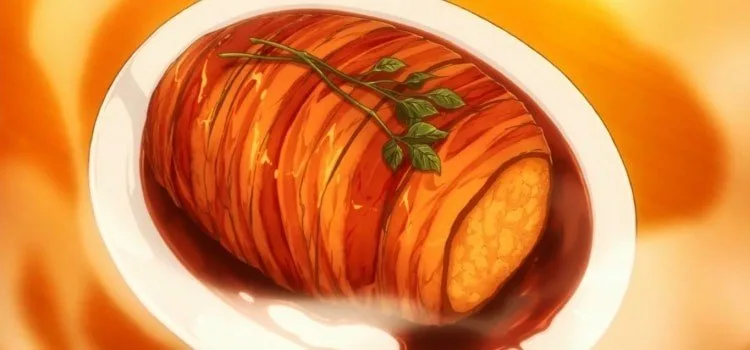
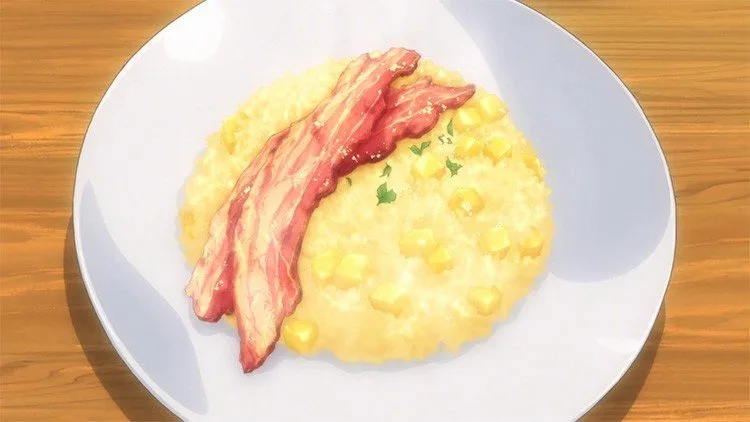
Season one of the anime cooks dozens of dishes, from Soma’s fake roast pork to eggs, curry, and donburi. There is even an official Shokugeki no Souma recipe book: 食戟のソーマ 公式レシピブック ~遠月学園勝負の一皿~, published by Shueisha in 2015. The recipes come from chef and cookbook author Yuki Morisaki, who consulted on the food while the manga was running. Some of those dishes can be cooked from our kitchen too, including the Gotcha Pork Roast and the apple risotto.
The plates on screen were never meant to be pure fantasy. The production worked with professional kitchen advice so techniques and ingredients would still make sense – even when the characters’ reactions go wildly over the top. In the collected volumes you often get a short recipe in the margin; the official book gathers cookable versions with color photos.
Why the tasting scenes go so far
Have you ever wondered why Shokugeki no Souma has such exaggerated ecchi moments? According to the creators, the spark came from illustrator Shun Saeki: a girl eating food who slips into a kind of ecstasy. Tsukuda built the story around that, and Morisaki supplied the kitchen. Saeki had also drawn adult manga under another name before Weekly Shonen Jump, which is why those tasting scenes go as far as they do.
If you only know season one, you expect a nude metaphor with every bite. Watch further and the cooking duels, Tōtsuki politics, and the Elite Ten take more of the runtime. That is why the ecchi feels thinner later – not because the show suddenly turned modest, but because the stakes of each shokugeki got larger.

Openings: who really sings the first one
Each season’s opening comes from a different Japanese band. The first season’s opening, “Kibou no Uta” (希望の唄), is still an earworm for a lot of fans – sung by Ultra Tower, not nano.RIPE. nano.RIPE shows up later: “Snow Drop” as the second season ending, more endings after that, and finally “Last Chapter” as the opening of the fifth season.
Season one even swaps its own opening. After the first 14 episodes, “Rising Rainbow” by Misokkasu takes over. Mix playlists casually and the mix-up is easy, because nano.RIPE spent so many years attached to the franchise.
Manga, anime, and what came after
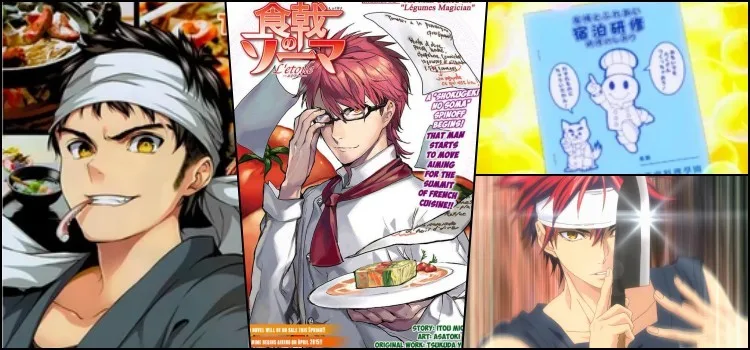
In the original one-shot, the protagonist has shorter black hair. There is also a spin-off manga about Shinomiya Kojiro, Shokugeki no Souma: L'étoile, serialized on Shonen Jump+ in eight volumes. Another related release was a limited drama CD bundled with volume 11 in 2015.
One last tip: if you have not watched the series yet, consider starting with the manga. J.C.Staff’s anime runs five seasons and 86 episodes (2015 to 2020) and does reach the end of the story. The Weekly Shonen Jump manga (2012 to 2019, 36 volumes) plus the Le dessert epilogue is still the quieter, more detailed version: margin recipes, character notes, and the rhythm of the kitchen often land more clearly there.
There are light novels too – including À la carte and Fratelli Aldini. Viz published the manga in English; the anime reached English-speaking audiences through Crunchyroll, Sentai Filmworks, and later Adult Swim’s Toonami block.


Community
Comments
0 comments
There are no published comments in this language yet.
Send comment