
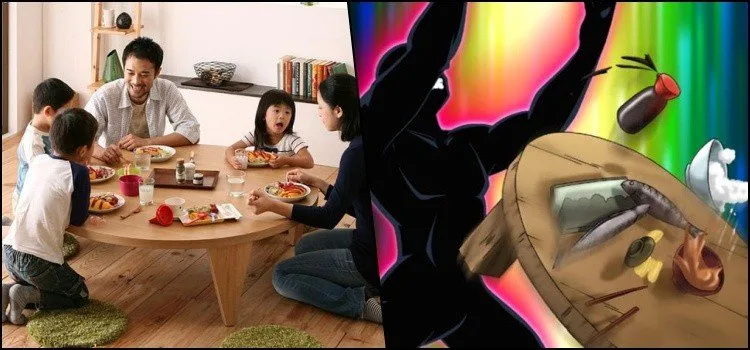
When someone snaps in a Japanese living room, the furniture that flies is a chabudai (卓袱台): a low wooden table, only 15 to 30 cm off the floor, light enough that two angry hands can send it spinning. That outburst — and the idiom that grew from it — is chabudai gaeshi (ちゃぶ台返し).
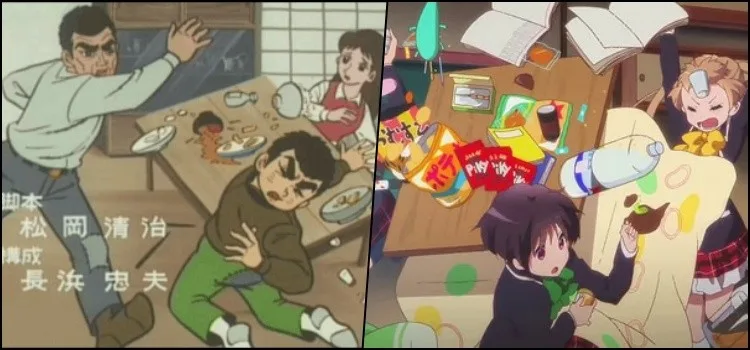
The bowls go airborne, the rice hits the floor, and the table usually lands upside down on the mess instead of sailing across the room. Old TV shows and manga turned that scene into a gag about stubborn fathers. The picture stuck so hard that people still type (╯°□°)╯︵ ┻━┻ when a match crashes or a plan falls apart.
Contents 5
What a chabudai actually is
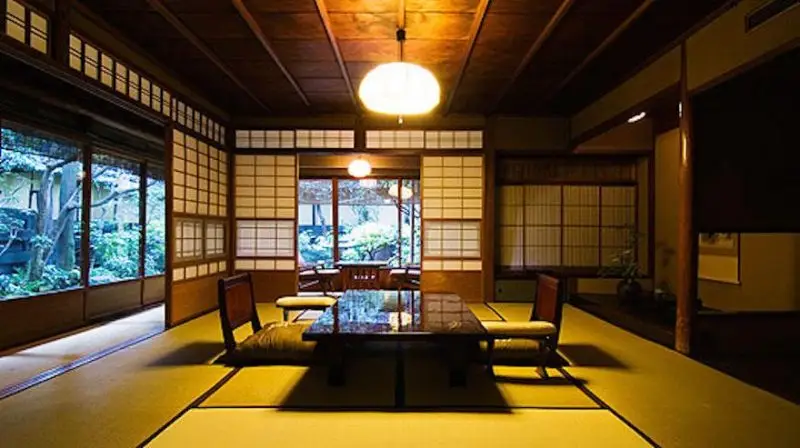
Chabudai tables sit on tatami. People gather around them on a zabuton or directly on the floor. The same low table could be used for studying, sewing, games, or dinner. In winter, many homes swap it for a kotatsu, a heated table with a quilt.
The four legs usually fold, so the table can be put away when the room becomes a bedroom. That collapsible design is part of the joke: the family table is the center of the house, and it is also easy to wreck in one motion. Shared chabudai meals became common from the Taisho period into the postwar decades, replacing older individual tray tables (zen). By the 1970s, Western-height tables with chairs were already taking over city apartments, which is one reason the flip now reads as old-fashioned.
What chabudai gaeshi means
Literally, the phrase means flipping the chabudai. In practice it is dinner in mid-meal: plates, bowls, and food going up with the table. The usual motion is both palms under the near edge, then a throw straight up. Dishes look spectacular in the air; they rarely travel far, because the table turns over and comes down on top of them.
The idiom later left the living room. When a boss scraps a nearly finished plan and forces everyone back to zero, Japanese speakers still call it chabudai gaeshi. At Nintendo, Shigeru Miyamoto’s teams used the same image — in English, “upending the tea table” — for the moment a game is thrown out and rebuilt. Miyamoto has described the literal flip as something old-fashioned Japanese fathers did, an act that would wreck a family if you tried it at the table today.
The stubborn-dad image on TV
The act of flipping the table in anger became a trademark of frustrated husbands and fathers in TV shows, manga, and anime. Two titles usually get named: the 1968 anime Star of the Giants (Kyojin no Hoshi / 巨人の星), from a manga that began in 1966, and the 1975 drama Terauchi Kantarou Ikka (寺内貫太郎一家).
Ittetsu Hoshi, the harsh baseball father, is the face people remember. The end credits looped him knocking the family table so often that chabudai gaeshi stuck to the character. In the story itself it barely happens, and it is closer to shoving the table aside and hitting his son Hyuma than to a clean, two-handed flip. The original manga does not even show the table going over. The 1975 sitcom did the mess as comedy: father Kantaro dumping dinner when he boiled over — sometimes on a heavier wooden table that would not fold like a true chabudai.
That is why the gag still reads as dated parenting. The flip is funny on screen because it destroys the shared meal. Off screen, it is the kind of outburst nobody wants at home.
Table-flip kaomoji
Japanese message boards built a whole family of kaomoji (顔文字) for the same tantrum: a face, two arms, and a table drawn with box-drawing characters. They grew on Japanese PC networks in the 1980s and 1990s, then traveled west through games and forums. The version most English speakers know is (╯°□°)╯︵ ┻━┻. A few of the older sets even throw the table at someone, which is cartoon slapstick, not how a real chabudai gaeshi works.
- (ノ≧∇≦)ノ ミ ┸┸)`ν゚)・;’;
- (ノTДT)ノ ┫:・’.::・┻┻:・’.::・
- (ノ≧∇≦)ノ ミ ┸━┸
- (ノ*`▽´*)ノ ⌒┫ ┻ ┣ ┳
- (ノ`m´)ノ ~┻━┻ (/o\)
- ⌒┫ ┻ ┣ ⌒┻☆)゚⊿゚)ノWTF!
- ┻━┻︵└(´▃`└)
- (ノ ̄皿 ̄)ノ ⌒=== ┫
- (-_- )ノ⌒┫ ┻ ┣
- ┻━┻ ︵ヽ(`Д´)ノ︵ ┻━┻
- ノ`⌒´)ノ ┫:・’.::・┻┻
- (┛ಸ_ಸ)┛彡┻━┻
- (╯°□°)╯︵ ┻━┻
- (┛✧Д✧))┛彡┻━┻
- (┛◉Д◉)┛彡┻━┻
- (ノ`⌒´)ノ ┫:・’.::・┻┻:・’.::・
- (ノಥ,_」ಥ)ノ彡┻━┻
- (ノ´・ω・)ノ ミ ┸━┸
- (╯ರ ~ ರ)╯︵ ┻━┻
- ─=≡Σ((((╯°□°)╯︵ ┻━┻
- ┻━┻ミ\(≧ロ≦\)
- ┻━┻ ︵ ¯(ツ)/¯ ︵ ┻━┻
- ミ┻┻(ノ>。<)ノ
- .::・┻┻☆()゚O゚)
- ┻━┻︵└(՞▃՞ └)
- (ノ`´)ノ ~┻━┻
- (ノಠ益ಠ)ノ彡┻━┻
- ヽ༼ຈل͜ຈ༽ノ⌒┫ ┻ ┣
- ༼ノຈل͜ຈ༽ノ︵┻━┻
- ミ(ノ ̄^ ̄)ノ≡≡≡≡≡━┳━☆() ̄□ ̄)/
- (ノ`A”)ノ ⌒┫ ┻ ┣ ┳☆(x x)
Cho Chabudai Gaeshi, the arcade game
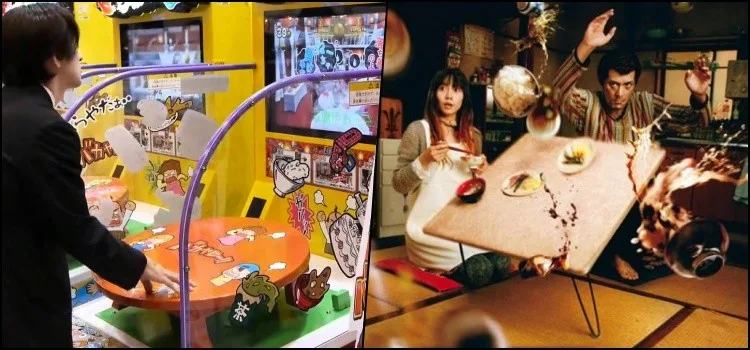
The same outburst became an arcade cabinet. Taito’s Cho Chabudai Gaeshi (超・ちゃぶ台返し!), roughly “super table flip,” arrived in Japanese arcades in fall 2009. You play on a plastic table bolted to the machine: sixty seconds to slam the surface, knock things around, then yank the table over for the finish. Hinges keep it from flying into the next cabinet.
Four stages were on the original: a family living room, a wedding, a host club, and a stressed office. A play cost 100 yen. IGS licensed it overseas in 2010 as Anger Explosion. Taito followed it in Japan with Cho Chabudai Gaeshi 2, which added extra stages and a two-player mode the first cabinet did not have.
The chabudai was the family’s shared table. Flipping it wrecks the meal and the mood in one motion, which is why the TV gag works and why the same phrase means “throw the whole plan out.” If you only know the kaomoji, the missing piece is that short wooden table on the tatami — light, foldable, and sitting right in the middle of the house.

Community
Comments
0 comments
There are no published comments in this language yet.
Send comment