
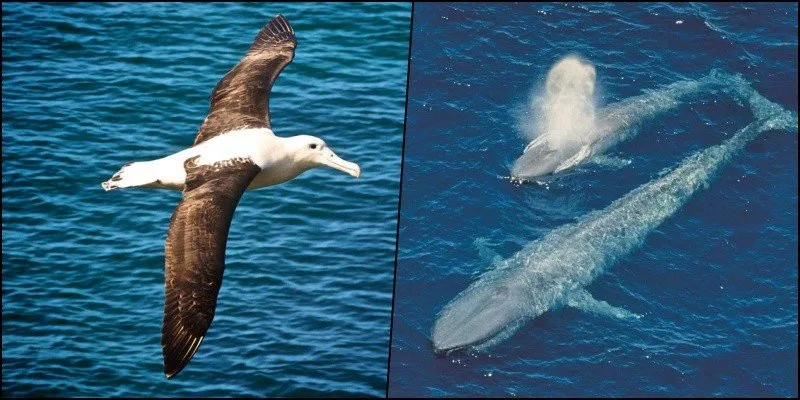
Although the first images of Japan remind us of large urban centers like Tokyo and Osaka, Japan has a diverse fauna that is of great importance to the Japanese people who try to conserve the existing species.
Unfortunately, Japan has many species at risk of extinction, and its history includes several species that are already extinct! Mostly due to human greed, but currently illegal hunting and improper consumption are declining.
Despite extinct and threatened species, there are about 130 types of terrestrial mammals, more than 600 species of birds, about 73 species of reptiles, and more than 3,000 different types of fish. Many of these animals are on the brink of extinction and are rarely found outside Japan. The Japanese fauna deserves to be explored, so we will look at 5 animals from the Japanese fauna that are threatened with extinction.
Table of Contents
Albatross
Albatrosses are large birds belonging to the family Diomedeidae, being seabirds that are extremely adapted to life in the open sea, found on land only during mating season. They are monogamous and tend to form large colonies of their species.
They are excellent swimmers, as they have all their toe digits facing forward and connected by an interdigital membrane that also aids in landings and takeoffs on the water. Albatrosses have a salt gland that removes excess sodium chloride from the blood, and they also have thermal protections.
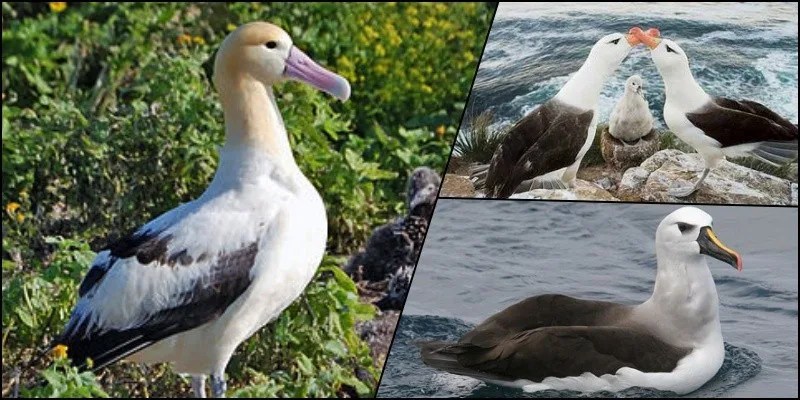
Unfortunately, in Japan, they are threatened with extinction, and this, as bad as it may seem, is a consequence of human causes. According to the Ministry of the Environment, there are about 3,000 short-tailed albatrosses living in Japan. Although there are other species such as the black-footed albatross, wandering albatross, and Laysan Albatross, only the short-tailed albatross is protected as it is considered a Threatened species.
The extinction of albatrosses came from human greed. Since the 19th century, albatrosses have been hunted, as in countries like the United States, the feathers of albatrosses were highly valued in the market, and in various mass slaughters, the population of albatrosses fell drastically, with more than 300,000 bird deaths.
In 1993, the Ahōdori (as it is known in Japan) was added to the list of rare wild animals protected by the Endangered Species Conservation Act. According to statistics, in 1990, the population of albatrosses was around 1,200 birds. By 2010, it is estimated that there were 2,570 albatrosses on Torishima, Izu Peninsula.
Blue Whale
The blue whale is the largest mammal on the planet, weighing an incredible 180 tons and measuring between 30 and 35 meters in length. Since everything about it is large, it is not enough to mention its diet, as a single adult blue whale can consume almost 4 tons of krill per day.
Although we cannot hear them, the song of blue whales is one of the loudest sounds produced by an animal. They communicate with each other using moans and a series of low-frequency pulses. Under ideal conditions, a blue whale can hear the song of another from distances of up to 1,600 km.
Unfortunately, it is threatened with extinction due to human hunting, especially in countries like Japan. The decline of the blue whale began more specifically in 1864, when the Norwegian ship Svend Foyn was equipped with harpoons specially designed to capture large whales.
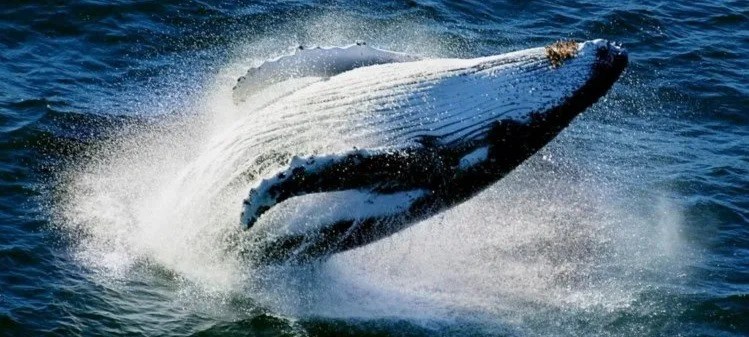
Quickly, the slaughter of whales became convenient. In 1925, the United States, the United Kingdom, and Japan joined Norway in whaling. In just 5 years, 44 ships killed 28,325 blue whales. After World War II, the population of blue whales was already scarce, and in 1946, the first laws to restrict hunting began to emerge. Unfortunately, the true prohibition only came in the 1960s, with over 350,000 blue whales dead.
Currently, the population of blue whales is estimated to be three to four thousand. A large part of the blame for the near extinction of this whale lies with Japan, being one of the largest countries specialized in whaling, claiming, in current times, that they use them for research, although many countries and whale protectors question this.
Japanese Crane
The Japanese crane or Tsuru is a species of bird that lives in East Asia, especially in Hokkaido, Japan. They have an estimated lifespan of about 50 years and are a species quite loyal to their partner, having relationships until death.
They are migratory birds; in spring and summer, these animals/birds live in Siberia, where the female lays two eggs each year, but only one chick will survive. In autumn, they migrate to the warmer places in Asia (Manchuria, Japan, Korea); they prefer wetlands where they can find abundant food (mice, frogs, large insects, and also seeds, leaves, and branches).

It is estimated that there are only 1,000 of them, with a high risk of extinction, however, with great encouragement for the preservation of the species. The consequence of this comes from illegal hunting and habitat destruction. Cranes are famous in Japan through legends and origami.
Iriomote Cat
It is a feline exclusive to Iriomote, a small mountainous tropical island in the far south of the Ryukyu archipelago. Since its discovery in 1967, it has been considered an endangered animal. This, in turn, is declining towards extinction due to habitat loss and deaths from traffic accidents. Its population is estimated to be between 100 and 109 felines of the species.
They are cats with nocturnal habits, capable of climbing trees and even swimming, with a varied diet, feeding on mammals and others. It is considered a wild cat. Discovered in 1965 and mentioned only in 1967, it was initially considered a unique species, but after DNA tests, it is suggested that the Iriomote cat may be a subspecies of the Southeast Asian leopard cat.

Giant Japanese Salamander
Japanese salamanders are different from the more common salamanders, which can even be confused with small lizards. There is no estimate of how many exist, but researchers state that they have a long history in ancient times.
It is the second largest amphibian on the planet, measuring about 1.5 meters and weighing up to 36 kilograms, and even though it has a very strange appearance, it is indeed one of the most curious animals on our planet Earth! The National Geographic reveals that the animal can bite off a piece of a human’s finger in a matter of seconds.
Even with this power, the salamander is the one threatened with extinction by humans. After being targeted for food, the species is now protected as a national treasure in Japan, and there are great efforts to ensure that it can be preserved and reproduce in captivity. Rare, these animals only come out of their hiding places at night and live in cold water rivers near mountains.
Leave a Reply