
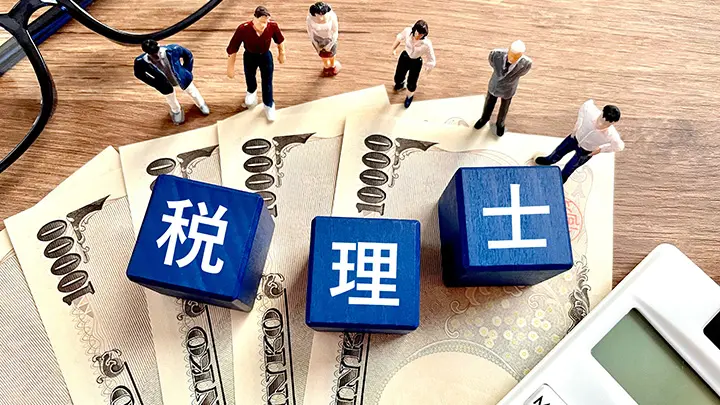
Accounting in Japan can feel intimidating at first, especially when your income, receipts and forms move between Japanese and another language. The useful starting point is not to memorize every rule. First identify how you earn money: as an employee, a sole proprietor or through a company. That tells you which records matter and when it is worth speaking with a zeirishi (税理士), Japan's certified public tax accountant.
This guide gives foreign residents and business owners a practical map. It does not replace advice on a particular return, but it will help you prepare better questions, keep cleaner records and avoid leaving important paperwork until filing season.
Contents 8
Start with your work and business status
Many employees have income tax adjusted through their employer's year-end process, known as nenmatsu chōsei (年末調整). That does not mean every situation is finished automatically. A second income stream, rental income, overseas matters, investment income or deductions that were not handled by an employer can change what you need to do.
Freelancers and sole proprietors usually need a routine for recording income and expenses throughout the year. Companies have another layer: corporate bookkeeping, financial statements, payroll and tax filings may all have different schedules. If you are still preparing a company, keep the accounting discussion close to your business registration steps; early choices can affect the documents you need later.
Build a recordkeeping habit before you need it
Good accounting is less about a dramatic clean-up in February and more about having a trail you can follow. Keep invoices, receipts, bank and card statements, contracts, payroll records and proof of major payments. For a business expense, note what it was for while the purpose is still obvious. A receipt without context is harder to explain months later.
- Keep business and personal spending separate whenever possible.
- Save digital copies in an organized folder, but do not discard originals when a rule or your adviser requires them.
- Match invoices and receipts to the payment record rather than relying on memory.
- Record the date, amount, currency and business purpose for cross-border payments.
- Ask early which documents your accountant wants each month or quarter.
Japan has national, prefectural and municipal taxes, so the bill attached to one activity can be different from the next. Our list of taxes in Japan is a useful companion when you need to distinguish the terms on a notice.

What a zeirishi can help with
A zeirishi is a licensed tax professional. Their work can include preparing tax documents, advising on tax matters and representing a taxpayer in tax procedures. Some offices also support bookkeeping, payroll coordination and company setup, but the exact service differs from firm to firm.
For a straightforward situation, you may mainly need help with a final return. For a business, monthly bookkeeping and an annual closing can be separate parts of the engagement. Ask what is included before you hand over a year of receipts: data entry, tax filing, consumption-tax work, payroll, meetings and replies to the tax office are not always bundled together.
How to choose an accountant in Japan
Language support matters, but it is only one part of a good fit. Confirm that the licensed professional—not only an assistant—can explain the work you are paying for. If you have income or assets connected to another country, ask whether the office routinely handles cross-border cases and works with overseas advisers when necessary.
- Check the professional's registration and the office's area of practice.
- Describe your real situation: employment, freelance work, company income, dependants, overseas income or property.
- Request a written scope and fee estimate, including year-end work and extra filings.
- Ask how documents are shared and how quickly questions are normally answered.
- Find out who will prepare the work and who will review it before filing.
Recommendations from a chamber of commerce, a professional network or people in a similar line of work can be useful starting points. Still, choose based on your own records and tax position, not on a generic promise that one office is right for everyone.
Fees: compare the work, not only the quote
There is no single reliable price for an accountant in Japan. Fees vary with the number of transactions, the quality of your records, payroll, consumption-tax obligations, company size, language support and whether the work involves more than one country. A low monthly quote can cover only bookkeeping, while the annual closing and return are charged separately.
Before signing, ask for the fee structure in writing. It should make clear whether the price covers routine records, the final return, meetings, corrections, registrations and communication with authorities. That comparison is more useful than choosing a firm from a price range copied from an unrelated case.
Tax returns and filing periods
Individual income tax is generally assessed by calendar year, while a company operates on the accounting period it has established. Filing dates and required forms depend on the taxpayer, the income and the type of tax, so do not treat one deadline as universal. The National Tax Agency publishes current guidance and filing tools in English.
If you expect to file a Japanese income tax return, begin organizing documents well before the filing window. A short discussion with a zeirishi before year-end can be far more useful than trying to reconstruct business expenses after the deadline approaches.

Essential accounting vocabulary in Japanese
- 会計 (kaikei) — accounting
- 税理士 (zeirishi) — certified public tax accountant
- 会計事務所 (kaikei jimusho) — accounting or tax office
- 所得税 (shotokuzei) — income tax
- 法人税 (hōjinzei) — corporate income tax
- 消費税 (shōhizei) — consumption tax
- 源泉徴収 (gensen chōshū) — withholding tax
- 青色申告 (aoiro shinkoku) — blue return filing
- 確定申告 (kakutei shinkoku) — final tax return
- 貸借対照表 (taishaku taishōhyō) — balance sheet
- 請求書 (seikyūsho) — invoice
- 領収書 (ryōshūsho) — receipt
- 経費 (keihi) — business expense
- 年末調整 (nenmatsu chōsei) — year-end adjustment
A practical next step
Make one folder for this year's income and expenses, gather the records you already have, and write down any income that came from outside your main job. Then decide whether you need a one-time filing consultation or ongoing support. Clear records do not remove every tax question, but they give you and your accountant a much stronger place to start.

Community
Comments
0 comments
There are no published comments in this language yet.
Send comment