
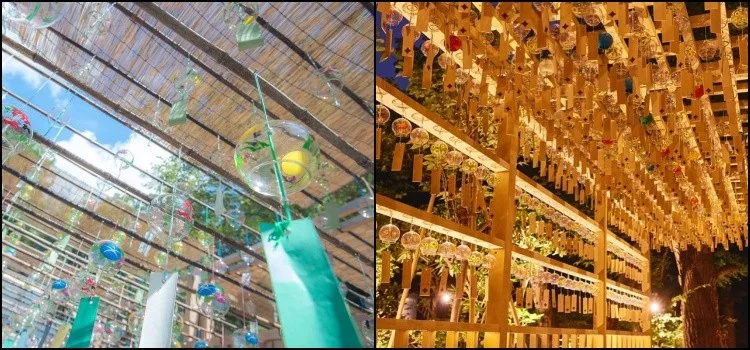
The Fūrin (風鈴), the charming Japanese wind chime, is a symbol of summer in Japan. Traditionally made of glass and iron, with a tanzaku (短冊) hanging from it, the Fūrin produces a soft sound when swayed by the wind. That tinkling is associated with a cooling breeze, and it is also seen as a protective talisman, warding off evil spirits.
Contents 3
Origin and Evolution of Fūrins
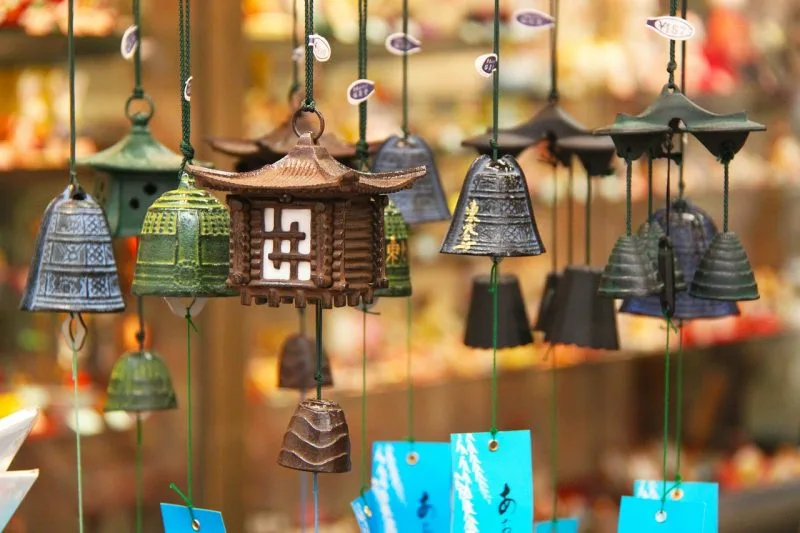
The origin of the Fūrin dates back to China, where the senpūtaku (占風鐸) was used to read fortune from the direction of the wind and the way the sound came out. These objects arrived in Japan through Buddhist monks, who used them in temples as bronze fūtaku (風鐸) to ward off evil spirits. The belief that the sound of the bell protected those who heard it soon spread through Japanese communities.
During the Heian and Kamakura periods, fūtaku gained even more importance against epidemics. The Japanese believed that strong winds could spread diseases, and the bells were used as protection against the yakubyōgami. At that time, only temples and wealthy families could acquire them, as they were made of bronze, an expensive material.
The popularization of the Fūrin occurred between the 18th and 19th centuries, when glassmaking was introduced to Japan by the Dutch. The first glass fūrin appeared around 1700, in Nagasaki, and at first they were extremely expensive. Only toward the end of the Edo period did glass become cheaper and the bells reach ordinary homes. Since then, they have been used as protection, a mark of summer, and a decorative item.
Tradition and Handcrafted Production
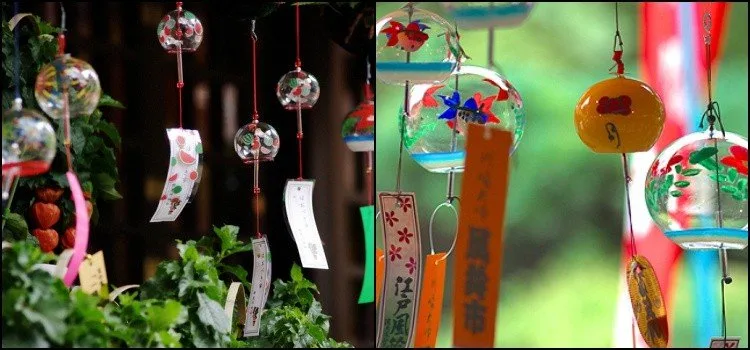
One of the most striking features of Fūrins is the internal painting, which enhances the durability of the colors and gives a unique touch to each piece. In Edo Fūrin, the cup is blown without a mold and the mouth is left irregular on purpose, so the sound comes out clearer. Even with modernization, many bells are still made by hand, keeping regional traditions alive.
Each area of Japan has its own styles and materials. Iwate works nanbu iron, Takaoka copper, and Okinawa ryukyu glass. Some regions use recycled glass, while others employ specific techniques to shape iron or other metals.
Today, Fūrins can be found in convenience stores and markets, with various models ranging from classic to contemporary. They continue to be a symbol of protection and also a charming reminder of summer in Japan.
Curiosities about Fūrins
- Internal painting: The technique of painting inside protects the colors from wear caused by time and weather.
- Tanzaku: The paper strip catches the wind and makes the clapper strike. It has the same name as the wish papers of Tanabata and sometimes carries a poem or a written request.
- Summer eaves: The teru teru bozu also hangs at the window in the same season, asking for a clear sky. The Fūrin occupies the same place and reacts to the wind.
Fūrins stay on the eaves because they catch the wind and give it back as sound. Whether to hear the soft sound that announces a breeze or to appreciate the handmade piece, these bells return every summer.







Community
Comments
0 comments
There are no published comments in this language yet.
Send comment