
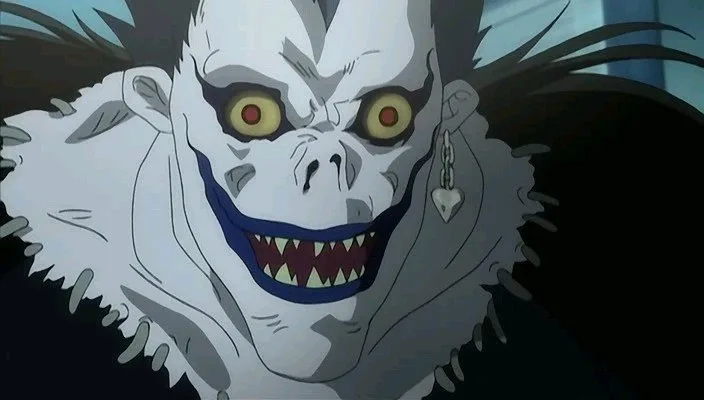
If you know shinigami from Death Note or Bleach, you already have a picture in mind: a bored god with a notebook, or a sword-wielding soul reaper in black. Japanese folklore is less tidy. The word [死神] sits between spirit, temptation, and local warning—not a single hooded reaper with a fixed job description.
That gap is what makes the idea stick. People search for a clean definition and find something closer to a family of stories: possession, suicide legends from the Edo period, postwar customs in a few prefectures, and only later the glossy anime versions. Here is how those layers sit together.
Contents 11
Shinigami in Japanese culture
In the West, shinigami are often blurred with Death—the figure that ends life and escorts the soul. Japanese usage is broader and less stable. Across tales, shinigami can mean a spirit that invites people toward death, a force that pushes despair, or a ghost that clings to places where someone already died.
In short, shinigami names supernatural beings in Japanese mythology and legend that lure humans toward death or stir suicidal thoughts. There is no single canonical face. Different periods and regions describe different creatures under the same label.
In some older religious explanations, a related figure marks how long a person has left to live. Elsewhere the emphasis falls on possession and bad places rather than a court of gods. The important point for readers: “god of death” is a translation habit, not proof that every shinigami works like a Western grim reaper.
Where the idea of the shinigami comes from
In Buddhist discussion, a related demon is sometimes called Mrtyu-mara (death). Stories link it with temptation and sudden despair that can push someone toward suicide. That line of thought is one ancestor of later “death spirit” talk, not a full match for modern anime design.
In classical Edo-period literature, the word appears more clearly. In the 1841 picture book Ehon Hyaku Monogatari, a story titled “Shinigami” shows something closer to a malicious dead spirit than a cosmic reaper. It joins the victim’s own bad intent, steers them onto dangerous paths, and helps tragedy repeat at sites of earlier murder or suicide—more possession than divine office.
Earlier Edo puppet plays and double-suicide dramas already used language about being “led by a god of death.” Scholars still debate how literal those lines were. After the war, Western ideas of a personified Death mixed into Japanese popular talk, and shinigami became easier to picture as beings with personalities—exactly the soil manga later used.
Once books, manga, and anime took over, the feared local spirit turned into a flexible pop figure. The myth stayed Japanese in name and texture, but the look and job description often followed entertainment, not village custom.
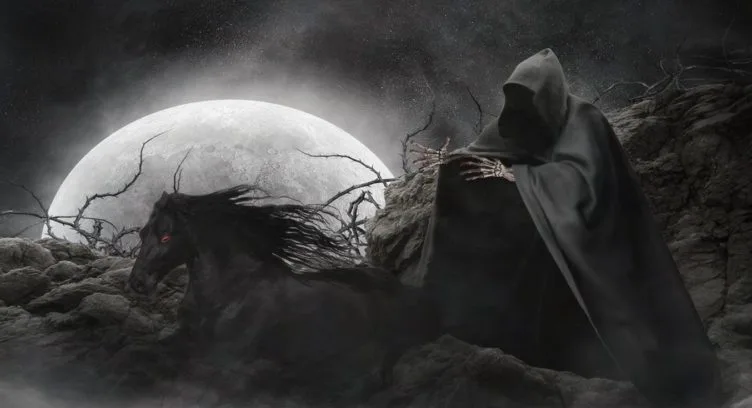
Myths and legends about shinigami
Regional folk belief kept the idea practical and local. In Miyajima, Kumamoto Prefecture, people who went out at night to stay with someone were told to drink tea or eat a bowl of rice before sleeping. Skip that, and a shinigami might follow them home.
Around Hamamatsu in Shizuoka Prefecture, a shinigami is said to possess people and lead them to mountains, seas, or railways where others have already died. The dead hold a “death turn” (shiniban): without a next death, they cannot ascend even after rites, so the living are invited to take their place.
In Okayama Prefecture, visiting a grave for Higan at sunrise—without the usual noon or sunset timing—could leave someone open to possession. If you visited at sunset, you were expected to return at dawn as well, or a shinigami might cling to you. Behind many of these warnings sits another idea: the bourei (亡霊, ghost) of someone with no one to honor them, hunting company in death.
Folklore vs. anime: older stories lean on possession, suicide sites, and unfinished dead. Series like Death Note and Bleach keep the name and the death theme, then invent rules, worlds, and costumes of their own.
Animes about shinigami
Anime did not invent the word, but it fixed the image for millions of viewers. A few titles put shinigami at the center; many more use the figure as a side force. The sketches below are entry points, not a ranked chart.
Death Note
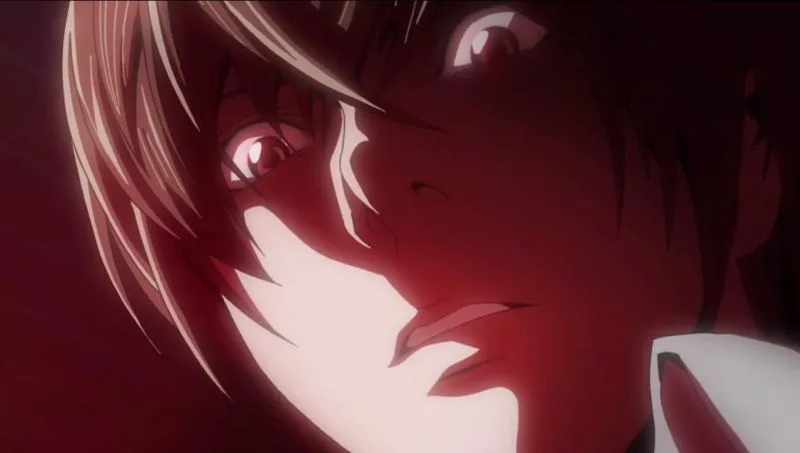
Light Yagami is Japan’s top student until he finds a black notebook on the ground: the Death Note. Written rules say that a name written while the writer visualizes the face brings death—by default a heart attack in forty seconds if no other method is set. Light tests it twice and learns the power is real.
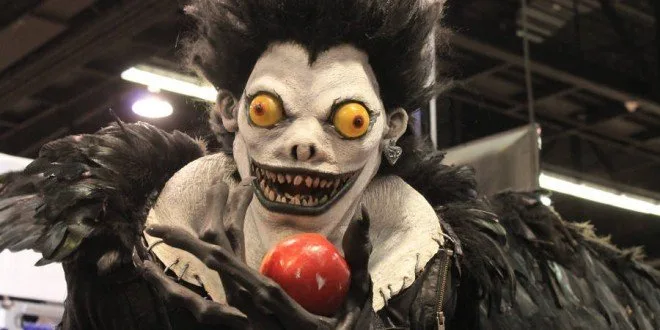
Days later he meets Ryuk, the shinigami who dropped the notebook out of boredom. Light decides to erase criminals and build a “new world” under his own law. The series turns the death god into a bored observer and the human into the real moral hazard.
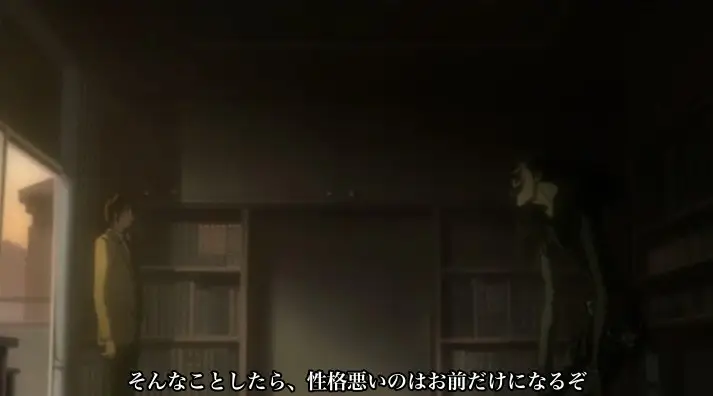
Soul Eater
Soul Eater follows student meisters at a shinigami technical academy. Each pairs with a weapon that is also a person. Classes, missions, and soul-collecting homework sit under the eye of a death-god figure who runs the school more like a principal than a village ghost.
Dakara Boku wa H ga Dekinai
A young man offers help to a red-eyed girl standing alone in the rain. She stabs him in the chest and leaves him on the ground—his first meeting with a shinigami who does not play by human courtesy. The show mixes death-god powers with romantic comedy; keep expectations light.
Bleach
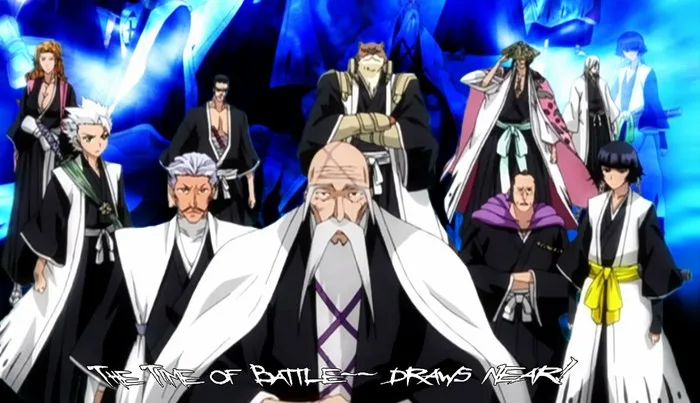
Ichigo Kurosaki is an ordinary teenager until he inherits powers from the shinigami Rukia Kuchiki. In this world, “shinigami” means Soul Reapers: agents who guide spirits and fight hollows. The uniform and sword look little like Edo-period possession tales, but the job of standing between the living and the dead is still the core.
Shinigami no Ballad
Momo, a shinigami in white with a scythe, travels with Daniel, a talking winged cat. Across six mostly self-contained stories she meets people tied to death—loss, regret, or their own end—and works through memory and emotion rather than collecting quotas.
Kyoukai no Rinne
As a child, Sakura Mamiya vanished in the woods behind her grandmother’s house and returned able to see ghosts. In high school she wants ordinary days; instead she gets a long-absent classmate who is far more than he looks—a shinigami cleaning up unfinished business between worlds, with comedy first and dread second.
List of anime with shinigami
| Anime title | Year | Type |
| Death Note | 2006 | TV |
| Soul Eater | 2008 | TV |
| Bleach | 2004 | TV |
| Full Moon wo Sagashite | 2002 | TV |
| RIN-NE 2 | 2016 | TV |
| RIN-NE 3 | 2017 | TV |
| Descendants of Darkness | 2000 | TV |
| So, I Can't Play H! | 2012 | TV |
| Momo: The Girl God of Death | 2006 | TV |
| RIN-NE | 2015 | TV |
| Omishi Magical Theater: Risky Safety | 1999 | TV |
| Soul Eater Not! | 2014 | TV |
| Bleach Movie 4: Hell Verse | 2010 | Movie |
| Bleach Movie 3: Fade to Black | 2008 | Movie |
| Bleach Movie 2: The DiamondDust Rebellion | 2007 | Movie |
| Bleach Movie 1: Memories of Nobody | 2006 | Movie |
| Kuro no Sumika: Chronus | 2014 | Movie |
| Bleach: Memories in the Rain | 2004 | OVA |
| Bleach: The Sealed Sword Frenzy | 2005 | OVA |
| Zou no Senaka: Tabi-Datsu Hi | 2007 | OVA |
The table is a historical map of titles that use the figure, not a popularity ranking. New series keep borrowing the name; the folklore underneath stays older, messier, and more local than any single design.

Community
Comments
0 comments
There are no published comments in this language yet.
Send comment