
Ramune soda (ラムネ) is a non-alcoholic carbonated drink that contains marbles in its container that serve as a stopper. Like cider, it is a type of "soda" made in Japan.
Ramune is a drink made by adding lemon, lime, and sugar flavors to carbonated water. Its name refers to the English word lemonade, as the drink was originally imported from the United Kingdom.
In this article, we will learn a little more about the history of this drink that has become so popular, we will see how ramune is produced and what the differences are between soda, ramune, and cider.
Contents 5
The History of Ramune
Around the end of the Tokugawa Shogunate (1603 to 1868), ramune was brought to Nagasaki and Yokohama, and later it was manufactured in Japan. At this initial moment, ramune arrived using a cork stopper, just like today's champagnes and some sparkling wines.
However, since carbonic acid escapes easily, a method was created in the United Kingdom where a ball was placed in contact with the entrance by the air pressure of the carbonic acid, from then on it became the common shape of the ramune bottle.
Around 1890, both the drink and the bottle with this shape were imported to Japan. After this period, the manufacture of ramune bottles with marbles began in the country, which made its popularization possible.
It is uncertain who was the first person to manufacture and sell the drink in Japan. As there is not much concrete information about it, Katsugoro Chiba is generally considered the first to produce and sell ramune on Japanese soil.
Katsugoro's application for a license to open the ramune factory is recorded on May 4, 1872, by the Japanese government. Later, this date was established as "Ramune Day" by the Japan Soft Drink Association.
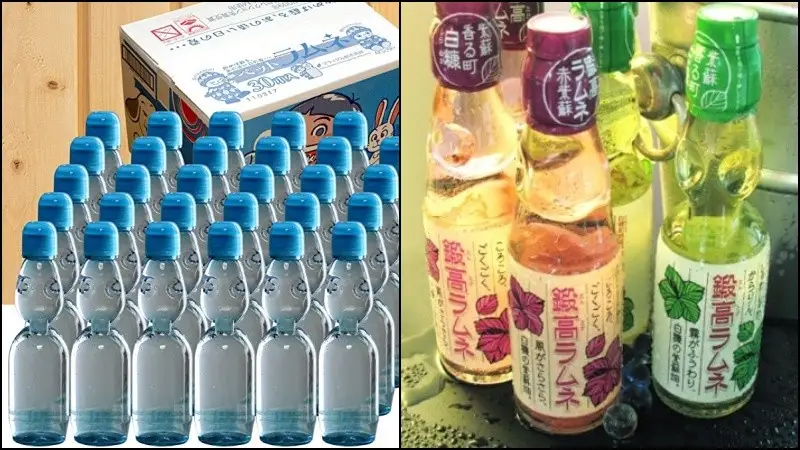
How is Ramune Made?
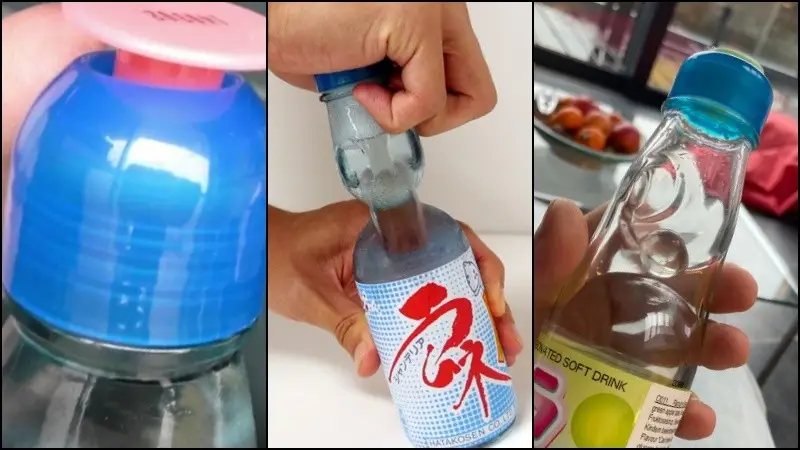
The ramune bottle is sealed with marbles. This manufacturing process is a bit difficult to explain, but we will strive to clarify it in the simplest way possible.
First, the syrup (the lemonade flavor) is injected into the bottle. Then, carbonated water is blown into it with an escape for the air that was in the bottle to exit.
When the air inside is released and the bottle is already full of carbonated water, the bottle is turned upside down.
Next, the marbles fall into the mouth of the bottle, and the pressurized carbonated water pushes the marbles against the rubber mouth to form a stopper.
There is a narrowing in the ramune bottle that prevents the marbles from falling to the bottom of the bottle; when the bottle is turned upside down, the marbles are thrown into the mouth of the bottle.
What is the Difference Between Sparkling Water, Ramune, and Cider?
Both soda, ramune, and cider are all carbonated drinks that have as their main characteristic the effervescent sensation caused by carbonic acid. They are refreshing drinks, making them indispensable in the summer.
However, despite being quite similar drinks, they have some differences, and we will see some of these differences between these carbonated beverages;
Sparkling Water
Sparkling water is a drink that generally does not use flavorings, which is why it is tasteless and odorless, and brings a warm sensation when consumed.
It is widely used as a raw material for the production of ramune and cider, but in a broader sense, it can refer to all carbonated drinks, including ramune and soda.
Since sparkling water generally lacks flavors or mixtures, it is often consumed mixed with alcohol or juice. In the past, sparkling water was made from sodium bicarbonate. Now, the common method is to saturate carbon dioxide with water to make carbonic acid.
Cider
Cider is a carbonated soft drink with flavors of lime and lemon, but it was originally a carbonated drink with an apple flavor. In the Meiji era, Mitsuya Cider was launched as a soft drink with an apple flavor, and it is known as the first cider in Japan.
As we saw, the flavor of cider and ramune used to be different. Cider would originally have the flavor of apple, while ramune was distinguished by the flavor of lemon and lime.
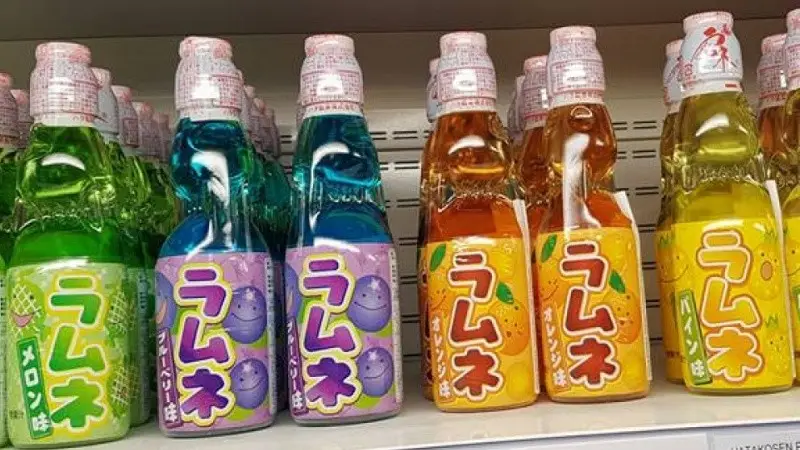
Despite this, the lemon flavor originated with cider, and it has now become indistinguishable from ramune. Today, both ramune and cider have various flavor variations, and there is no clear difference.
Both drinks also had different bottle shapes. Cider had a long, round bottle with a crown and a cork that served as a stopper, while ramune has a glass bottle with a slight deformation to prevent the marble that serves as a stopper from falling out.
However, today we have a wide variety of bottles and other containers, which makes it difficult to distinguish them. So, the biggest difference between the drinks is the presence of marbles in the bottle.






Community
Comments
0 comments
There are no published comments in this language yet.
Send comment