

I think most people know about mangas, but have you heard about manhwa and manhua? In this article, we will talk a little about these comics of Chinese and Korean origin and their differences with Japanese mangas.
The famous stories from the East intrigue thousands and thousands of readers from the West. Captivated by the fantastical plots of Korean, Chinese, and Japanese narratives, the comics from the other side of the world are certainly a success in the Americas and Europe.
Being manga the most popular among Asian comics, few people know about the variations from Korea and China known as manhwa and manhua. Today you will finally learn about them and their differences!

Table of Contents
What are Manhwa? Korean Comics
The first item on our list is manhwa. Of Korean origin, the term literally means comic book. They are often marketed as mangas.
The manhwa differ from the traditional Japanese style and are closer to Western comics. Their reading is from left to right, and their creators are called manhwaga.
Adaptations into animated versions of manhwas are rare. Animated films are more popular than series and live-actions. An example of a live-action that yielded good results was the film Priest (2011). An adaptation of the manhwa by Hyung Min-Woodo.
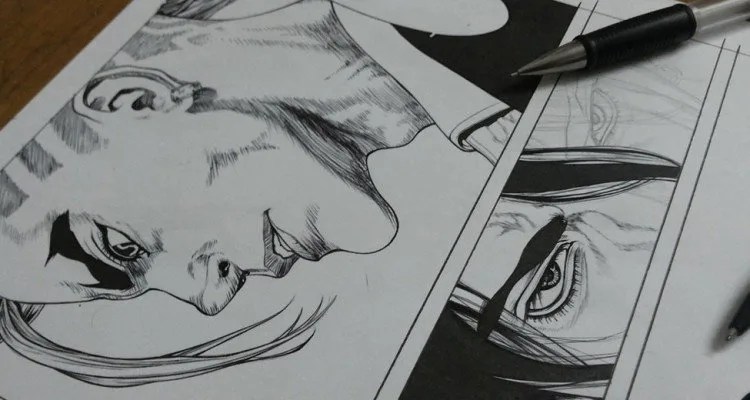
A curiosity is the difference between North Korean and South Korean manhwas. Due to the socialist government, the works of manhwagas always exalt the homeland and love for the nation. Meanwhile, South Korean works are completely free of political concepts.
What are manhua? Chinese Comics
On the other hand, manhua are of Chinese origin, and their literal translation means “irresponsible drawings.” Their first appearance was in the 18th century through the artistic works of painters of the time.
We cannot talk about manhuas without mentioning the work from the 80s that was a pioneer in the market: Chinese Hero: Tales of the Blood Sword. The author Ma Wing-Shing brought Japanese influence to his realistic, innovative, and detailed drawings.

However, in 1954, with the cultural opening of Hong Kong, there was a significant American influence – stemming from Walt Disney cartoons – in the manhua of Little Angeli (1954).
An interesting point about manhua is that it has local influence. Some authors use the Japanese reading standard, starting from back to front with dialogues from right to left. Others take advantage of the Western style.
What caused some changes in manhua was the Chinese communist government. Several times, they altered the writing standard. At one point, they adopted horizontal writing, just like in the West. At another, they used the more conventional writing of countries that use ideograms, the vertical writing.
Besides Chinese Mangas, do you know about Chinese Light Novels?

What are mangas? Japanese Comics
Like the previous ones, mangas are the Japanese comics responsible for popularizing the genre throughout Asia and globally. We don’t have much to describe beyond their possible origin.
The origin of manga can be traced back to the 19th century when Japanese artists began producing illustrations in Western style for newspapers and magazines.
In the early 20th century, artists began producing comics in Japanese style, which evolved into what we know today as manga.
Since then, manga has expanded and diversified, encompassing a wide range of genres, including action, comedy, drama, science fiction, and fantasy. Mangas are also frequently adapted into other media, such as television animations and films.
Today, manga is a popular form of artistic and cultural expression worldwide, enjoyed by millions of fans of all ages.
What are mangas and what are the differences with MANHUA and MANHWA?
Finally, mangas are the most known by the audience passionate about Eastern culture. The term is, once again, a reference to “comic books”, or “graphic novels”.
With the largest audience among the three, manga has its own publication styles. There are the famous shonen, which is the style of manga aimed at young male audiences. Shoujo is aimed at young female audiences, and Josei is for adult female audiences. In contrast, Seinen is classified for adult men.
As the Japanese have a more fertile culture for books and reading than other countries, there is also the Kodomo style of manga, aimed at children. Thus, from a young age, boys and girls are influenced to develop the habit of reading.
The reading pattern of manga follows the model: reading from back to front, with dialogues organized from right to left.

An important point to highlight is that the overwhelming majority of animes arise due to the eminent success of their manga. Many productions have followed this model. Among them, we can cite the most famous: One Piece, Dragon Ball, Naruto, Death Note, Fullmetal Alchemist, Bleach, and so on…
While for Westerners the word manga has the meaning of “Japanese comics” – strictly for the Japanese, it is just a designation for comic stories. It is also a cognate of the other words presented here: manhwa and manhua.
Disney had a great influence on Japanese comics after World War II. If you want to understand a little about the history of mangas, I recommend reading our article about Osamu Tezuka, considered the God of Manga.
Leave a Reply