
Anyone who spends time around anime and Japanese media culture eventually runs into terms like DLE, dōjin soft, or visual novel. On the surface they look like obscure labels for insiders. In Japan, though, they have been part of mainstream pop culture for decades. They have launched careers, shaped international markets, and are now within reach of Western players on platforms like Steam, MangaGamer, and JAST USA.
This article treats the genre as a cultural phenomenon. The focus is on history, mechanics, iconic works, distribution channels, and the question of why text-heavy, often quietly paced adventures have built such a devoted following in Japan. The spotlight stays on serious, broadly released titles that made the genre famous.
Contents 20
What Are DLE, Dōjin, and Visual Novel Games?
Before going further, it helps to separate terms that the West often uses as synonyms but Japan keeps clearly distinct.
DLE as a Genre Label
In Japanese usage, DLE often stands for Doujin-Limited-Edition or for the broader category of dōjin games traded through grey-market shops, specialty stores, and digital storefronts. In the West, the acronym has drifted and is now used as a catch-all for anime-themed games, puzzles, and spinoffs. Worth noting: DLE is not an official industry category. It is a genre tag that fans, platforms, and media have adopted.
Doujinshi, Dōjin Soft, and Comiket
Doujinshi (同人誌) refers to self-published, often fan-driven works: manga, art books, novels, music CDs, and games. Most doujinshi are released by so-called circles, small groups of amateurs and professionals who produce a booklet or a game together. The main venue for selling them is Comiket, short for Comic Market, a twice-yearly fair held in Tokyo since 1975 that draws several hundred thousand visitors. Anyone trying to understand the anime game scene in Japan has to look at Comiket, because new dōjin soft titles regularly premiere there.
The Visual Novel as a Form
A visual novel (ビジュアルノベル, bijuaru noberu) is, at its core, an interactive digital book. The screen shows text, supported by character portraits, background art, music, and full voice acting. The player makes choices at key moments, and those choices change the direction of the story and lead to different endings. Visual novels are text-heavy, slow-paced, and stand in deliberate contrast to fast action games.
Alongside the mainline visual novel tradition sits a wider field often grouped under the term eroge (エロゲ) in Japanese, a word that covers games with erotic or explicit content and is heavily debated in the West. Anyone taking the genre seriously should keep a clean line between mainstream visual novels sold in regular retail, aimed at families and older teenagers, and explicit titles made for adults.
The History of DLE and Dōjin Games
The roots of the visual novel lie in the 1980s and early 1990s, when the first PC games with a strong narrative focus appeared in Japan. A frequent point of reference is the Otogirisō series from the early 1990s, often cited as one of the first titles that clearly reads as a sound novel: minimal interaction, heavy atmosphere, lots of text. The title is still used today when people argue about when the genre actually began.
In parallel, the dōjin culture around Comiket kept growing through the 1980s. The early focus was on photocopied manga and booklets, but in the 1990s personal computers and affordable art tools arrived. Suddenly, a small circle could put out a complete game with multiple routes, background art, and voice acting in a matter of months. That technological shift is the real birth of dōjin soft in the strict sense.
From the 2000s on, distribution and consumption moved steadily online. Platforms like DLsite, Melonbooks, Toranoana, and DMM opened dedicated sections for dōjin soft, so players no longer had to travel to Comiket to get new titles. At the same time, Western attention grew. Publishers such as MangaGamer, JAST USA, and Sekai Project began localizing Japanese visual novels for international audiences. Many of those titles are now available with official English translations on Steam, GOG, or the publishers' own storefronts.

Iconic Visual Novels of the Genre
Which games stand as milestones of the form? A short selection that fans in Japan and abroad keep coming back to:
- Key (Visual Art's): With Kanon, Air, Clannad, Little Busters!, and Rewrite, the studio set the template for the emotional visual novel. Clannad in particular is a regular fixture on "best of" lists in Japan and helped define the school-and-family drama subgenre.
- Type-Moon: Started as a dōjin circle with Tsukihime before turning commercial. Fate/stay night became the seed of a multi-media franchise that includes Fate, the Heaven's Feel films, and a string of spin-offs. The studio's Mahoutsukai no Yoru is a long-awaited fan favorite.
- Leaf (Aquaplus): Built To Heart and White Album, two titles that helped bring the romance and slice-of-life variant of the visual novel to a wider audience in the late 1990s and early 2000s.
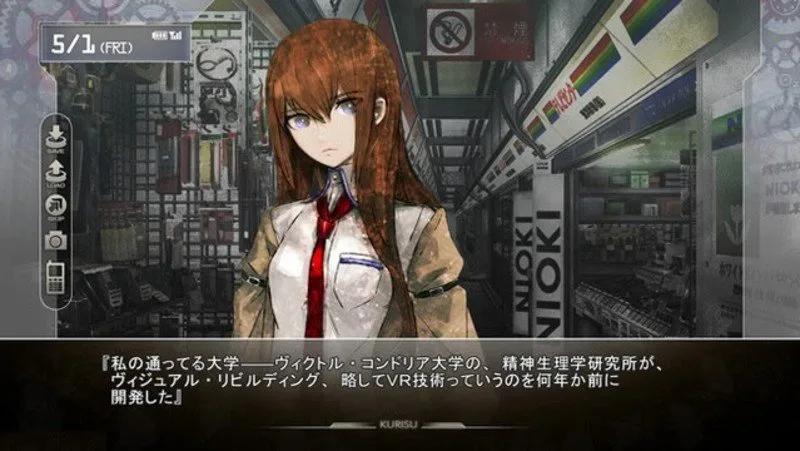
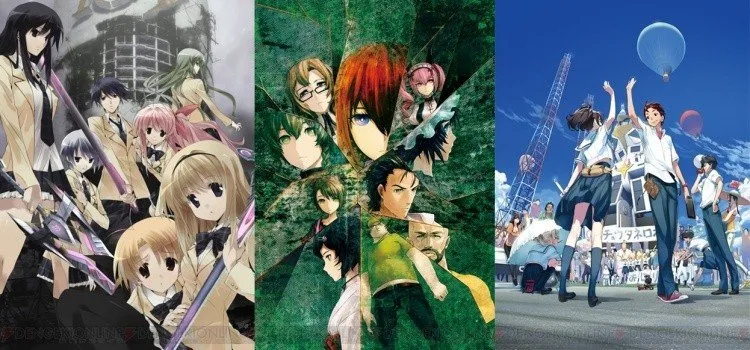
- 5pb. and MAGES.: Steins;Gate and Chaos;Head are the best-known Science Adventure entries. Steins;Gate in particular broke out of the niche and reached a global audience through its anime adaptation.
- Spike Chunsoft: Carries the legacy of the 999 and Danganronpa series. Danganronpa in particular turned a niche visual novel formula into a mainstream hit with international releases.
- AQUAPLUS: Utawarerumono mixes tactical RPG combat with a long, emotional story and is a long-running reference point for the strategy side of the genre.
- Visual Art's: Beyond Key, the parent company also produced Island and the Narcissu series, both of which pushed the form in more experimental directions.
- RPG Maker horror: Yume Nikki and Ib are the two touchstones of a homemade subculture built on free tools, fan translations, and an unsettling dreamlike atmosphere.
- Indie scene: Katawa Shoujo and Doki Doki Literature Club proved that small Western and international teams could deliver visual novels with real cultural impact, and that the form travels well outside Japan.
Why These Games Are Popular
Several overlapping reasons explain the lasting appeal of anime-style narrative games.
Narrative Depth
Visual novels routinely run thirty to fifty hours, with multiple routes and dozens of endings. That length allows for character arcs and slow-burn plots that mainstream action games rarely have room for. For readers who like long-form storytelling, the medium is unusually generous.
Choices With Consequences
The branching structure is not just decoration. Decisions in a visual novel actually change who lives, who falls apart, and which ending the player reaches. That sense of agency keeps the experience tense in a way that a linear novel cannot match.
Emotional Investment
Because the format spends so much time with a small cast, the attachment to characters tends to be unusually strong. Crying at a visual novel ending is a well-worn joke in the community, and it points at something real about how the medium builds empathy.
Cultural Authenticity
School life, summer festivals, shrine visits, trains, convenience stores, the small rituals of Japanese everyday life. For international readers curious about Japan, the genre offers a window that anime alone cannot fully provide.
Anime Aesthetics and Voice Acting
The art, music, and full Japanese voice acting give the form a sensory layer that pure text cannot. Character portraits shift expression as the story moves, and the sound design carries as much weight as the writing.
Replay Value
Multiple routes and hidden scenes give a clear reason to play a title more than once. Many fans keep route guides, theory wikis, and detailed save files for exactly this reason.
Community
Around the bigger titles there are lively fan communities that share route advice, fan art, theories about mysteries in the story, and translation notes. That social layer is part of why a niche game can stay alive for decades.
Boundaries of the Genre and Legal Aspects
The adult side of the scene is real, and any honest overview has to acknowledge it. The framework around it is, however, more structured than outsiders often assume.
Age Ratings in Practice
Japan uses the CERO system, the United States uses ESRB, and Europe uses PEGI. Mainstream visual novels usually receive a CERO B (12+) or CERO C (15+) rating. Explicit titles are sold only through 18+ storefronts and physical channels, and they are usually sold sealed, with an age check at purchase. The goal of the system is to keep explicit content out of reach of minors, and the storefronts enforce this in practice.
Legal Platforms in Japan
DLsite is registered with Japan's Financial Services Agency and is one of the main legal channels for dōjin and doujin-style digital content, including adult works. FANZA, run by DMM, is the legal 18+ storefront for commercial adult games. The fact that both exist as regulated, taxed businesses is sometimes missed in Western coverage that treats the whole space as a grey zone.
International Availability
Steam is open to visual novels, including Japanese titles, and has become the easiest entry point for most Western players. Specialized publishers like MangaGamer, JAST USA, and Sekai Project handle translation and distribution for titles that Steam would not host in their original form. In many cases, games released internationally are edited compared to the Japanese original. Censorships of sexual content, and sometimes violence, are common, and the changes can be significant.
The Trope Debate
Terms like moe, tsundere, and yandere describe character types that the visual novel and anime world has refined over decades. Translated into English, the same words can read as cute labels or as troubling stereotypes, depending on the reader and the work. The debate around gender representation, violence, and certain recurring patterns in the genre is ongoing, and reasonable people on both sides have strong arguments. The honest summary is that the genre contains both thoughtful work and material that has aged badly by current standards, and that the difference is rarely obvious from the cover.
Cultural Significance and Looking Forward
Anime games sit inside a much bigger picture of Japanese soft power and the so-called Cool Japan strategy, the long-running public effort to promote Japanese culture abroad. Visual novels in particular have been studied as a narrative medium in their own right, with academic work in Japan, North America, and Europe treating them as a serious form rather than a niche curiosity.
The international market is growing. Steam has been the single biggest driver, and it is now common for new visual novels to launch with English text from day one, with Chinese, Korean, and other Asian languages often following soon after. Mobile visual novels, played on smartphones, have become a separate and sizeable market of their own, and several titles have crossed over into anime adaptations and printed manga.
Looking ahead, three trends are easy to spot. First, more indie visual novels from outside Japan, building on what Katawa Shoujo and Doki Doki Literature Club showed was possible. Second, more official translations, with publishers increasingly treating non-Japanese releases as the rule rather than the exception. Third, more overlap with other media, from light novels to manga to anime, and growing experimentation with AI-assisted translation and, more cautiously, AI-assisted writing. Whether the AI side becomes a creative tool or a shortcut that flattens the writing is one of the open questions for the next few years.
If you are curious and want a safe starting point, the simplest path is to pick one of the mainstream titles on Steam, set aside a quiet evening, and let the genre's slow pace do its work. If you come out of that first playthrough wanting to know more about the dōjin scene, Comiket, and the more experimental corners of the form, you will already be deeper into the culture than most casual readers ever get.

Community
Comments
0 comments
There are no published comments in this language yet.
Send comment