
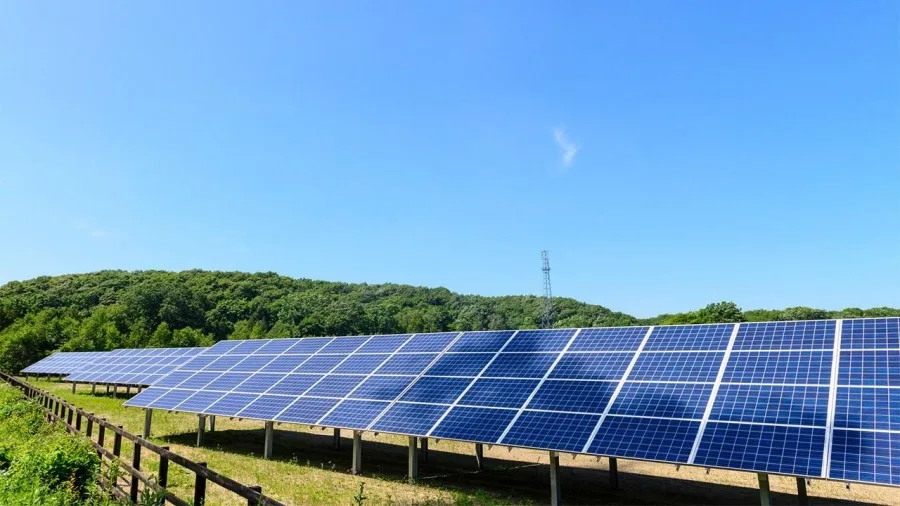
Solar energy is widely used all over the world, and in Japan, this energy source has been generated since the late 1990s. Japan is one of the countries with the highest production of residential solar panels and photovoltaic cells. The solar radiation index in Japan is between 4.3 and 4.8 kWh/m² per day.
Japan is a country with little territorial extension and contains many irregular terrains. These unfavorable conditions lead the country to seek innovative and futuristic energy supply solutions to meet the demand of its population of over 125 million. 80% of its supply depends on foreign sources.
Solar energy became a priority in Japan after the nuclear disaster in Fukushima in 2011, becoming the second largest in the global market between 2013 and 2014, with a record of 6.97 GW and 9.74 GW of installed capacity.

Table of Contents
Oil Crisis
The oil crisis of 1973 and 1979 significantly affected solar energy. The consumption of the resource increased, and in the following years, the consumption of large industries was unstable, but residential, commercial, and passenger and freight transport saw an increase.
By the end of the 1980s, there was a decrease in imports in Asian countries, and Japan began to depend on oil from the Middle East, representing 90% of imports and other energy sources. This was significant because it is important for obtaining energy sources.
It seems that oil has everything to be a global energy source, and the demand, especially from the Asian continent, tends to increase. To avoid the risk of energy shortages, Japan is already considering promoting independent resources to avoid emergency situations, but cooperation from oil-producing countries will be necessary.

Residential Solar Energy
Since 2013, Japan has been encouraging the entire population to adopt the use of solar energy in homes. Solar energy had already reached an installed capacity of 6707 MW.
Then the idea of installing photovoltaic systems on rooftops across Japan was adopted, making this installation accessible to everyone due to affordable prices. Japan became one of the world’s leading manufacturers. Several companies are already investing in photovoltaic energy, and many of their projects are even carried out here in Brazil.
The world’s most powerful floating solar power plant was built in Japan. This Japanese plant has 51,000 floating solar panels that provide electricity for over 5,000 homes. This helps contribute to environmental efforts. The plant is located in the Yakamura Reservoir, 70 km from the capital, Tokyo. On average, it produces more than 16,000 MW/hour per year, assisting Japan’s plan to obtain 24% of its total electric capacity from renewable sources by 2030.

Greenhouse Effect
The greenhouse effect is important for life on Earth; it helps ensure that we do not die, and in fact, it might not even be possible to have life on this planet without it. Without the greenhouse effect, the Earth’s temperature would be -18°C. Greenhouse gases absorb solar radiation and emit heat (infrared radiation) back to the Earth’s surface. Part of this heat escapes the atmosphere and returns to space, allowing the Earth to maintain a temperature that supports life.
The greenhouse effect results from carbon dioxide emissions from burning fossil fuels like oil and coal, which have become a serious global problem. To mitigate these damages, the Kyoto Protocol was developed.
The Kyoto Protocol is international; its goal is to make developed countries commit to reducing gases that exacerbate the greenhouse effect to lessen the impacts of global warming. Discussions are also held to establish goals and projects that do not harm the planet.
Technology has come to help and simplify life wherever possible, including concerning nature. The goal is to use technology to reduce greenhouse gas emissions. In 1993, the “New Solar Clarity Program” underwent restructuring and was adopted to develop innovative technologies aimed at sustainability and solving energy and environmental issues.

Car powered by solar energy
Until the end of 2004, Japan was one of the leading countries in the introduction of solar energy worldwide. In 2009, Japan was the third country in the world in solar electric capacity, and the government re-implemented a subsidy system for solar energy generation, which increased the revenue of solar cells in Japan’s domestic market.
Other technologies were developed for this purpose, such as new energy sources with hydrogen fuel cells used as fuel for cars. In 2004, Japanese companies developed an electric motor known as the “wheel-motor.”
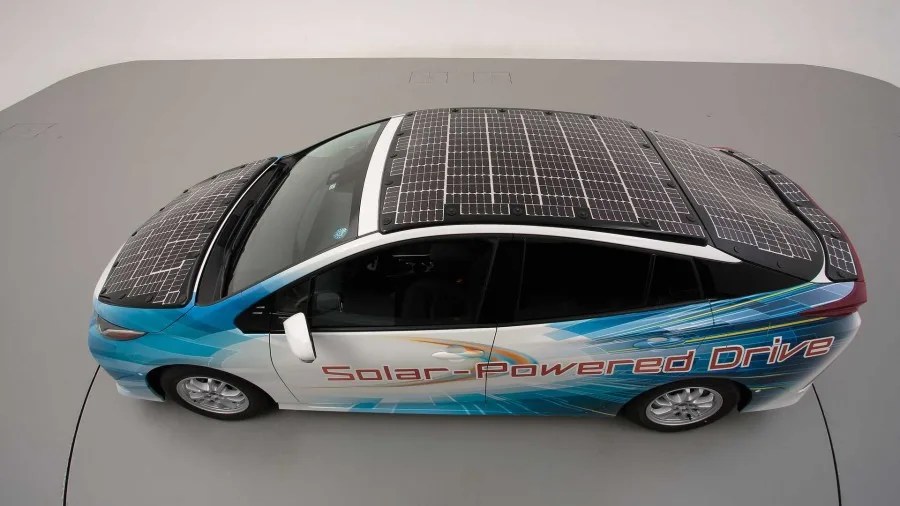
Toyota tested a Prius in Japan in 2019. The vehicle was covered with solar panels. The panels were 0.03 millimeters thick on the hood, roof, and rear window, made by Sharp. The system can recover about 56 km of range solely from solar energy.
The Prius Prime operates as a plug-in hybrid, charging the batteries from an outlet instead of using the vehicle’s movement. In Japan, solar panels on the Prius are sold as an option, capable of recovering only 6.5 km of range, and the recharge is done only when the vehicle is parked. The new system is almost seven times more efficient, generating about 45 km with the car stationary. In motion, it generates 56 km of range in conjunction with brake regeneration.
Source: Solar Portal and the Embassy of Japan in Brazil
Leave a Reply