
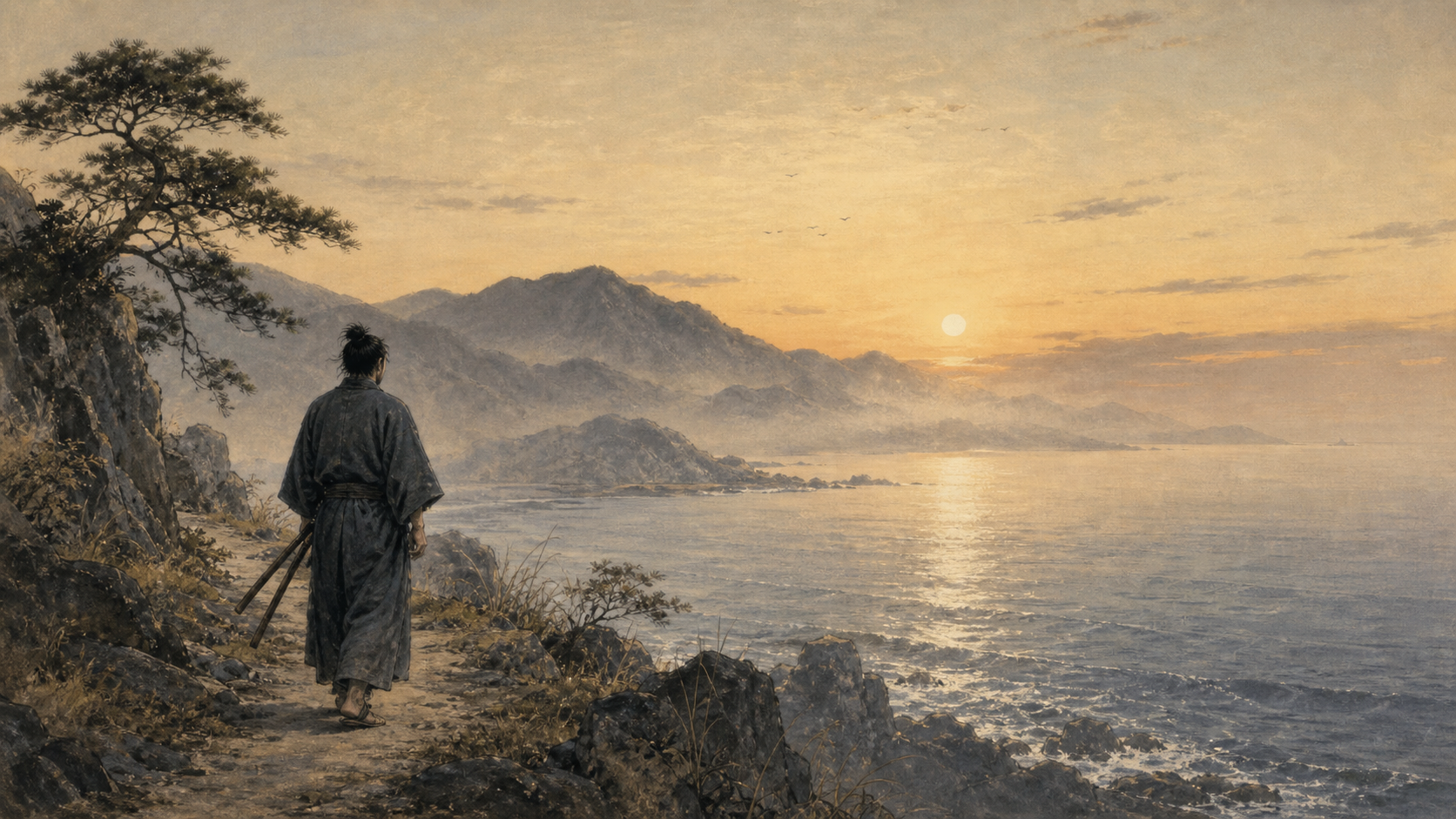
Miyamoto Musashi (1584–1645) was a Japanese swordsman, writer, and artist whose name now carries far more than a single biography can hold. He is associated with the two-sword school Niten Ichi-ryū, the famous 1612 duel with Sasaki Kojirō, and The Book of Five Rings. Yet those familiar points sit beside a real problem for readers: much of the vivid story was shaped by later biographies, novels, film, and manga. The most rewarding way to approach Musashi is to keep the historical figure and the cultural legend in view at the same time.
That distinction does not make his life less interesting. It makes the stakes clearer. Musashi lived during the transition into the Edo period, when the long wars that had shaped Japan gave way to Tokugawa rule. His writings and the tradition around his school came from a martial world with its own tools, language, and discipline. They were not written as a modern handbook for office life.
Contents 6
What can be said with confidence
Musashi is commonly dated to 1584–1645, although details of his childhood and early travels remain uncertain. In his last five years, he lived in Kumamoto under the patronage of the Hosokawa domain. That later period matters because Kumamoto preserves an important share of the objects, paintings, manuscripts, and traditions connected with him.
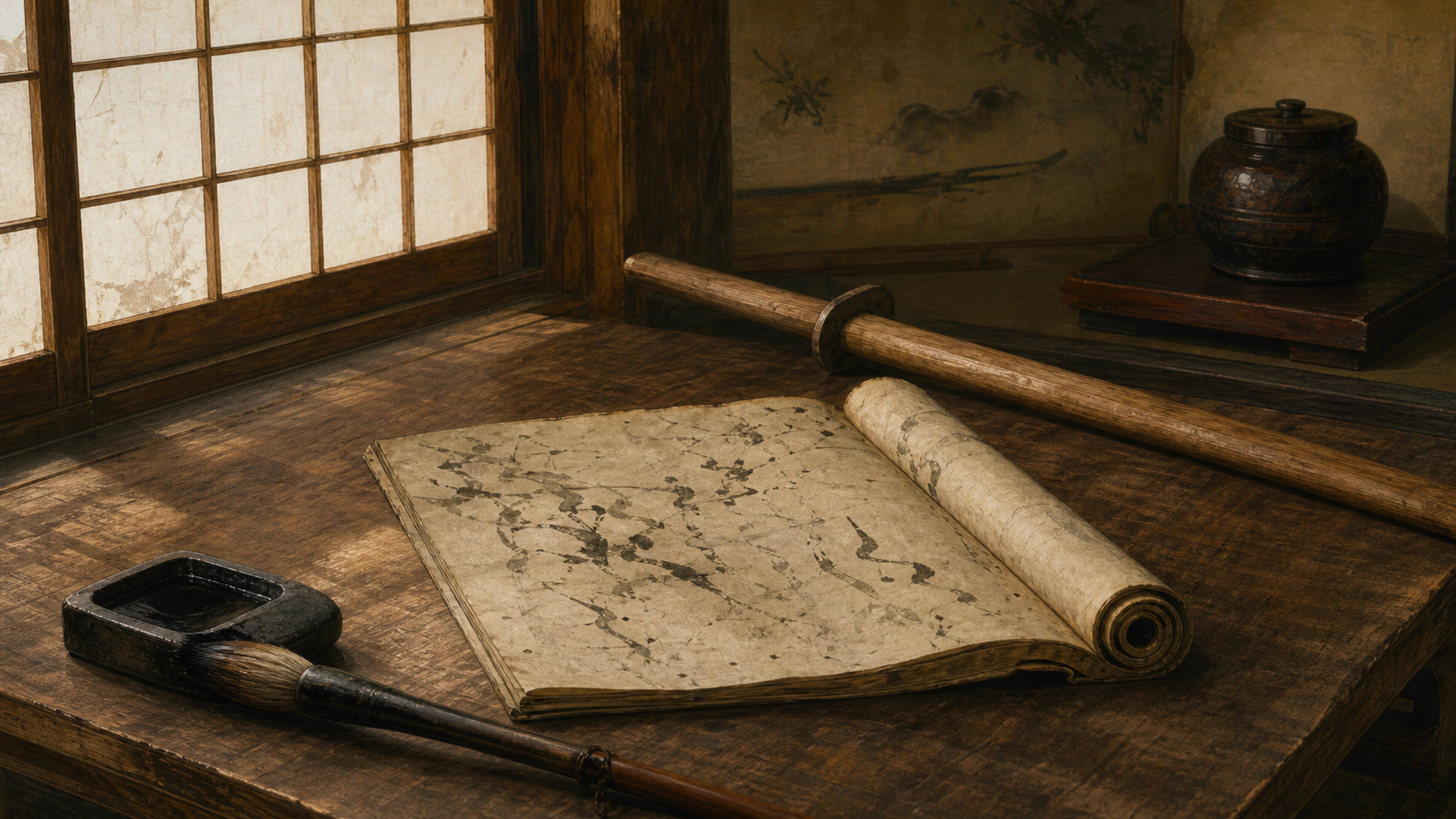
The surviving material also gives a more grounded picture than the invincible lone warrior of popular stories. Musashi was connected with sword teaching, writing, calligraphy, and ink painting. The Shimada Museum of Art in Kumamoto holds works and copies related to him, including a copy of the “Wind” chapter of The Book of Five Rings made by his disciple Terao Magonojō in 1651. No manuscript written in Musashi’s own hand is known to survive.
The duel with Sasaki Kojirō
The 1612 duel with Sasaki Kojirō on Ganryūjima is the episode most readers know first. It is central to Musashi’s reputation, but the familiar details need care. Accounts differ on the exact sequence, the weapons, and the drama around his arrival. Later retellings often add dialogue, perfect timing, or a neat moral lesson that the surviving record cannot fully support.
What remains useful is the wider point: the duel became a lasting frame for Japanese storytelling about skill, nerve, and strategy. It is also why a short biography can easily drift into fiction without warning. When a version presents every move as certain, it is worth asking whether it comes from contemporary evidence, a later chronicle, or a modern adaptation.
Niten Ichi-ryū and the use of two swords
Musashi is linked to Niten Ichi-ryū, often translated as “two heavens as one.” The phrase is commonly reduced to a striking image of a fighter holding two blades, but the school is not only a spectacle of simultaneous sword use. Its teaching concerns distance, timing, posture, weapons, and adjustment to the situation. The practical question is not whether two swords always look more impressive; it is what tool and position suit the moment.
That is also a useful correction to the stock image of a samurai who wins through force alone. In The Book of Five Rings, attention repeatedly returns to training, observation, rhythm, and knowing the conditions of a fight. Those ideas belong first to sword strategy. Reading them in their original setting is more revealing than turning every passage into a slogan about business or personal success.
What The Book of Five Rings is about
Completed near the end of Musashi’s life, Go Rin no Sho is arranged in five books: Earth, Water, Fire, Wind, and Void. The titles can sound mysterious in English, but the work is concerned with concrete matters as well: how a school teaches, how weapons are used, how rhythm changes, and how a practitioner notices an opening.
The book is neither a complete record of Musashi’s life nor a collection of detached inspirational sayings. It is a text from a particular martial tradition. That context explains both its appeal and its limits. Readers can find sharp observations about practice and attention, but a careful reading does not erase the violence, hierarchy, or technical language of seventeenth-century sword culture.
Musashi the artist
His reputation as an artist is sometimes treated as an afterthought, even though it changes how the man is seen. Kumamoto collections include ink paintings, literary manuscripts, and swords connected with him. The surviving objects make room for a Musashi who worked with brush and paper as well as weapons, and whose later image was shaped by portraits made after his death.
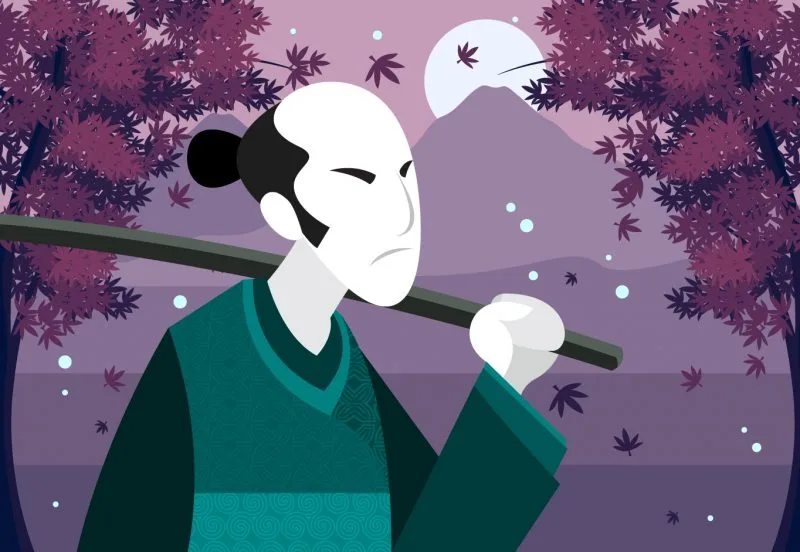
That image changed quickly. Some later Edo-period portraits show the familiar wild-haired, barefoot figure carrying two swords. Those visual conventions are part of Musashi’s cultural afterlife, not a transparent photograph of the historical person. They help explain why he remained so adaptable for novelists, filmmakers, manga artists, and martial artists.
How to read Musashi without flattening him
A good starting point is to separate three layers: what can be supported by surviving objects and contemporary context; what comes from later biographies and local tradition; and what belongs to modern fiction. The layers overlap, but they should not be mistaken for one another.
Musashi endures because each layer has value. There is a historical writer associated with an influential strategy text, a teacher linked to a living sword tradition, an artist represented in museum collections, and a character continually reinvented by popular culture. Keeping those layers distinct lets the story stay vivid without pretending every legend is a document.


Community
Comments
0 comments
There are no published comments in this language yet.
Send comment