
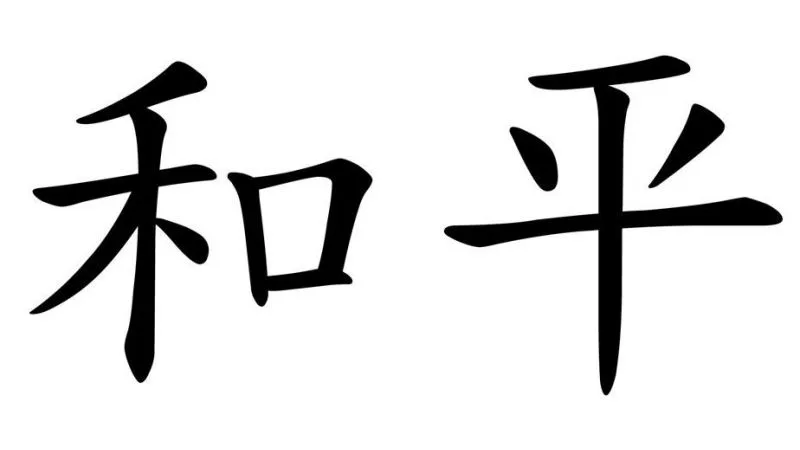
Plenty of people look up peace in Japanese just to get a tattoo. Image search will happily sell you a single kanji as if it were the whole word — and that is where the mix-up starts.
The everyday word is heiwa [平和]. It can lean toward harmony too: a calm temperament, someone polite, a situation that stays even. The two characters that build it do not mean the same thing on their own, which is why the tattoo question is harder than it looks.
Contents 6
Mistakes when tattooing peace in ideograms
Many people tattoo a character thinking it literally means peace. I myself found images online labeled as “peace” that do not mean that in Japanese or in Chinese.
The two ideograms [平] and [和] do make up the word for peace, and each one can carry a peaceful flavor on its own. The mistake is presenting either character as if it only meant peace, and ignoring the rest of the meaning.
It is common to tattoo just one ideogram instead of the whole word. So which one should you get? There is no honest one-line answer, because both sit inside heiwa and neither is a perfect English “peace” by itself. Once you know what each character actually does, the choice gets easier.
Peace in a Japanese key [和]
The ideogram [和] that many people tattoo thinking it mainly means peace is also the character Japan uses for itself. It is the old native name, and it keeps showing up whenever something is Japanese or traditional: food, rooms, clothes, music.
The same [和] can mean to make peace, to reconcile, to come into harmony. That is a real reading — it just is not the whole story. On a single-character tattoo, a Japanese reader is more likely to see harmony or Japanese style than the civic word “peace.”
And here is the pair that trips people up: wahei [和平] is not a synonym of heiwa [平和]. Heiwa is the state — no war, a quiet household, a country at rest. Wahei is the process of making peace after a fight: talks, proposals, a settlement. Flip the characters and you change the job of the word. In Chinese the civic word for peace is also 和平, read hépíng, so a reference image from a Chinese shop can put the wrong order on your skin.
Because [和] is so busy naming traditional Japanese things, not every compound with this character is about peace. The ones that are tend to lean toward reconciliation, softness, or agreement:
| Kanji | Romaji | Meaning |
| 和平 | wahei | making peace; a peace settlement |
| 和やか | nagoyaka | mild; calm; kind; harmonious; peaceful |
| 和解 | wakai | reconciliation; compromise; a legal settlement |
| 和議 | wagi | peace conference; peace negotiation |
| 和む | nagomu | to soften; to calm down |
| 和睦 | waboku | reconciliation; making up |
| 和戦 | wasen | war and peace |
| 和約 | wayaku | peace treaty |
| 和楽 | waraku | peace and harmony |
| 和を結ぶ | wa o musubu | to make peace |
The ideogram [平] inside the word for peace
You should think twice before tattooing this character [平] alone. It sits inside the word for peace and dictionaries often gloss it as peace, but on its own it is something flat, ordinary, mediocre — a person of no rank, a freshman, a weekday.
People reach for it because it is the first character in heiwa [平和]. It is a generic building block. It shows up in plenty of words that have nothing to do with peace at all.
Even so, hei [平] does live in words that really are about calm, including the Heian period — the “period of peace” in Japanese history.
Words related to peace that use [平]:
| Kanji | Romaji | Meaning |
| 平安 | heian | the Heian period; peace; tranquility |
| 平等 | byōdō | equality; impartiality |
| 平均 | heikin | average; balance |
| 平ら | taira | flat; calm; composed; stable |
| 平気 | heiki | unfazed; calm; composure |
| 平静 | heisei | calm; serenity; composure |
| 太平 | taihei | great peace; tranquility |
| 昌平 | shōhei | peace; prosperity (also a name and era reading) |
The kanji [安]: cheap, safe, and at ease
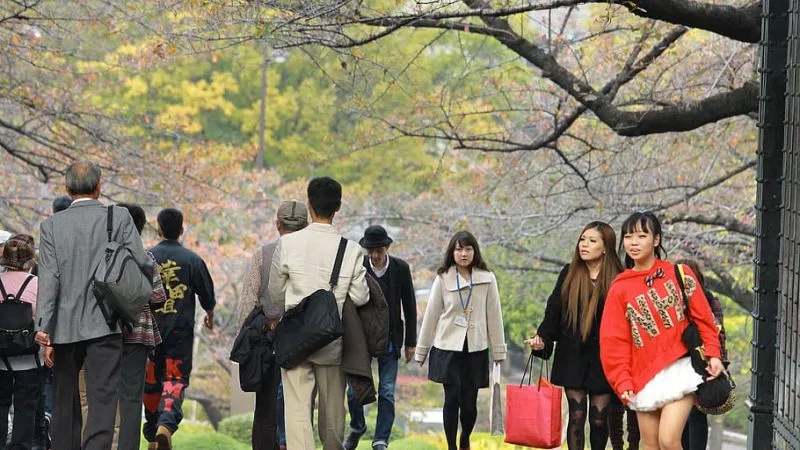
[安] is not “the Chinese word for peace,” and it is not a spare Japanese spelling of heiwa either. In Japanese it often means cheap — that is the everyday adjective yasui [安い]. The same character also builds words for rest, safety, and a mind that can finally sit still.
Chinese uses [安] in its own compounds for ease and safety. The usual Chinese word for civic peace, though, is 和平 (hépíng), the reverse of Japanese 平和. If you want a Japanese word that English speakers would call peace of mind, look at anshin [安心] — relief, a heart that is no longer braced — or anzen [安全], safety.
Japanese words with [安] that sit near peace:
| Kanji | Romaji | Meaning |
| 安易 | an’i | easy; facile; taking the easy way |
| 安静 | ansei | rest; quiet (often medical rest) |
| 安否 | anpi | someone’s safety; whether they are all right |
| 安らか | yasuraka | peaceful; tranquil; at rest |
| 安心感 | anshinkan | a sense of security |
| 安泰 | antai | peace; safety; being in a stable place |
| 安穏 | annon | peace; quiet; an untroubled life |
| 安寧 | annei | public peace; stability; order |
Other ways to say peace in Japanese
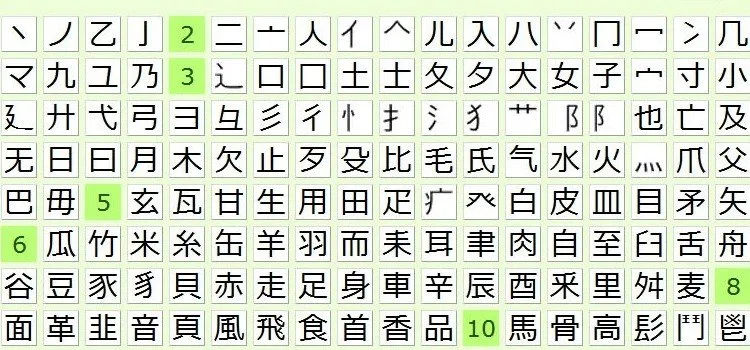
Japanese has more words for peace, harmony, and quiet than one tattoo can hold. Some are adjectives. Some are verbs. A few are so rare they belong in a dictionary more than in a conversation. Here are others that sit next to the idea:
| Kanji | Romaji | Meaning |
| 穆穆 | bokuboku | tranquil and kind; humble and dignified (literary) |
| 無事 | buji | safe; without incident; all is well |
| 円満 | enman | harmonious; amicable; a relationship with no sharp edges |
| 楽 | raku | comfort; ease; relief |
| ピース | pīsu | from English peace; often the peace sign in a photo |
| 仲直り | nakanaori | making up after a quarrel |
| 安らぎ | yasuragi | inner ease; the peace that settles in the chest |
| 静けさ | shizukesa | quiet; stillness |
Other characters can lean toward the same feeling, like [治], which can mean to govern, to be at peace, to calm something down. For a single-character tattoo, [和] or [安] is usually the more honest choice — as long as you want harmony or ease, not the civic word heiwa. If you want the word that actually means peace, write 平和.
Peace phrases in Japanese
A few sentences to hear the words in use — including one that is funeral language, not a casual “peace out.”
ご冥福をお祈りします。
Gomeifuku o inorimasu.
May their soul rest in peace. (A condolence, not everyday speech.)
和平会談は再度失敗した。
Wahei kaidan wa saido shippai shita.
The peace talks failed again.
平和はとても大切です。
Heiwa wa totemo taisetsu desu.
Peace is very important.
彼らは和睦を求めた。
Karera wa waboku o motometa.
They sought reconciliation.
日本はとても平和だ。
Nihon wa totemo heiwa da.
Japan is very peaceful.
私の望むのは安らぎと静けさだけです。
Watashi no nozomu no wa yasuragi to shizukesa dake desu.
All I want is peace and quiet.



Community
Comments
0 comments
There are no published comments in this language yet.
Send comment