
Kazushi Sakuraba is a Japanese professional wrestler and former mixed martial artist whose career helped give Pride Fighting Championships its unruly, cross-style character. Known as the “Gracie Hunter,” he became famous for major wins over members of the Gracie family at a time when Brazilian jiu-jitsu carried enormous prestige in MMA.
His appeal was never built on an image of invincibility. Sakuraba was compelling because he took difficult matchups, made strange positions look playable, and brought the instincts of puroresu into bouts where the result still had to be earned. That mix made him hard to place in one school of fighting—and hard to forget.
Contents 5
How Sakuraba moved from wrestling into MMA
Before MMA made him internationally known, Sakuraba had a professional-wrestling background. That experience did not turn him into a finished mixed martial artist, but it gave him useful habits: comfort in scrambles, a feel for grips and leverage, and the confidence to keep moving when a position looked awkward.
Early MMA demanded more than showmanship. Opponents arrived with focused backgrounds in wrestling, judo, striking, or Brazilian jiu-jitsu. Sakuraba had to deal with takedowns, guard work, clinches, and submissions against specialists who expected the fight to follow their strengths. His answer was usually movement rather than a rigid template. He changed direction, hunted for limbs, and made a stalled exchange feel unstable.
Why he became the Gracie Hunter
The nickname came from a run of high-profile victories over Gracie family members. His win over Royler Gracie at Pride 8 ended by technical submission after a kimura sequence. In 2000, Sakuraba faced Royce Gracie in the bout most associated with his name: a six-round, 90-minute contest that ended when Royce’s corner stopped the fight between rounds.
Those were not his only notable results in the rivalry. Sakuraba also beat Renzo Gracie by submission and Ryan Gracie by decision. Taken together, the wins made “Gracie Hunter” a memorable label, but the label can hide the point of the fights. They did not prove that one martial art had permanently defeated another. Rules, preparation, size, conditioning, and the ability to adapt all shaped what happened.
What Pride gave Sakuraba
Pride was a natural setting for a fighter who could not be reduced to a single style. The promotion brought together athletes from jiu-jitsu, wrestling, judo, kickboxing, and professional wrestling, often with very different ideas about how a fight should unfold. Sakuraba gave that collision a human center: a fighter willing to use what worked, even if it did not look like a textbook sequence.
His record also shows why the legend should not become a fairy tale. He beat names such as Renzo Gracie, Quinton Jackson, and Ken Shamrock, while losses and difficult late-career bouts reveal the cost of competing for so long against elite opposition. His final MMA appearance came against Shinya Aoki at Rizin in 2015. The full arc is more interesting than a highlights reel because it includes risk, wear, setbacks, and stubbornness.
The style behind the reputation
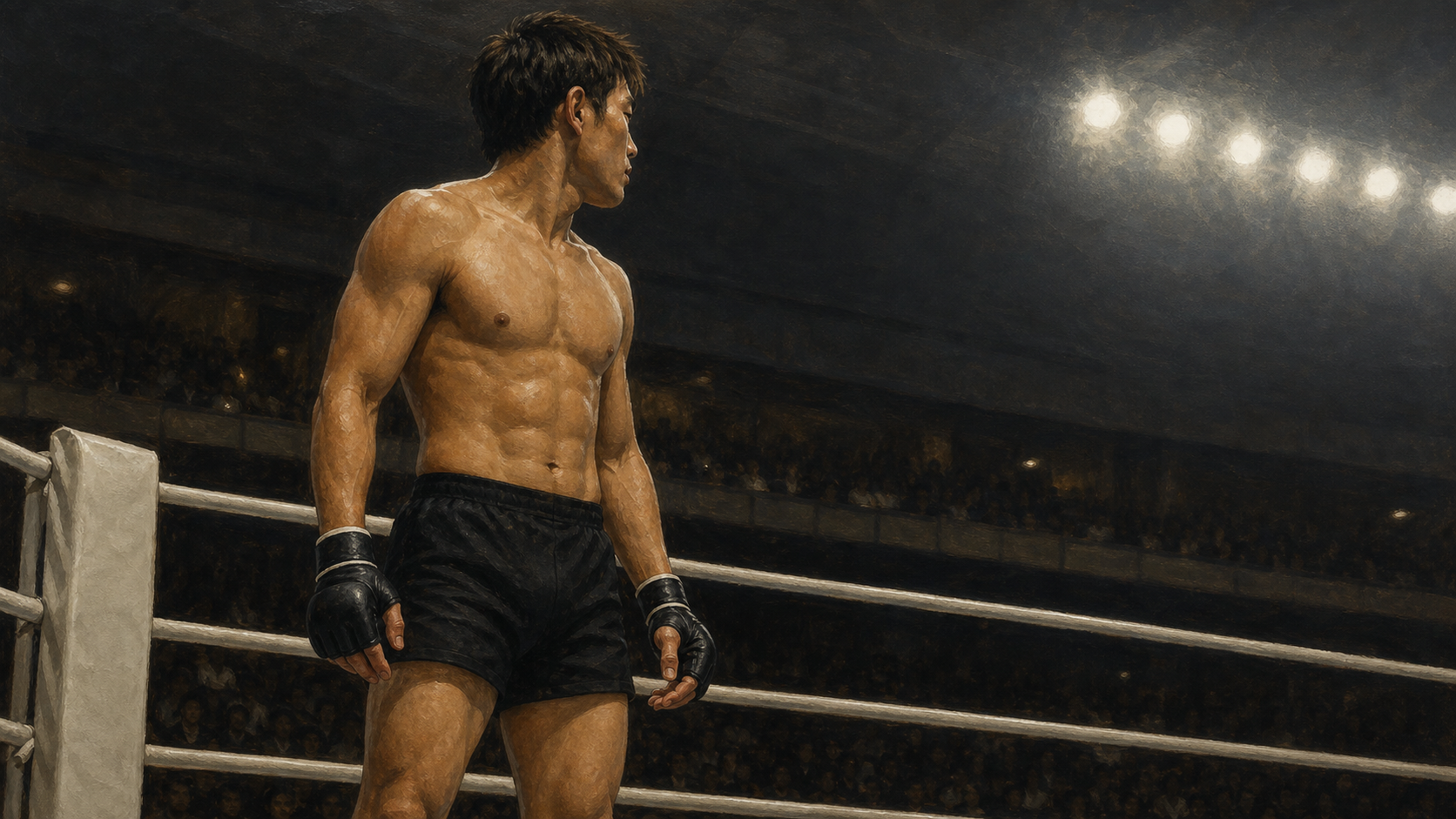
Sakuraba’s reputation for creativity becomes clearer when you watch how he treated uncomfortable moments. He did not wait for every exchange to become clean. From clinches, transitions, or bottom positions, he looked for a grip, an angle, or a small opening that could change the opponent’s priorities. That is why his fights often feel less predictable than a simple striker-versus-grappler matchup.
His submission record reflects that opportunism, but technique alone does not explain the effect. He also used timing and pressure to make rivals react. Sometimes that produced a reversal or a finish; sometimes it exposed him. The same willingness to take a risky route that made his best performances exciting also left room for opponents to punish mistakes.
How to watch Sakuraba today
Start with the opening minutes rather than waiting for a famous finish. Notice where he puts his head during a takedown, how he tries to create space under pressure, and when he chooses to turn a clinch into a scramble. In a ring, ropes can interrupt movement and alter position in ways a cage does not, so the setting matters as much as the individual hold.
The Royce Gracie fight is essential for understanding the nickname, but it should not be the only tape you watch. A bout with a larger striker, a wrestling-heavy opponent, or another submission specialist shows different parts of the same idea: Sakuraba tried to make every contest answer a new question. That is his lasting place in MMA history—not as an unbeatable figure, but as a Japanese fighter whose willingness to improvise made an unstable sport feel newly possible.


Community
Comments
0 comments
There are no published comments in this language yet.
Send comment