
Kakebo is a Japanese method used to save money, promising to save up to 35% of your salary. The name Kakebo [家計簿] literally means "household account book".
The kakebo is very popular in Japan and has spread around the world. Its method is used daily by thousands of people worldwide, who meticulously record their personal expenses and income.
Its popularity is so great that there are different types of Kakebo books, some copying the method and releasing books under different names. These are books or notebooks for singles, couples, teenagers, entrepreneurs, etc.
Contents 7
Motoko Hani - How did Kakebo originate?
The book was launched in 1904 by a woman named Motoko Hani, considered the first journalist in Japan. She founded the magazine fujinnotomo [婦人之友社] which literally means woman's companion.
Motoko Hani (1873–1957) is considered a protected daughter of the revolution and modernization of Japan. She was part of the first generation of women at the then newly inaugurated Tokyo Women's Higher Education Institute.
Since 1904, the Kakebo has been published every year by Fujinnotomo. This was an innovative way for wives to efficiently manage their family's income. Did you know that in Japan women take care of the household finances?
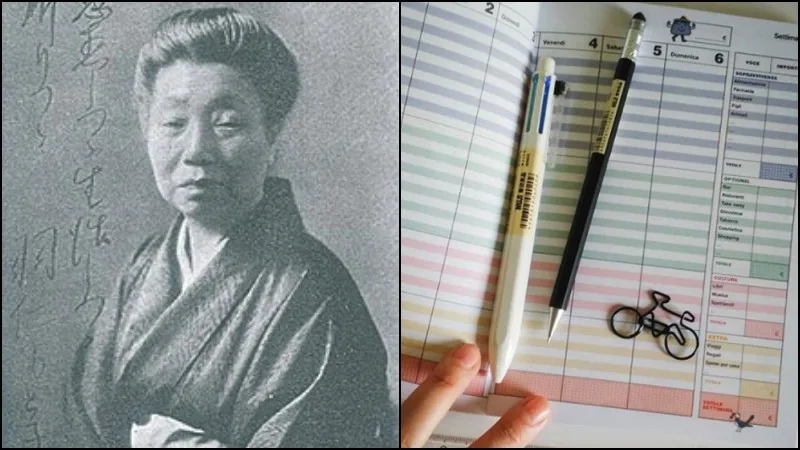
In most traditional Japanese households and families, the woman manages the salary and even gives an allowance to her husband. Perhaps this influenced the creation of the Kakebo book or vice versa.
In reality, Motoko Hani is a great influencer and even founded a women's school called Jiyû Gakuen that encouraged women's freedom and independence.
“Although Japan is a traditional culture in many aspects, the kakebo was a liberating tool for women, because it gave them control over financial decisions“, says Fumiko Chiba, author of the book “Kakebo: the Japanese art of saving money”.
What is the Kakebo book like?
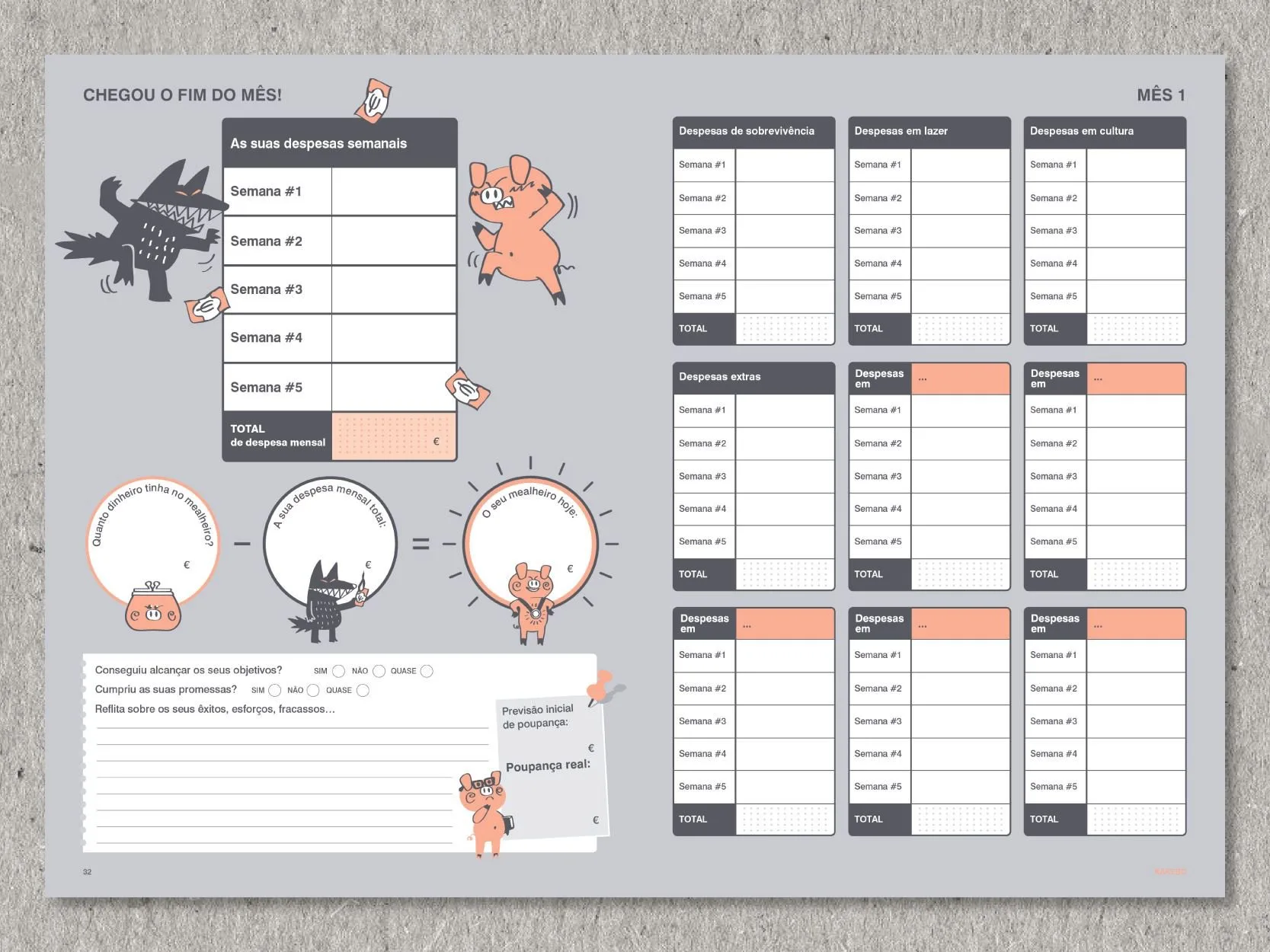
The Kakebo books often feature a narrative like that of the pig and the wolf, one character trying to spend and another trying to save. Along with various tips on how to save and create household budgets.
The book is not a calendar with dates; you can start whenever you want on a Monday, making notes of your income and expenses in the indicated places. The recording cycle lasts a total of 12 months and helps you set savings goals, create graphs, and categorize expenses.

The Kakebo classifies expenses into four groups called Survival, Leisure and Vices, Culture, and Extras. You can use Survival to define expenses such as food, transportation, dependents, and medications.
In Leisure and Vices, you can include things like drinks, restaurants, parties, clothes, and cosmetics. In Culture, you can include things like books, music, movies, and magazines. In Extras, you add things like travel, electronics, and household items.
How does the Kakebo Method work?
In reality, the Kakebo method is very simple. The goal behind kakebo is to emphasize things that cannot be dispensed with and learn to get rid of those that are not essential or necessary expenses.
The method works based on 4 questions that are:
- How much money did you save?
- How much money would you like to save?
- How much money are you actually spending?
- What would you change next month to improve?

The Kakebo also has 3 basic principles that form the method:
- Control all expenses, week by week, reorganizing daily consumption and analyzing the results at the end of each month.
- Prioritize and categorize expenses according to daily needs, thus appealing for more conscious and responsible consumption;
- Allow for a deep analysis of daily consumption, to find ways to replace ineffective financial habits with those that not only fit your life and financial reality but also effectively help you save;
The method also allows you to set monthly or longer-term goals. With a goal in mind, you will be able to achieve it through the method that keeps you focused on saving your money and achieving what you desire.
Advantages and disadvantages of kakebo
One of the advantages of this finance book compared to others is that it is filled with diagrams and illustrations, which facilitate organization and classification, in addition to encouraging discipline in recording income and expenses.
It is also simple and can be used by anyone, whether a child or an adult. It can be advantageous to put aside technology and go for the traditional notebook. Not to mention that it lasts a total of 12 months and has a narrative.

The few disadvantages of Kakebo are the fact that it is a book, not discreet, anyone can pick it up and read it if it is in a visible place. Quite different from finance apps that have passwords and other forms of privacy.
Being a book, it is also a bit large, even in its pocket version. Since it stays at home, it may end up making it difficult to record any expenses outside the house. If you forget to note it down, it's gone...
Being a book and not an app, you don’t have backup, there’s no automation in calculations, and you also don’t have all the convenience of a smartphone app. There are even versions of Kakebo for phones, but they are in other languages and usually only carry the name.
Users and advocates of kakebo say that the manual method makes you more aware of how and where to spend your money. Not to mention that the manual method forces you to think about your goals, thus making saving more effective.
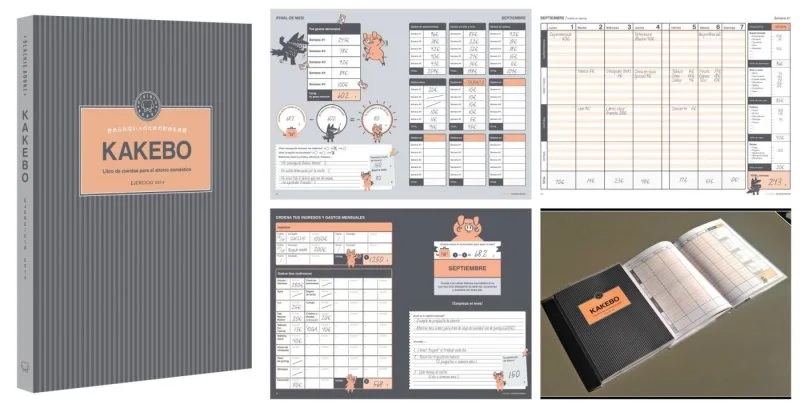
Despite the existence of apps, I myself have stopped noting things on my cell phone to write them down in a little notebook. I understand very well that sometimes manual things can be more effective than automatic ones, depending on the person's discipline.
Who is it for? How to use Kakebo?
For people who want to save money and do not know how or do not have much discipline and organization. Or people who do not know how to control daily consumption or find themselves at the end of the month with practically no money.
The method is also great for people looking for ways to prioritize and categorize their expenses according to their needs. Perfect for people with a fixed salary, freelancers, or unemployed. Whether married or single, child or adult, the method is simple and accessible to everyone.
At the beginning of each month, you should determine your fixed income and expenses. This will help to define and differentiate the money available for each month. You also need to follow all the suggested guidelines of the method and answer the questions.
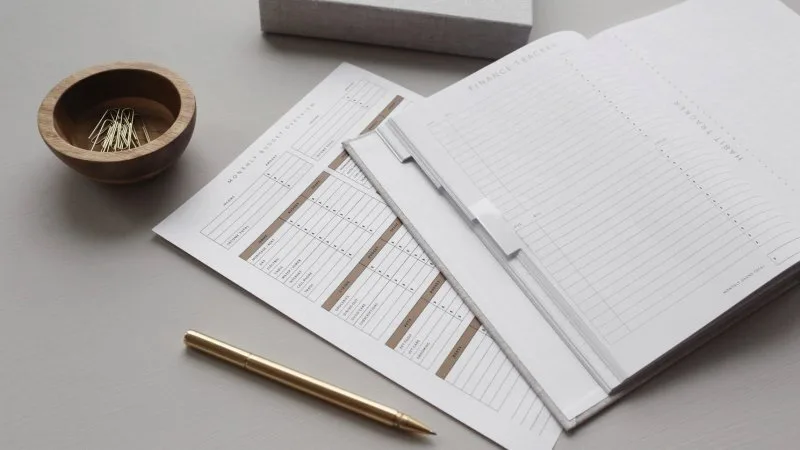
As it is a traditional method, it might be practical to keep all purchase receipts throughout the day and note all amounts before going to sleep or upon waking, to do everything with a calm mind and avoid distractions.
After applying the entire method for 12 months, you will have learned to save and spend your money better. They say that those who buy without a down payment end up with no way out! Thus, the Kakebo method will be your way out, better to save consciously.
List of Kakebo Notebooks and Books
The book is so sought after that sometimes you find it out of stock online. If it is priced exorbitantly low, it may be because it is out of stock. Try going to the page as the price may have already updated on the site.
How to Make Your Own Kakebo?
Perhaps you do not want to buy the Kakebo book or notebook, but want to use the method in a homemade way, creating your own spreadsheets using the method. I prefer that you acquire the book, but otherwise, keep in mind the tips to make your notebook:
In the spreadsheet, you should define the amount you start the month with and how it ends. Make a spreadsheet of income, regular expenses, monthly expenses, and forecasts of weekly expenses, both with date, source, amount, and category.
You should also create a field for important things to do, wishes, outings and forecasts, points for improvement, and a graphical representation. Perhaps the images of a Kakebo below will help you create your spreadsheet, whether online or on paper.
I hope you enjoyed the tips in this article. What did you think of the Kakebo method? If you liked it, share and leave your comments. What other ways have you used to save money?






Community
Comments
0 comments
There are no published comments in this language yet.
Send comment