
Do you know the Kumon method? What differentiates the Kumon method from other in-person courses? In this article, we will talk about Kumon's Japanese course and its learning method! Is it worth it?
As the name makes clear, Kumon was created by Japanese people in 1958 by professor Toru Kumon, who started teaching mathematics to people who had difficulties in school; soon he spread this method around the world, which first appeared in Londrina in 1977.
The main objective of the Kumon method is to create independence in studies, generating self-learning and a love for learning. In other words, the focus of the Kumon method is to make the person study alone, despite the existence of in-person classes.
Kumon courses are spread across various cities in Brazil and the world and primarily teach mathematics, English, Portuguese, and Japanese. Is the Kumon method worth it?
Contents 5
Kumon Method - In-person course or not?
Those who know Suki Desu know that I do not recommend in-person courses, mainly due to the slowness with which the classes are taught, aimed at making you pay endless monthly fees and end up spending a fortune.
On the other hand, the Kumon method is different and encourages learning at home, allowing the person to truly learn at a much faster and higher level. Still, Kumon's Japanese course shares negative characteristics of in-person courses.
Those who usually opt for in-person courses need the help of a teacher, discipline, and motivation. Unfortunately, if the focus of the course is to make the person study at home, they may not be able to do so due to a lack of discipline.
Another negative reason for an in-person course is the need to commute weekly to classes. The Kumon method is exactly stuck in the back and forth of studying at home and at the course. So, why not just take an online course?
As already mentioned, if the person does not have discipline, the Kumon method is of no use.
How do Kumon Method classes work?
In the Kumon method, you receive the material to study at home and go weekly to the Learning Unit to solve tasks and receive individual support. No class is presented to the group; each student has individual support in the unit.
Another school that uses a similar method is Prepara. I have had the opportunity to take about 5 courses at Prepara, and unfortunately, I don't remember anything I studied there, even though I work in the same field as the courses taken.

Kumon is better because it encourages you to study at home with quality material. Kumon students usually stay in the Unit 2 times a week for about an hour. It's a very short time, which only makes you waste time commuting from home to the Unit.
My friend said that the Japanese course goes from Module A to L; she spent 9 months and only reached Module C. In addition to this basic Japanese course, there is another more advanced course called Kokugo.
Upon completing the last level (stage L) of the Japanese course, the student will have studied approximately 1,000 kanji, 6,380 vocabulary words, and literary works that contain a maximum of 6,000 characters, providing conditions to take the N2 of the Japanese Language Proficiency Test.
The Japanese course at Kumon
As this site is focused on Japan and the Japanese language, I think it's good to give a little highlight to Kumon's Japanese course. As I mentioned earlier, it goes from stage A to L, dividing the course as follows:
The table below represents the number of characters studied per text, the total number of words learned, and the number of ideograms learned.
| Module | Text | Volc | Kanji |
| Beginner 4A | ?? | 109 | 0 |
| Beginner 3A | ?? | 204 | 0 |
| Beginner 2A | ?? | 403 | 0 |
| Basic A | 240 | 568 | 58 |
| Basic B | 280 | 856 | 121 |
| Basic C | 280 | 1088 | 185 |
| Basic D | 300 | 1323 | 265 |
| Basic E | 900 | 1640 | 347 |
| Basic F | 900 | 2055 | 428 |
| Intermediate G | 1000 | 2395 | 508 |
| Intermediate H | 1100 | 2885 | 588 |
| Intermediate I | 1300 | 3375 | 668 |
| Advanced JKL | ??? | 6380 | 1000 |
The number presented does not mean the amount of words that the person will already know how to speak and write, only the number of words and ideograms that appeared in the studied material. To learn, the person needs time and dedication.
At the Beginner level, the student will learn to read and write hiragana and katakana, simpler words, and to understand elementary sentences.
At the Basic level, the student will learn about 1,500 words and practice text comprehension. Upon completion, the student will be able to take the N4 level.
At the Intermediate level, the student will be able to take the N3 of the Japanese Language Proficiency Test. And as already mentioned, at the end of the course, the student will be able to take the N2 exam. Will they?
How much does the Kumon method cost?
Kumon Units are franchises where investors open Units in their cities; prices may vary depending on the region and the Unit administrator. In addition to monthly fees, the course also requires a registration fee.
My friend paid about 230 reais monthly to learn Japanese at Kumon in São Paulo. This is also the average in Japan. Let's suppose you spend 3 years to reach N2 (fluency) in Japanese. You will have invested a total of 8,000 reais to achieve fluency.
If you have the same dedication that you have to study alone with Kumon, you will have a much lower expense studying on your own or investing in a cheaper online course like the Online Japanese Program.
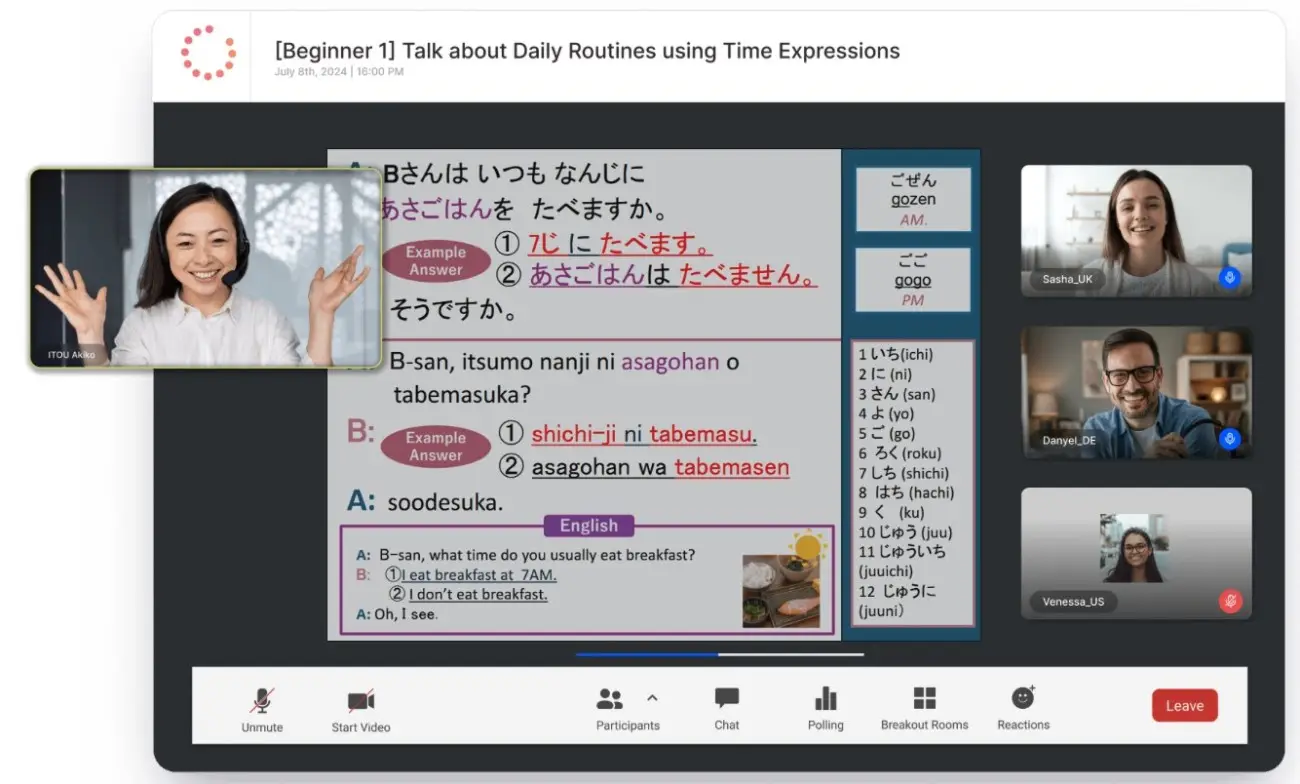
The Online courses on the Internet, such as the Online Japanese Program, use a more effective method based on immersion and spaced repetition with Anki. This way, you spend less money and learn faster. There are basic Japanese courses with a one-time price of 100 reais.
In the subjects of Mathematics and Portuguese, the Kumon method can be well utilized, since we are not trying to learn an unknown language, just improving our performance in subjects we have already studied in schools.
Remember that learning will depend on your dedication, no matter what course you are taking!
Is it WORTH IT or NOT to do KUMON?
Although the method encourages studying alone at home, along with self-learning, its study material focuses on filling gaps and answering questions, a traditional method that is not very advantageous in language learning.
I'm not saying that the Kumon method is ineffective. I just think it's useless to pay monthly fees to have study material at home and spend more than two hours of your week in a Unit doing exercises and asking questions to a teacher.
2 hours of class per week in a Kumon Unit is not enough to learn Japanese, English, or any other language. I also doubt that the children do the proposed exercises in the booklets correctly.

Thus, you end up paying high monthly fees for a method that seems innovative but is not at all different from online courses or in-person classes.
I have always wanted to do the Kumon method, but I believe that all the material taught by this method can be easily found on the internet without spending a dime. With discipline and dedication, you will be able to learn Japanese or any other subject on your own without spending anything.
Now, if you have a child, the Kumon method can be very effective in encouraging children to learn on their own. It requires parental supervision to come to a conclusion that the high investment in this method is worth it.
There are complaints about Kumon on Reclame Aqui, mostly about improper charges, difficulty in cancellation, neglect, and other issues. Unfortunately, we do not blame Kumon, but rather the owners of the Units who hire the franchise.
I cannot question or influence your decision to do Kumon. After all, I am a person who criticizes even higher education, which in my opinion only serves to obtain diplomas.
This is a characteristic of Julius from Everybody Hates Chris. Why would I spend money on something if I can do it for free or cheaper? Well, that's my opinion; many prefer to invest, so go for it!
I believe that the Kumon Method has helped many learn Japanese, English, mathematics, and other subjects. If you have already taken this course, I would like to hear your opinion about it in the comments. If you liked the article, share it with friends on social media.






Community
Comments
0 comments
There are no published comments in this language yet.
Send comment