
Ghost in the Shell is one of the most important works of Japanese animation. The 1995 film was based on the manga by Masamune Shirow and, under the direction of Mamoru Oshii, became a classic of science fiction anime. It combines action with questions about identity, memory and artificial intelligence.
This article explains how the film was made, what the story is about, what the title means, how the music and the images work, how the film influenced The Matrix and other works, and which sequels and series exist.

Contents 12
What is Ghost in the Shell?
Ghost in the Shell (Japanese: 攻殻機動隊, Kōkaku Kidōtai) is a manga by Masamune Shirow from 1989 that was adapted into anime several times. The best-known version is Mamoru Oshii's 1995 feature film, which is considered a milestone around the world.
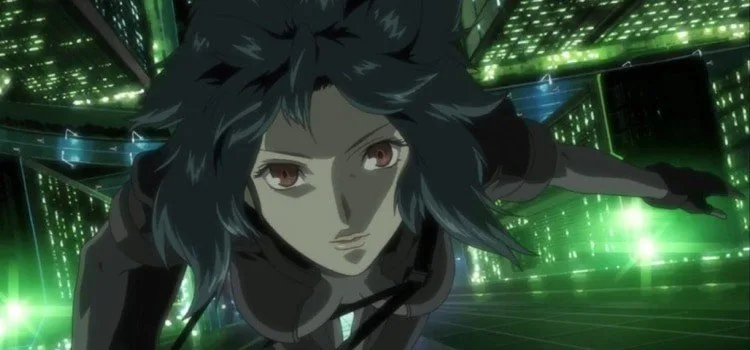
The film is set in 2029 in a fictional big city where people replace their bodies with prosthetics and implants. It follows the cyborg agent Major Motoko Kusanagi as she hunts a mysterious hacker.
The manga from 1989
Masamune Shirow published Ghost in the Shell from 1989 in Kodansha's Young Magazine. The story mixes police work with cyberpunk and political conflict and was translated into many languages.
Shirow drew a world where databases, brain implants and artificial bodies are part of everyday life. Many of the manga's ideas seemed far away at the time and are now part of the discussion about technology and society.
The 1995 film: team and production
The film was directed by Mamoru Oshii, with a screenplay by Kazunori Itō. The animation was produced by Production I.G and the music was composed by Kenji Kawai. It opened in Japan on 18 November 1995 and runs for 82 minutes.
The images combine traditional cel animation with early computer animation. That mix created a particular atmosphere that still defines the film today.
The story
Major Motoko Kusanagi works for Section 9, a cybercrime unit. She investigates a hacker known as the Puppet Master, who is able to manipulate people's memories and their ghosts, as the film calls their consciousness.
Without spoiling the ending: the investigation leads less to a classic chase than to the question of what makes a person a person when the body can be replaced entirely.
Major Motoko Kusanagi
Kusanagi is a cyborg whose body is almost entirely artificial. What remains original about her is her ghost, the film's term for the mind or consciousness. She is the centre of the story because she embodies the border between human and machine.
The film shows her as a professional investigator, but also as a character who thinks about her own self. The quiet scenes in which she talks about her existence are among the best known passages of the film.
The Puppet Master and the question of the ghost
The Puppet Master is more than a conventional villain. He raises the question of whether an artificially created consciousness has a right to its own existence. The film therefore joins a crime story with philosophy.
That question was unusual for an anime film in 1995 and feels surprisingly current today, in the age of language models and autonomous systems.
Title and philosophy: ghost and shell
The title can be translated as ghost and shell. The shell is the artificial body, the ghost is the consciousness that inhabits it. The film asks how much of a person remains when the body becomes replaceable.
Memory adds another layer: if memories can be stored and changed, what is left of a fixed identity? These themes are why the film is still discussed today.
Visual style and music
The film is known for its quiet, long shots. The city is often shown from a distance, with water, glass and reflections that also picture the question of identity. Between them are short, precise action scenes.
Kenji Kawai's score uses vocals in classical Japanese, among other elements. The main theme is considered one of the most striking pieces of music in the genre and carries much of the atmosphere.
Influence: The Matrix, Cameron and cyberpunk
The film influenced many directors. The Wachowskis, creators of The Matrix, cited it as an inspiration, and James Cameron described it as the first truly adult animation film to reach a level of literary and visual excellence.
At the 24th Annie Awards in 1996 the film was nominated in five categories, including Best Animated Feature. Together with Akira, it is a key example of how Japanese science fiction anime became known around the world.
Sequels and series
In 2004 Oshii directed the sequel Ghost in the Shell 2: Innocence. In 2008 Ghost in the Shell 2.0 was released, a remastered version of the first film with new digital effects and new audio.
There are also the television series Stand Alone Complex, further films and the Arise series. Together they form one of the largest anime franchises in the genre.
The 2017 live-action film
In 2017 a live-action version directed by Rupert Sanders reached cinemas, with Scarlett Johansson as the Major. The film uses motifs from the source but is judged differently by many fans than the 1995 anime.
Anyone who wants to discover the story should start with the 1995 film. It is the shortest and most focused version of the material.
Conclusion
Ghost in the Shell is a rare case: a film that combines action and philosophy and remains entertaining. Anyone who likes science fiction and Japanese animation will find one of the great classics of the genre here.
Read more: the best cyberpunk anime, the list of sci-fi anime, Ghost Stories, anime names in Japanese and anime vs manga.



Community
Comments
0 comments
There are no published comments in this language yet.
Send comment