
Learning Japanese directions is useful far beyond the classroom. You need these words when you read a map, follow station signs, talk about regions such as Tohoku, or ask someone how to reach the nearest train platform. The good news is that the core vocabulary is small, and once you understand how the readings change, the whole system becomes much easier to remember.
The general word for direction is hougaku [方角]. In practice, though, most people start with the four basic compass words and a handful of location terms such as left, right, straight ahead, in front of, and next to. That combination already covers most everyday situations.
Contents 6
The four cardinal directions in Japanese
The four main directions use the native Japanese readings: kita for north, minami for south, higashi for east, and nishi for west. These are the forms you will hear first when someone points at a map or gives a simple explanation.

| English | Japanese | Reading | Rōmaji |
|---|---|---|---|
| North | 北 | きた | kita |
| South | 南 | みなみ | minami |
| East | 東 | ひがし | higashi |
| West | 西 | にし | nishi |
These words show up in place names as well. Hokkaido is associated with the north, and when you start reading about Japan's eight regions, you quickly notice how often compass vocabulary appears in geography.
Why compass compounds sound different
This is the part that usually confuses beginners. The four single directions use native readings, but most combined compass terms switch to on'yomi, the Sino-Japanese readings. That is why north is kita on its own, while northeast becomes hokutou instead of kita-higashi.
| English | Japanese | Reading | Rōmaji |
|---|---|---|---|
| Northeast | 北東 | ほくとう | hokutou |
| Northwest | 北西 | ほくせい | hokusei |
| Southeast | 南東 | なんとう | nantou |
| Southwest | 南西 | なんせい | nansei |
| North-northeast | 北北東 | ほくほくとう | hokuhokutou |
| East-northeast | 東北東 | とうほくとう | touhokutou |
There is one nuance worth remembering: on maps and weather reports, 北東 means the compass direction northeast, but in established region names you can also see forms such as 東北 for Tohoku. In other words, the kanji order can shift when the word names a region instead of a pointing direction.
Useful location words for everyday directions
Cardinal points are only half the story. In real conversations, people rely just as much on location words such as left, right, straight ahead, in front of, and behind. If you are traveling in Japan, these words will help more often than an elaborate compass explanation.
| English | Japanese | Reading | Rōmaji |
|---|---|---|---|
| Left | 左 | ひだり | hidari |
| Right | 右 | みぎ | migi |
| Straight ahead | 真っすぐ | まっすぐ | massugu |
| In front of | 前 | まえ | mae |
| Behind | 後ろ | うしろ | ushiro |
| Above | 上 | うえ | ue |
| Below | 下 | した | shita |
| Next to | 隣 | となり | tonari |
| Near | 近く | ちかく | chikaku |
| Opposite side | 向かい | むかい | mukai |
Once you know these basics, phrases from station staff, shop workers, or taxi drivers stop sounding like a blur. Even simple expressions such as migi desu or massugu itte kudasai can save a lot of hesitation.
Useful Japanese phrases for asking and giving directions
The most practical way to study this topic is to learn a few short phrases you can reuse. These are simple, polite, and common in daily life.
- トイレはどこですか。 Toire wa doko desu ka. = Where is the bathroom?
- 駅はどっちですか。 Eki wa docchi desu ka. = Which way is the station?
- 右に曲がってください。 Migi ni magatte kudasai. = Please turn right.
- 左に曲がってください。 Hidari ni magatte kudasai. = Please turn left.
- 真っすぐ行ってください。 Massugu itte kudasai. = Please go straight.
- 駅は東です。 Eki wa higashi desu. = The station is to the east.
- 銀行の向かいです。 Ginkou no mukai desu. = It is across from the bank.
- 交番は近くにありますか。 Kouban wa chikaku ni arimasu ka. = Is there a police box nearby?
Notice how movement and destination words often appear with particles such as に and へ. If you want to understand that pattern better, this guide to Japanese particles for location and direction is a useful follow-up.
Maps, regions, and real travel situations
Direction words become much more useful when you connect them to places you actually see. A weather map may mention a north wind, a train guide may point you east of an exit, and a travel article may talk about the northeast or southwest of the country. That is why compass vocabulary pairs well with reading about how Japanese addresses work and how regions are organized.
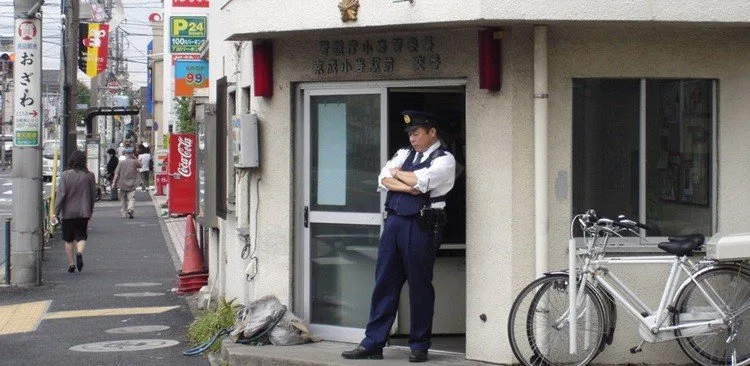
If you ever need help on the street, a koban police box is one of the best places to ask for directions. In practice, being able to say the destination clearly matters more than speaking in long sentences. Short, clean phrases usually work best.
Video lesson about directions in Japanese
If you want to hear the rhythm and pronunciation instead of just reading tables, the lesson below is a good companion to this article.
Start with the four cardinal points, then add the words for left, right, and straight ahead. After that, combined forms such as hokutou and nansei feel much less intimidating. Once these words settle in your ear, maps, station signs, and everyday directions in Japanese become far easier to follow.



Community
Comments
0 comments
There are no published comments in this language yet.
Send comment