
Many podcasts begin with one simple music decision: choosing an intro. That may work for the first few episodes, but as a show develops, producers usually discover that an opening theme is only one part of its audio identity. Transitions, background beds, closing music, recurring segment cues, and promotional clips can all require music of their own.
Creating each piece independently often leads to inconsistency. One transition may sound cinematic while the outro feels like corporate stock music, even though both tracks work perfectly well on their own. An AI Music Agent can help producers explore music from written descriptions of mood and style, but the strongest results come from first designing a complete package in which every cue has a clear purpose.
Contents 8
Start With the Structure of an Episode
Before choosing or generating music, producers should map where music actually appears in a normal episode. A typical interview show might need an opening theme, a short transition into the conversation, a background bed for announcements, a cue for a recurring segment, and a closing theme.
Narrative podcasts may require a larger set of emotional or tension cues, while conversational programs may only use music at key structural moments. There is no ideal number of tracks because the correct package depends on the format of the show.
What matters is that every cue has a job. A five-second transition does not need the same musical development as a full opening theme, and background music beneath a host should usually attract less attention than the music used to introduce the entire program.
Create One Musical Vocabulary
The pieces in a podcast package do not need to use the same melody. They simply need enough shared characteristics to sound as though they belong to the same show.
A technology podcast might use clean electronic textures and light percussion, while a history program could lean toward restrained cinematic or acoustic instrumentation. A lifestyle show may prefer warmer arrangements with softer rhythms and less dramatic movement.
Producers can define this identity through a small number of choices, such as instrument family, production texture, typical tempo range, average energy level, and overall emotional tone. These decisions form the show's musical vocabulary and give future tracks clear boundaries.
Once those boundaries are established, each cue can change according to its function without becoming unrelated to the rest of the package. Consistency comes from shared musical characteristics rather than copying the same song repeatedly.
Build the Main Theme First
The opening theme is usually the best starting point because it expresses the show's identity most clearly. Instead of describing only a genre, producers should create a short creative brief explaining the subject of the podcast, the target audience, the desired emotional tone, and the level of energy the introduction should create.
A business show, for example, may want something modern and confident without sounding aggressive or overly promotional. A storytelling podcast may need more atmosphere but still want to avoid music that becomes too dramatic for ordinary episodes.
Once the opening direction works, the rest of the package can develop around it. The closing theme may feel more resolved, the transition cue can become shorter and more rhythmic, and background music can use fewer melodic elements so that it remains comfortable underneath speech.
Explore Related Tracks Instead of Starting Over
Producing several connected cues is where AI-assisted music tools can become especially practical. Instead of searching for five unrelated pieces and hoping they happen to match, the producer can work from one established creative direction and explore several variations.
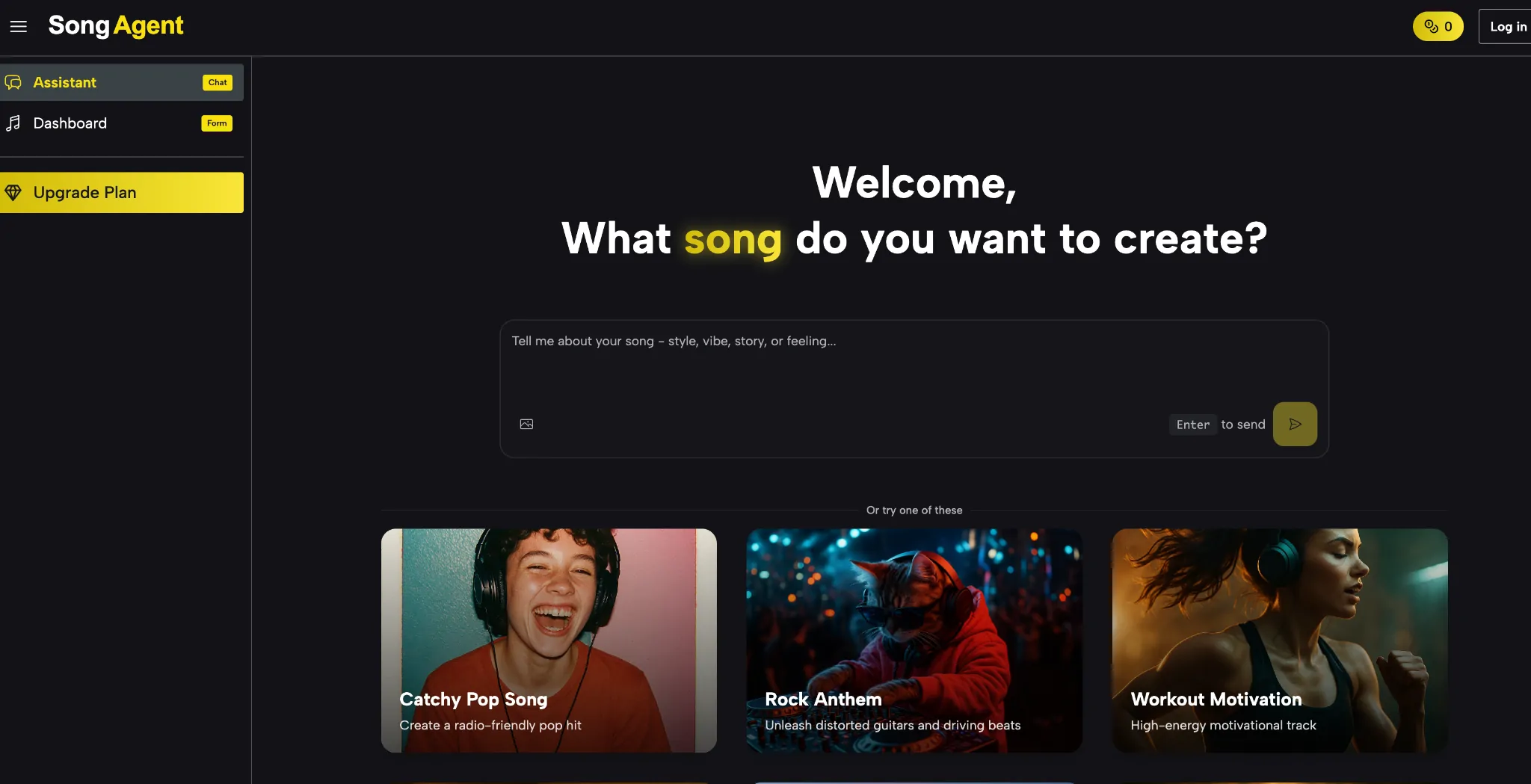
An AI Song Agent can use natural-language descriptions to generate music around style, mood, structure, and other creative choices. SongAgent also positions music packages and collections as part of its broader workflow, which makes the approach relevant to producers who need more than one isolated track.
The producer still needs to curate the results carefully. Not every generated cue will fit the show simply because it uses the same prompt, and strong musical consistency remains an editorial judgment rather than something that should be assumed automatically.
Test Music Beneath Real Speech
Podcast music should always be evaluated in context because a track that sounds subtle on its own may become distracting underneath a host's voice. Strong melodies can compete with important information, while busy percussion may make speech feel rushed even when the volume is low.
Producers should place candidate background music under an actual section of dialogue and listen for problems. The rhythm should not fight the speaker, the emotional tone should match the conversation, and the arrangement should leave enough space for words to remain the main focus.
Transitions deserve the same treatment. A five-second sting may sound elegant in isolation but feel painfully slow when placed between two spoken segments. The correct length and intensity only become clear when the cue is tested inside a real episode.
Prepare Music for More Than the Main Episode
A podcast's music often becomes useful outside the full show. The same audio identity may appear in short social trailers, YouTube clips, season announcements, sponsor videos, or recordings from live events.
Preparing several lengths in advance can save significant editing time later. A twenty-second opening theme might have a shorter five-second version for social content, while an instrumental variation may work better when narration needs to sit over the music.
Longer background pieces can also make editing easier when episode sections vary in length. By planning these versions early, producers avoid rebuilding the same material every time a new distribution format appears.
Keep Rights and Usage Records Organized
Podcast music is part of a published media product, so usage rights should not be treated as an afterthought. This becomes particularly important for monetized podcasts, client productions, branded shows, and episodes containing advertising.
Before publishing generated music commercially, producers should confirm the current usage terms attached to the service and plan they are using. It is also useful to keep a simple record of where important cues came from and what licensing conditions applied when they were created.
This administrative step takes very little time and can prevent confusion later if the show grows, changes ownership, or begins distributing content through additional channels.
Build for Episode Fifty
A good podcast music package is not designed only to make the first episode sound polished. Its real value appears months later, when editors already know which cue belongs to an introduction, transition, announcement, or conclusion.
At that point, the question changes from “What song should we find this week?” to “Which part of our music system fits this moment?” That shift reduces repeated searching while giving the show a more recognizable audio identity.
For a podcast that plans to publish consistently, a small but deliberate music system is usually more valuable than one impressive intro track.






Community
Comments
0 comments
There are no published comments in this language yet.
Send comment