
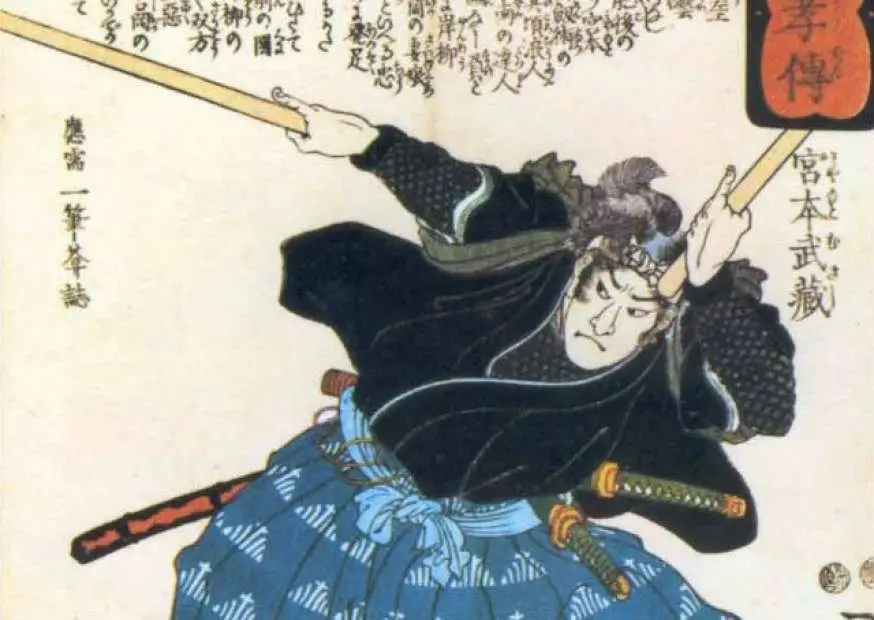
Have you heard of the 47 Ronins? This story is portrayed as one of the greatest examples of honor and loyalty in Japanese culture. It is about a group of samurais responsible for the protection of their lords and provinces.
It was not an easy mission for these warriors; they took the Bushido (武士道) very seriously, a kind of code for samurais. This manual was not written, but it had a strong meaning of honor above all. But how did these samurais become Ronins and end up becoming symbols of loyalty?
Contents 4
The real story behind the legend of the 47 Ronins
The story takes place in ancient feudal Japan between 1701 and 1703. Samurais were very important to the empires at that time to ensure everyone's safety.
But after all, what does Ronin (浪人) mean? This term refers to samurais without a lord. In other words, by not having the basic principle of Bushido, they were like "downgraded samurais." Because they did not have a master, they could not perform their previous functions.
The story gained strength during the Meiji period, but it is still widely discussed in Japan today. Oihi Yoshio was the right-hand man and servant of Asano Takumi No Kami Naganori (浅野長矩).
At that time, the lords were governed by shōgun (general). The shōgun of the time was Tokugawa Tsunayoshi, who chose the daimyō Asano to receive and host the representatives of the Imperial family. Among them was Kira Kozukenosuke Yoshinaka, who was responsible for dictating orders of conduct.
It seems that Asano and Kira did not get along due to Kira's difficult temperament, so they were always provoking each other. One day, Asano could not stand the offense and ended up wounding the representative superficially with his sword.
What the daimyō did may not seem so serious, but attempting to harm a guest was against the law, and to make matters worse, the act was committed inside the palace, which made it even more dishonorable. The penalty for this type of crime was hanging, but he had the chance to commit seppuku. This form of ritual suicide is given as an option in some cases to die with honor and restore the honor of his family.
What did the 47 Ronin do?
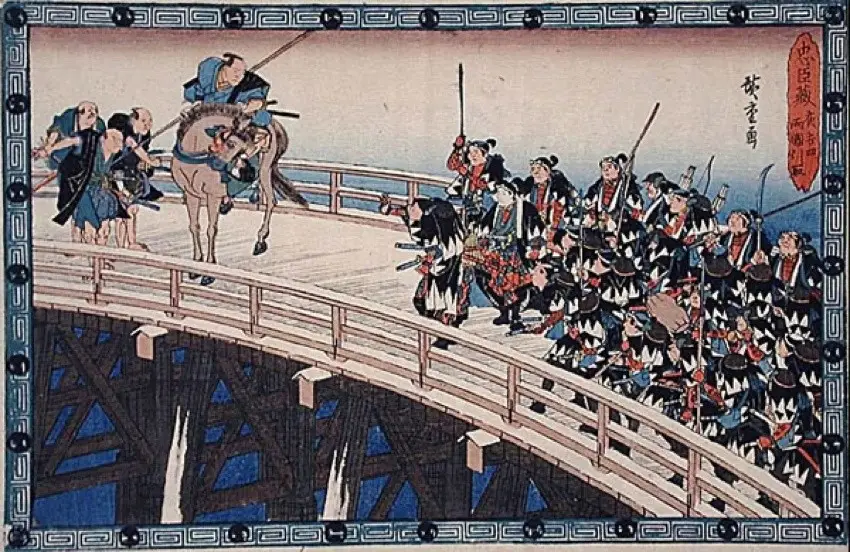
When the news spread throughout the palace, the samurais were outraged by what had happened and decided to find a way to take revenge on Kira. The samurais who became ronins after the death of their daimyō were led by Oihi Yoshio. He led everything regarding the revenge plan and even managed to convince 46 others to help him in this mission.
The ronins were very careful to remain free of suspicion; they did not attack immediately. They waited almost two years to attack Kira. Everyone was aware that they would not escape death, but they would honor their master.
The plan was for them to live as ordinary citizens to throw off Kira's spies. The ronins hid weapons, already thinking of the day they would avenge their lord's death.
When they were convinced that the lord had let his guard down, they decided to attack, almost two years later. On December 14, 1702, they invaded Kira's mansion located in Edo. The ronins entered armed and split into two groups, one entering from the back and the other from the front.
Since the neighbors around the palace did not like the lord very much, it was not difficult for them to enter. When Kira realized the presence of the ronins, he did everything to escape and hide but ended up being found outside the location. The ronin who found him brought him before the others so they could see "justice being done." He had the option to take his own life like master Asano, but since he did not react, he was executed by a ronin in the same way as the daimyō, and then his head was decapitated.
The head was kept and taken to Asano's tomb to symbolize the honor done by him through the ronins. The consequence was that on February 4, 1703, they were to be killed, not as criminals, but with honor. The 47 ronin died by seppuku and were buried together in Sengakuji.
The impact of the 47 Ronin today
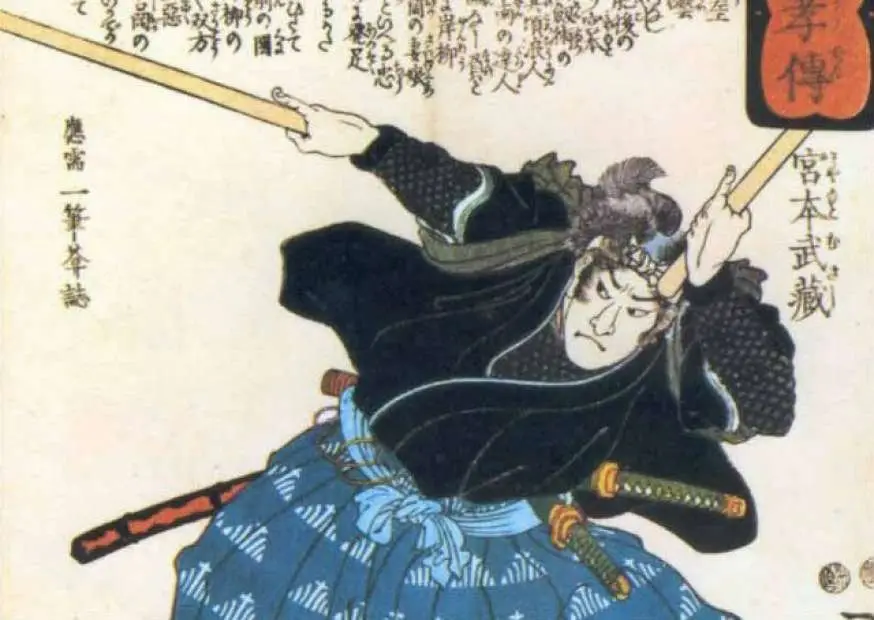
The actions of the ronins are examples for Japanese culture to this day. Every year on December 14, their graves are visited and honored.
In addition to being remembered in Japan, this story has become known worldwide, as books, plays, and films have been written about it.
The movie 47 Ronin
There are several film versions that represent the bravery of these ronins, but currently, the most recent is the movie 47 Ronin. The film is American, produced in 2013, directed by Carl Rinsch. Of course, like most feature films that depict a fact, there were some adaptations to attract more audience attention.
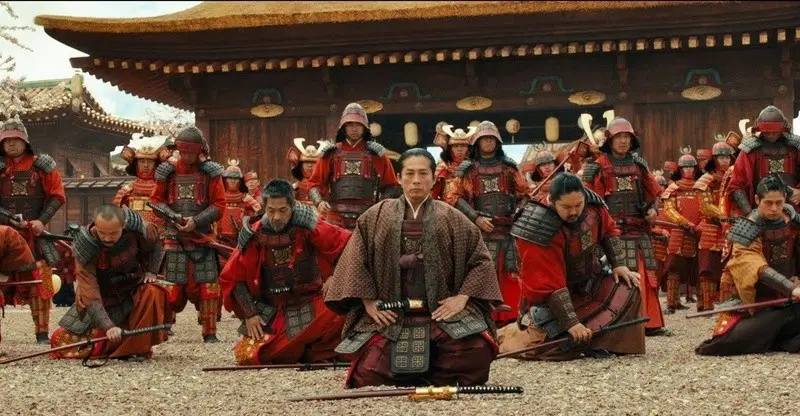
In the movie 47 Ronin, there are tournaments with fighting and armor, the presence of mystical creatures, and even a sorceress who transforms into a fox representing a spy of Kira. Another thing that cannot be missed to attract even more audience attention is the romantic part that occurs when Asano's daughter falls in love with a bastard who later joins the group of ronin.
Despite having these extra scenes, the movie is good and managed to achieve the goal of portraying the story of the ronins as closely as possible. They were very careful regarding the clothing, weapons, hairstyles, locations, and ceremonies.



Community
Comments
0 comments
There are no published comments in this language yet.
Send comment