
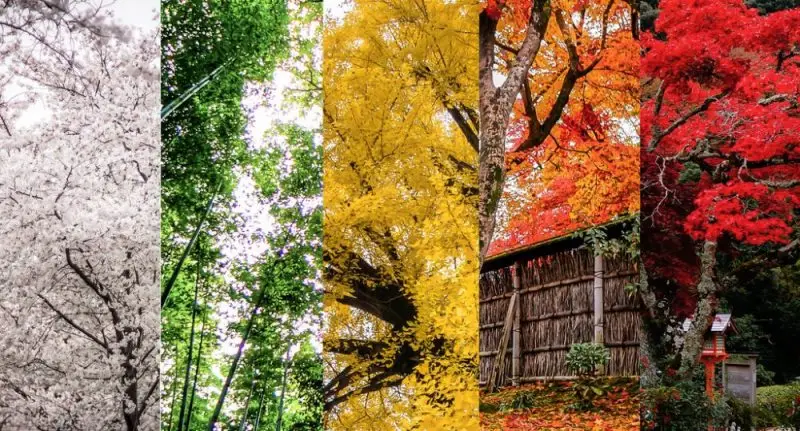
Japan is one of the few countries where the 4 seasons we learned in school actually work. Japan also gave rise to the word we know as tsunami. In this article, we will expand our vocabulary in Japanese by learning the seasons, weather, and climate.
Table of Contents
Seasons (季節)
Below we will see some words in Japanese related to the seasons of the year:
- 四季 (shiki) – The 4 seasons
- 春夏秋冬 (shunkashūtō) – The four seasons of the year (Spring, Summer, Autumn, Winter)
- 季節 (kisetsu) – Season
- 春 (haru) – Spring
- 夏 (natsu) – Summer
- 秋 (aki) – Autumn
- 冬 (fuyu) – Winter
- 乾季 (kanki) – Dry season
- 雨期 (uki) – Rainy season
- 梅雨 (tsuyu) – Rainy season (rainy period from June to July)

Weather/Climate (天気)
Below is a list of words related to weather and climate in Japanese:
- 気象 (kishō) – Weather
- 気候 (kikō) – Climate
- 天気 (tenki) – Weather (atmospheric)
- 天気予報 (tenkeyohō) – Weather forecast
- 太陽 (taiyō) – Sun
- 風 (kaze) – Wind
- 晴れ (hare) – Sunny
- 雲 (kumo) – Cloud
- 曇り (kumori) – Cloudy
- 雨 (ame) – Rain
- 台風 (taifū) – Typhoon
- ハリケーン (harikēn) – Hurricane
- サイクロン (saikuron) – Cyclone
- 霧 (kiri) – Fog
- 朝霧 (asagiri) – Morning mist
- 夕霧 (yūgiri) – Evening mist
- 雪 (yuki) – Snow
- 温度 (ondo) – Temperature
- 湿度 (shitsudo) – Humidity
- 暑い (atsui) – Hot / heat
- 暖かい (atatakai / attakai) – Warm (pleasant)
- 寒い (samui) – Cold
- 涼しい (suzushī) – Cool / refreshing
- 雨曇り (amagumori) – Cloudy (with rain)
- じめじめ (jimejime) – Humid
- 日照り (hideri) – Drought
- ざーざー (za-za-) – Downpour
- 小糠雨 (konukame) – Drizzle
- 霙 (mizore) – Sleet
- 氷雪 (hyōsetsu) – Ice and snow
- 雷雨 (raiu) – Thunderstorm
- 雷 (kaminari) – Thunder
- 稲妻 (inazuma) – Lightning
- 気温 (kion) – Air temperature
- 竜巻 (tatsumaki) – Tornado
- 虹 (niji) – Rainbow
- 洪水 (kōsui) – Flood
- 地震 (jishin) – Earthquake
- 雪片 (seppen / sunō furēku) – Snowflake
- 暴風 (bōfū) – Storm
- 雹 (hyō) – Hail
- 晴天 (seiten) – Sunny (clear sky)
You may also be interested in the article 50 ways to say rain in Japanese.

Phrases about weather and seasons
See below some phrases in Japanese to help you talk about the weather and time in Japanese:
What is the weather forecast for today?
今日の天気予報は何ですか
Kyō no tenki yohō wa nan desu ka?
How is the weather?
天気はどうですか
Tenki wa dō desuka?
What is the temperature?
気温は何度ですか
Kion wa nando desu ka?
How is it outside?
外はどうですか
Soto wa dō desu ka?
The questions can be answered with the words learned in the article followed by です (desu). See some examples below:
It is Sunny
晴天です
Seiten Desu
It is Windy
風が強いです
Kaze ga tsuyoi desu
Leave a Reply