
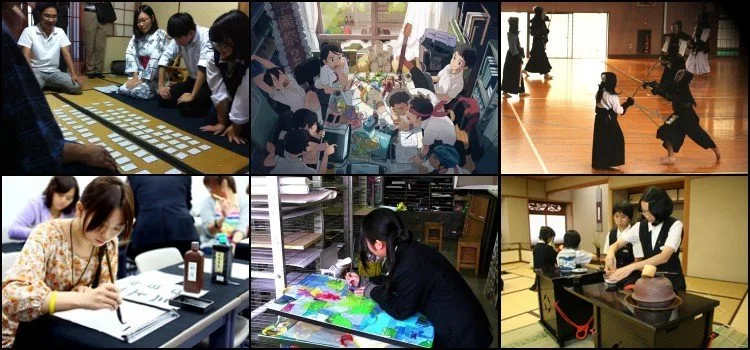
School clubs in Japan, usually called bukatsu, are a major part of student life in many junior high and high schools. They meet after class, bring together students with the same interest, and can range from baseball and brass band to calligraphy, drama, science, or tea ceremony. What anime often gets right is the feeling: a club can become the place where friendships, routines, rivalries, and school memories take shape.
Still, there is no single rule for every school. Some clubs are relaxed; others train often, compete on weekends, or expect a serious commitment. Participation is common, but the available activities, timetable, and level of supervision depend on the school and the local area.
Contents 8
What do bukatsu and kurabu mean?
Bukatsu (部活) is the everyday short form of bukatsudō (部活動), meaning club activities. You may also hear kurabu (クラブ), a Japanese use of the English word “club.” In ordinary conversation, both can point to school-based activities, so the distinction is not a strict one that every student follows.
Many club names end in -bu (部), which means department or club. A baseball club may be called yakyūbu; a brass band is often suizōgakubu. The school typically provides the setting, while a teacher adviser and student leaders help organize practice, notices, equipment, and events.
How school clubs fit into the day
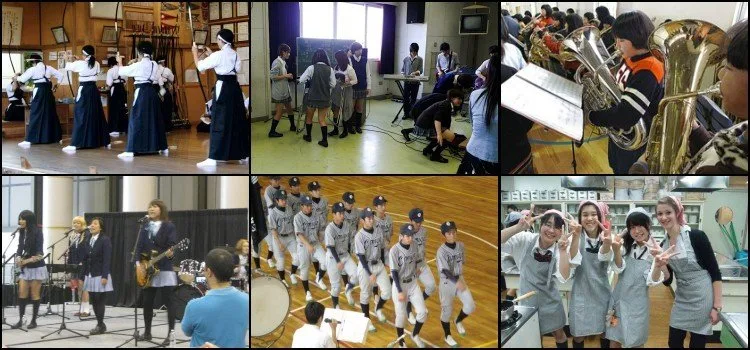
Classes come first. Afterward, students clean classrooms in turns, take care of their regular duties, and then head to club activities. A sports team may use a field or gym, while a cultural club may meet in a classroom, music room, library, or dedicated clubroom.
That routine is why bukatsu can feel so central to a student’s life. It creates regular time with the same people outside the classroom. For a newcomer, the club may be the quickest way to meet older students, learn school customs, and find a place in a much larger school.
Schedules differ widely. One club might meet once or twice a week; another may practice most afternoons and prepare for matches, concerts, exhibitions, or festivals. Before choosing, a student needs the school’s actual schedule, attendance expectations, costs, and competition calendar—not an assumption based on anime or another school.
Sports clubs and cultural clubs
Japanese school clubs are often described in two broad groups:
- Sports clubs (undōbu, 運動部): baseball, volleyball, basketball, track and field, swimming, judo, kendo, badminton, and many others.
- Cultural clubs (bunkabu, 文化部): brass band, choir, drama, art, photography, literature, science, debate, tea ceremony, flower arrangement, calligraphy, manga, and games such as shogi.
These labels are useful, but they do not tell you how demanding a club will be. A concert band can rehearse intensely before a performance, while a sports club may have a lighter schedule at another school. The activity, the adviser, the student leaders, and the school’s own policies all matter.
Friendships, seniority, and responsibility
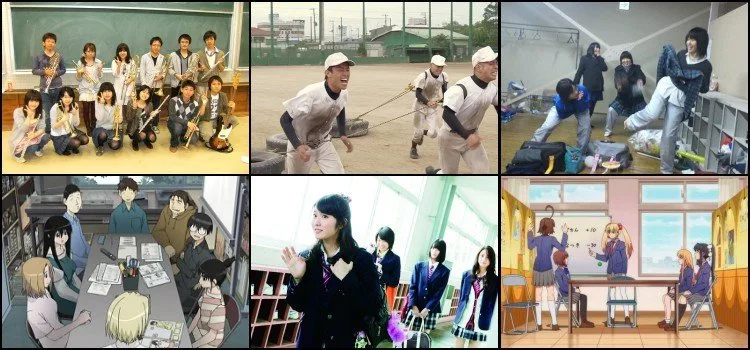
Clubs are one of the places where the senpai and kōhai relationship becomes visible. Senpai are more experienced members; kōhai are newer ones. The relationship can include practical guidance—learning how to set up equipment, follow practice routines, or prepare for an event—but its tone varies from club to club.
Students also take on roles such as captain, president, treasurer, manager, or event organizer. Those jobs are not decorative. They can mean coordinating a meeting, looking after equipment, speaking for the group, or helping younger members settle in. This is one reason clubs are remembered as more than a hobby: they give students repeated chances to work with others toward a visible result.
Are school clubs mandatory in Japan?
Not across the country. Joining a club is common and often encouraged, but it is not a nationwide requirement that applies in the same way to every student. Some schools may strongly encourage an activity or make it part of their school culture; others give students more freedom to choose how they spend time after class.
Students who go straight home are sometimes jokingly called kitakubu (帰宅部), literally a “go-home club.” The term is familiar, but it should not be read as a formal club or a judgment about students who have jobs, family responsibilities, exam preparation, or other commitments.
Why the time commitment gets attention
A committed club can be rewarding, but it can also make a school week feel long. Practice, travel, competitions, performances, and school events all take time. Families and students often weigh that commitment against homework, commuting, part-time work, health, and entrance-exam preparation.
There has also been ongoing discussion in Japan about teachers’ workloads and how activities should be supported. That makes one point especially useful for families moving to Japan: ask the school directly how a specific club is run today. Rules, holidays, coaching, fees, and transport can change from one school to the next.

School clubs in anime: what fiction captures well
Anime often uses a club as a ready-made group of characters who have to spend time together. That can exaggerate comedy, romance, or competition, but it captures a real point: the clubroom, gym, or practice field gives students a shared rhythm beyond lessons.
- Haikyu!! follows a high-school volleyball team.
- K-On! centers on a light music club.
- Chihayafuru features competitive karuta.
- Hyouka begins with the Classic Literature Club.
- Kuroko’s Basketball focuses on basketball club competition.
For a broader look at the gap between fiction and everyday routines, see how Japanese schools compare with anime. School clubs are real, but no anime can predict the atmosphere, rules, or workload of a particular school.
What to ask before joining a club
- How many days does the club meet, and are weekends involved?
- Is there a trial period for new members?
- What equipment, uniform, travel, or event costs should families expect?
- Does the club compete or perform, and how often?
- Who supervises the activity, and how are schedule changes announced?
The best club is not automatically the most famous or demanding one. It is the one whose pace and purpose fit the student. For some, that means a competitive team; for others, a quieter cultural club or time outside school. Either way, bukatsu remains one of the clearest windows into how Japanese students build friendships and interests after the last class ends.

Community
Comments
0 comments
There are no published comments in this language yet.
Send comment