
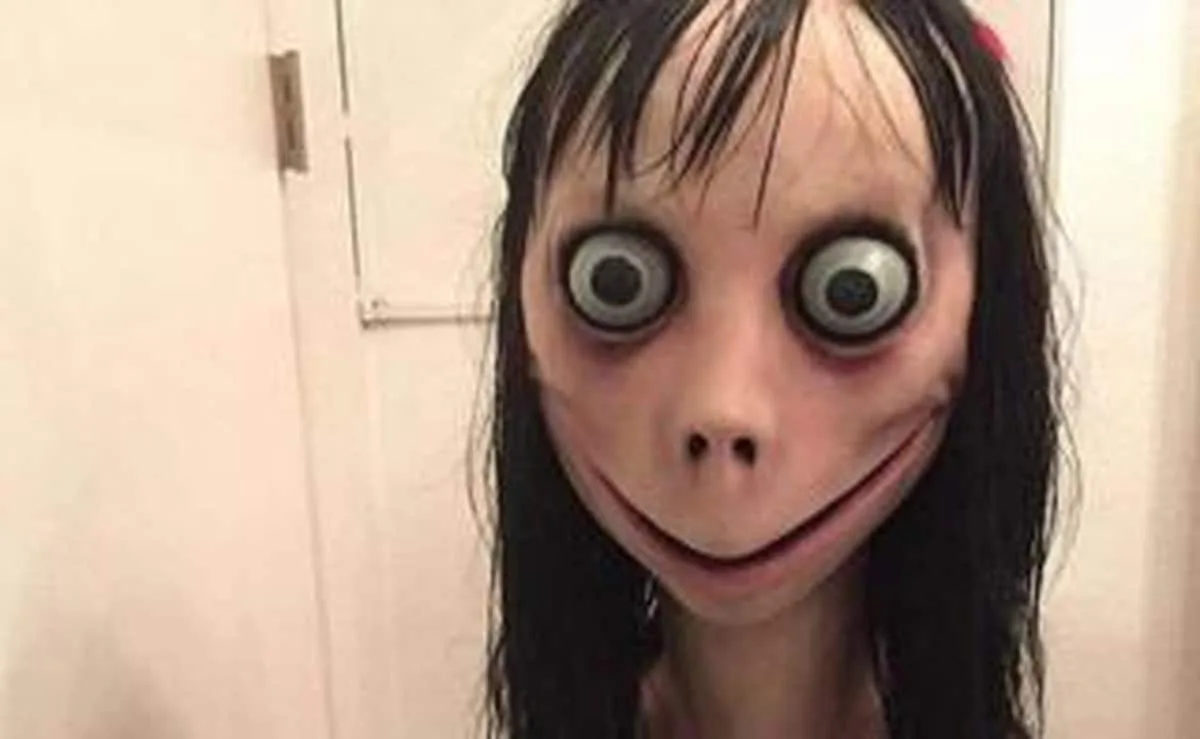
Have you seen the pale figure with bulging eyes and a wide grin that spread through WhatsApp in 2018? The photo shows a sculpture called Mother Bird, exhibited in Tokyo two years earlier. The internet nicknamed it Momo and turned it into a cursed doll. The Momo Challenge built around the image was a hoax.
Contents 5
What is the Momo doll?
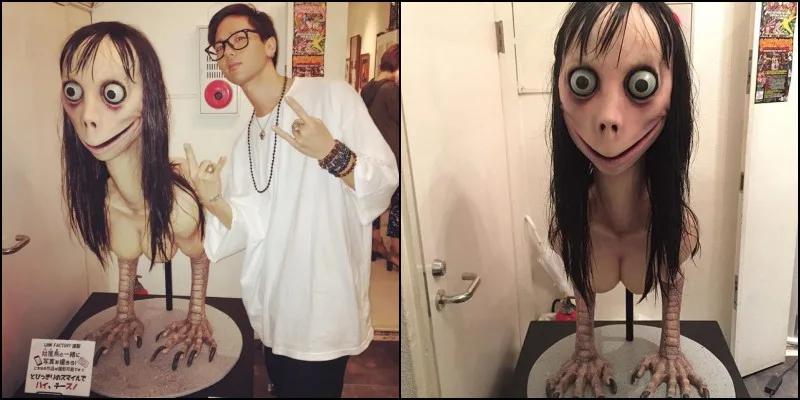
Mother Bird is a sculpture by the Japanese special effects artist Keisuke Aiso, created for the special effects company Link Factory. It was exhibited in 2016 at the Vanilla Gallery in Tokyo. The piece has bird legs, long black hair, pale skin, and a face with lidless eyes and a grin that looks too wide for a human mouth. Aiso said the figure was inspired by the ubume, a bird-woman from Japanese folklore.
An Instagram user, @nanaakooo, posted photos of the sculpture in 2016, and the images circulated online. Two years later, unknown people copied one of those photos and used it as the profile picture of a supposed WhatsApp contact. The name Momo came from the internet, while Aiso titled the work Mother Bird.
Momo is also a Japanese word. Written 桃, it means peach. Written 股, it is read momo and refers to the thigh or crotch. Those meanings are a coincidence.
Aiso discarded the sculpture in 2018. He said the natural rubber and plant oils had started to decompose, and the piece was never meant to last. Anyone who visits the Vanilla Gallery today will not find Mother Bird there. Only the photographs remain.
How the Momo Challenge spread
In July 2018, WhatsApp users began receiving messages from a contact named Momo. The profile picture showed the sculpture. According to the messages, anyone who replied would receive threats, disturbing images, or a list of tasks. The numbers behind the messages came from different countries, and most were out of service by September 2018.
The story spread first through Spanish-speaking internet communities and then through YouTube. Creators compared Momo to the Blue Whale Challenge, an alleged suicide game from Russia that had made headlines in 2017. By early 2019, the tale had reached Europe and the United States. In the United Kingdom, edited versions of cartoons such as Peppa Pig appeared on YouTube with the figure inserted into the video.
In February 2019, Kim Kardashian posted a warning on Instagram and asked YouTube to remove videos about Momo. YouTube said it had not received links to videos that showed or promoted the challenge. The attention kept growing even after the platform questioned the claims.
Was the Momo Challenge real?
Fact-checkers and child safety organizations reached a clear conclusion in 2019: there was no verified evidence that Momo had harmed anyone. The Samaritans said it was not aware of any verified evidence in the United Kingdom or elsewhere linking the Momo meme to self-harm. NSPCC told the Guardian that it had received more calls from journalists than from worried parents. The UK Safer Internet Centre called the story fake news, and the BBC described it as a hoax.
Police forces in several countries issued warnings, but none confirmed a case in which the challenge caused a death. Several warnings focused on identity theft and fraud by cybercriminals.
A claim that circulated in 2018 said children aged 9 to 12 in Colombia, Mexico, and Brazil had killed themselves because of Momo. News reports mentioned some deaths, but no investigation established the challenge as the cause. Researchers who study urban legends described the wave as a moral panic, fueled by unverified headlines and by parents' natural fear about what their children see online.
The concrete risk came from people who used the name to scare others, collect personal data, and demand money. Anonymous accounts can pretend to be anyone, and a chain message is an easy way to reach a large audience. That is the part of the story that deserves attention.
Why Momo is barely known in Japan
Although the sculpture is Japanese, the Momo Challenge remained largely unknown in Japan. The country's main messaging app is LINE, and WhatsApp has a small share of the market. Those messages circulated widely among numbers and accounts in Spanish-speaking countries. That context helps explain why the panic did not take root where the image was made.
Japan has its own long tradition of ghost stories and urban legends. The ubume, the bird-woman that inspired Aiso, belongs to the world of yōkai, the supernatural creatures of Japanese folklore. If you want to go deeper, our article on 15 Japanese monsters, myths, and legends explores that tradition in more detail.
Japanese urban legends often grow out of ordinary places: a school corridor, a train station, an apartment building. Our selection of five strange Japanese urban legends shows how those stories take shape.
What to do if you receive a Momo message
Do not reply. Block the number and report it in WhatsApp. Do not forward warnings that include the Momo image, even when the warning comes from someone you trust. Every share keeps the figure in circulation and gives the story a new audience.
Talk to children about what they see online. Explain that the image is a sculpture and that the challenge was invented. Tell them that strangers who ask for personal information or send threats should be blocked and reported. Ask whether they have seen the image at school or in a video, and keep the conversation calm. Organizations such as the UK Safer Internet Centre offer practical guidance for families, and the Samaritans can help anyone who is struggling.
The sculpture no longer exists, but its photograph still travels. A simple response works best: check the story before you share it, block accounts that threaten you, and teach children to do the same. That is how a chain message loses its reach.





Community
Comments
0 comments
There are no published comments in this language yet.
Send comment