

Anyone who lives in a Japanese town or neighbourhood for a while eventually comes across it: the kominkan (公民館), the public community cultural centre. Some take it for a town hall, others for a club room. In fact it is more than both: a public house for learning and culture, funded by the municipality and open to all residents. This article explains what a kominkan is, what it does, how it came about and why it still matters in everyday Japanese life.
Contents 8
What is a kominkan?

A kominkan is a public cultural and educational centre for local people. Cities, towns and wards run it so that residents can join courses, lectures, working groups and events. The range is broad: sport, music, literature, art and handicrafts as well as language classes, health talks and neighbourhood meetings. Many buildings also have a small reading room, a hall and meeting rooms that local groups can use free of charge or for a small fee.
The term is often translated as «community centre» or «citizens' hall». That comes close, but misses an important point: a kominkan is explicitly not just a venue. It is a place of shakai kyōiku (社会教育), out-of-school adult and community education. It is meant to help people learn from one another and shape their shared life.
The legal framework
The foundation is Japan's Social Education Act (社会教育法) of 1949. Under it, kominkan are social education institutions set up by the municipality, with a local ordinance covering purpose and management. The law describes the task: education, science and culture should serve residents' daily lives and contribute to their cultivation, health and quality of life. It also sets limits: a kominkan may not support a particular religion or serve as a platform for party politics.
The first houses appeared right after the war. In July 1946 the Ministry of Education instructed municipalities to establish kominkan in order to give a population shaken by war and collapse cultural and social support. The concept went back to the official Teranaka Sakuo and is still known as the «Teranaka plan». Three years later the houses were written into law. The kominkan is therefore a child of post-war democracy and remains an expression of it.
What happens there
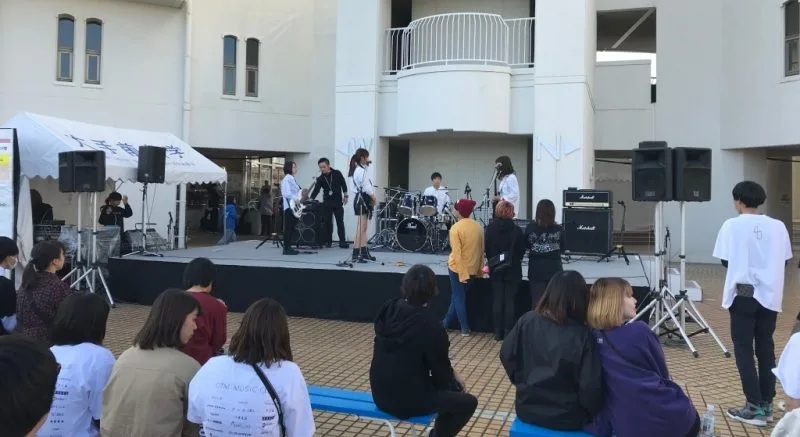
Daily life in a kominkan is surprisingly varied. In the morning older residents often meet for tai chi, tea or a writing group. In the afternoon children and teenagers use the rooms for homework help, craft classes or club work. In the evening adults take language courses, cooking classes or information sessions on health and money. At weekends there are small concerts, exhibitions and the annual general meetings of neighbourhood associations.
Many kominkan have a small library or at least a bookshelf. According to a 2011 survey, almost half of the buildings had their own reading room. There are also practical functions that are easy to miss: a kominkan often appears in the municipality's disaster plan, serves as a polling station or as a venue for health check-ups. Especially in rural areas it is therefore more than a leisure facility: a piece of public basic services.
Structure and types

Not every kominkan is the same. Larger cities often maintain a central kominkan that advises the others and runs higher-level educational work. Alongside it there are district or area kominkan covering a neighbourhood, as well as smaller units at school-district level. Especially in rural areas there are also houses run by residents themselves, sometimes without a permanent education professional.
The professional work is done by employed education officers, the shakai kyōiku shuji and kominkan shuji. They plan courses, advise groups and make sure the house does not turn into a hall for rent. This staff is exactly why a kominkan is not simply a municipal event hall.
Koryukan and related houses
Next to the kominkan there are facilities such as the kōryūkan (交流館), literally a «house of encounter». It works in a similar way but stresses exchange between generations, cultures and groups. Many municipalities now also use new names: «lifelong learning centre», «meeting centre» or «regional exchange place». Legally such houses may be equivalent to a kominkan or run as a separate community education facility.
The law also recognises kominkan-like institutions that are not run by the municipality but by associations or private individuals. In recent years small private «Co-Minkan» have appeared, where neighbours meet without a municipal structure, sometimes inspired by Danish folk high schools. The idea is the same: learning and community should be easy to reach.
Numbers and everyday life
A 2011 survey by the Ministry of Education shows how many there are: around 14,700 kominkan existed in Japan at the time, and about 5,900 of them had their own reading room. Measured against the number of municipalities, that is a dense network. Most houses are in residential areas, reachable by bicycle, and charge nothing or only a symbolic fee for many activities.
That explains why kominkan are simply part of everyday life in Japan. Anyone looking for a choir, a calligraphy class, a self-help group or a room for a neighbourhood festival often finds it at the kominkan. Many volunteer groups for disaster preparedness and the organisation of district festivals also use it as a meeting point. For newcomers it is a good first place to meet people and understand how the neighbourhood works.
Challenges
The model does face problems. Many buildings went up in the 1970s and 1980s and now need renovation. In municipalities with shrinking populations and tight budgets, closures or mergers are under discussion, often as part of boundary reforms. Use is changing too: younger people come less often through fixed groups and more for single events, while online offers and the internet have taken over part of the courses.
At the same time there are new approaches. Some municipalities hand operation to local associations so that residents shape the houses themselves. Others rely on cooperation with schools, libraries and care services so that the kominkan becomes a hub for the whole neighbourhood rather than a course room. Whether that works depends heavily on the people who fill the houses with life.
Conclusion
The kominkan is an unspectacular but important part of Japanese society. It is not a museum of tradition and not an event temple, but a public living room for learning, encounters and neighbourhood. Anyone who wants to understand how Japan works at the local level should take a look inside. More background is in the articles on the health system and on the services of the prefectures.



Community
Comments
0 comments
There are no published comments in this language yet.
Send comment