
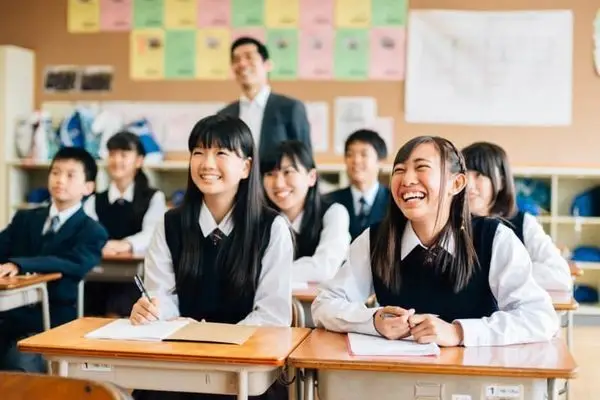
School reinforcement aims to help students understand the subjects taught in the classroom. In Japan, there are some forms of this type of reinforcement known as Juku (学習 塾) or Gakken. These reinforcement classes are private lessons and usually take place during the 7 days of the week, outside of conventional school hours.
Juku are private schools that charge fees and offer supplementary classes, as if they were preparatory courses for entrance exams to schools and universities. Juku usually takes place after school hours, on weekends, and during school vacations.

Table of Contents
How did Juku start?
In the 70s and 80s, these school reinforcement classes already existed, and it was during this period that they gained more notoriety in Japan. There was a significant increase in the number of students, especially among those in elementary school (mandatory).
This did not have a positive effect according to the Ministry of Education, as if many students were seeking reinforcement classes, it would theoretically be because regular education was not sufficient. As a result, some guidelines were established in regular schools to reduce the demand for school reinforcement. This measure did not have much effect.
Juku has undergone many changes recently. Education is no longer just a school reinforcement, but a complement to help students leave school even more qualified. There are two types of Juku: academic and non-academic, and the choice depends on the level of education the student is at and what they wish to achieve.

How does school reinforcement work?
In Japan, school reinforcement classes are not mandatory, but when a student wants to improve their understanding of a subject or prepare for important exams, they turn to this resource. At least 20% of students start attending Juku in preschool. The goal is to pass the entrance exams for elementary school.
When children enter elementary school (Chuugaku for 7th, 8th, and 9th grades), they begin to prepare for high school (Koukou). Some parents already find it appropriate to enroll them in another Juku. And when they are in high school, the concern is to prepare for university entrance exams. But only if the person wants to study more because high school is not mandatory in Japan.
School reinforcement helps these students to study in great schools in high school. Many of these high schools have technical specializations. There are schools for students who want to become public servants, for those who want to enter prestigious universities, or for those who want to study languages or become nurses, farmers, or mechanics.
In some countries, such as Brazil and the United States, there are Juku structures aimed at Japanese students who ended up in another country due to their parents’ work but intend to return to their home country in the future. The advantage is that the child will not fall behind compared to other Japanese students. These students who attend Juku outside of Japan take tests and mock exams to assess their knowledge in relation to the Japanese school average.

Academic and Non-Academic Juku
According to the website String Fixer (stringfixer.com), non-academic Juku is focused on extracurricular classes. It is not school reinforcement, but extra classes for new learning and skills. Generally, younger children attend non-academic Juku. The classes usually taught are: piano, languages, art, Japanese calligraphy (shodō), swimming, and abacus classes (soroban).
Academic Juku can be divided into categories:
- Local medium or small-sized cram schools;
- Schools to rescue children who have dropped out or avoid regular school;
- Franchise cram schools;
- Other various types of preparatory courses.
Only in 2011, 1 in every 5 children attended school reinforcement classes. This number was higher than that of students aiming to go to college. The annual fees paid for Juku were around 260,000 yen.
Academic Juku offers mathematics, Japanese language, science, English, and social studies as mandatory subjects. These are more geared towards students who choose to take “cram school” in order to pass the entrance exam for high school. Although it may seem quite exhausting for a child to study so much, in general, those who attend Juku enjoy it a lot!

This type of education has been much questioned, especially regarding these school reinforcement classes. Those who choose to do it live to study, and most are small children. Japan is known for having good education, but not all students can access Juku.
Juku can assist those who have an education in a public school, but not everyone studying in that school can afford to pay for Juku for their children. And parents certainly wish for them to have a good education at the same level as others.
What do you think about Japanese school reinforcement classes?
Leave a Reply