
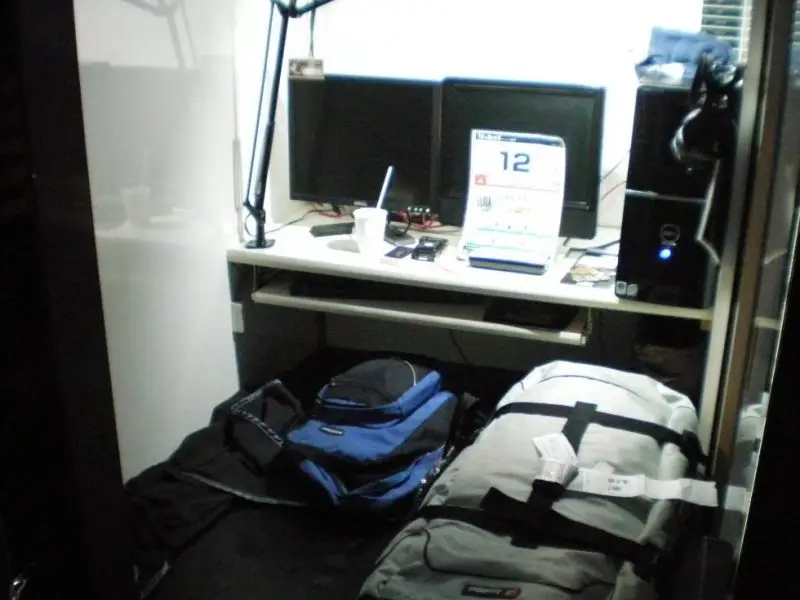
A manga kissa can look like a small refuge when a train has stopped running or a long layover has left you with nowhere comfortable to wait. Behind the shelves of comics, though, there is usually much more than reading: a booth, a drink bar, a computer, and sometimes enough room to lie down for a few hours.
That mix is what makes a manga kissa (漫画喫茶) memorable. It can be useful for a break, a late-night stop, or a quiet place to read, but it is not a hotel. The seat, facilities, rules, and overnight options change from one branch to another, so a little checking beforehand makes a big difference.
Contents 5
Manga kissa, manga café, and internet café: what is the difference?
Manga kissa literally means manga café. The word kissa comes from kissaten (喫茶店), a coffeehouse or tea room. In everyday use, you may also see manga café or internet café. The labels overlap, but they are not a promise that every place offers the same service.
A manga kissa usually revolves around comics, magazines, drinks, and individual seats or booths. An internet café may put more emphasis on computers, games, or private rooms. Many places combine both ideas and add karaoke, billiards, darts, or arcade games, which is why they can feel closer to a compact entertainment space than to an ordinary café. For a larger version of that kind of outing, see Spocha.
How does a manga kissa work?
Many branches ask first-time visitors to register, then issue a membership card or give them a receipt and seat number. Some chains use an app or card system, while others handle the visit more simply at the counter. If you are unsure, ask which plan covers your intended stay before choosing a seat.
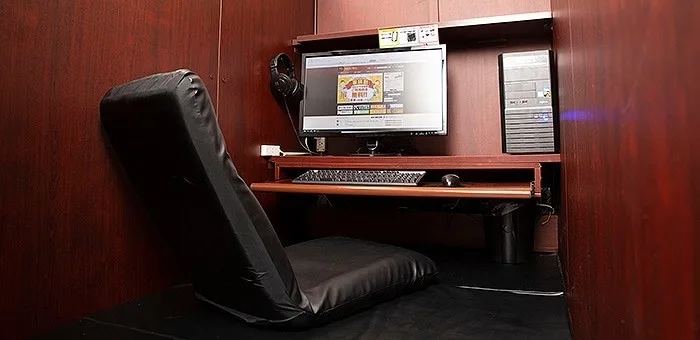
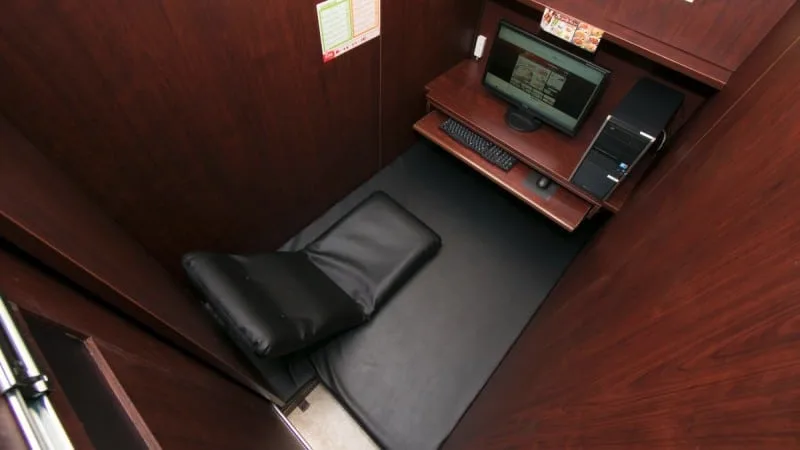
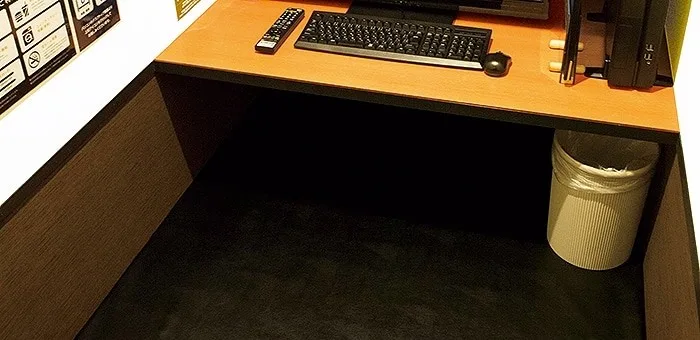
Seats range from an open computer station to a reclining chair, a paired booth, or a flat seat (furatto, フラット): a low enclosed space with a cushioned floor where you can stretch out. Some branches also have women-only areas or lockable private rooms, but those are branch-specific features rather than a standard rule.
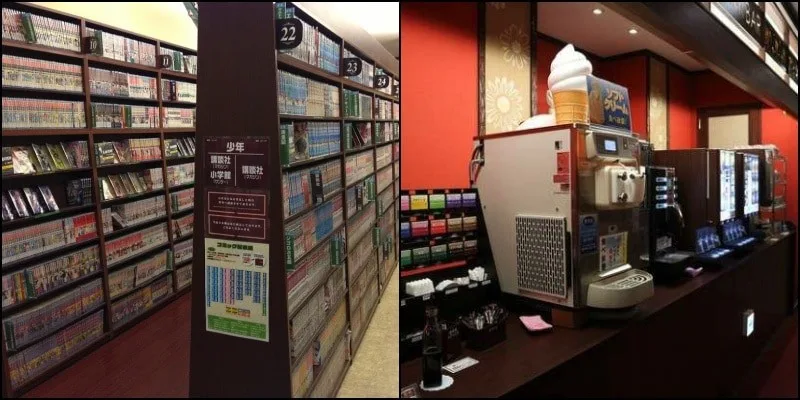
Once settled, you can normally move around the venue, choose manga or magazines, and use the drink bar included with your plan. Food is often ordered separately from a terminal or counter. Computers, headphones, television, showers, lockers, laundry machines, Wi-Fi, and game equipment are common possibilities, not guarantees. Check the branch page or recent photos before relying on a shower, luggage storage, or a particular type of room.
How is a manga kissa charged?
Rates are usually built around time and seat type. A short visit may be charged in small blocks, while longer packages can make more sense for an evening or overnight stay. Weekend, holiday, late-night, and private-room rates may differ, and food, showers, or other extras can sit outside the base plan.
The important detail is the clock: some places ask you to choose a package at check-in, while others calculate the best available plan when you leave. Look at the price display on arrival and keep an eye on the time shown for your seat. If you plan to sleep, confirm whether the branch permits overnight use, what kind of seat is available, and whether your luggage will fit safely.
For a quick search, Google Maps is useful when you try the Japanese terms 漫画喫茶 (manga kissa) or インターネットカフェ (internet café). This guide to using Google Maps in Japan can help you compare locations, opening hours, and recent visitor photos.
Chains and independent manga cafés
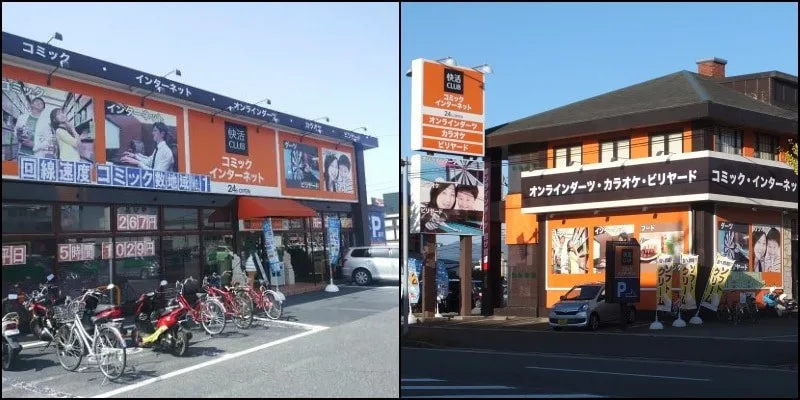
Japan has large chains as well as smaller local shops. Names you may encounter include Kaikatsu Club, Gera Gera, Manboo, Aprecio, Space Create, Customa, Gran Cyber Café, and Media Café Popeye. What matters more than the name is the individual branch: a city-centre location may focus on short stays, while another may have larger seats or more facilities for a long visit.
Tokyo and Osaka have plenty of options, including places that blur the line between a manga café, a gaming lounge, and a simple overnight stop. A clean photo gallery, current price list, and seat map tell you more than a generic description. If a branch uses a points or membership system, this overview of Japanese point cards gives useful background.
My experience at Kaikatsu Club
When I was in Japan, I stayed at Kaikatsu Club three times. On the first visit, I slept in a karaoke room while my friend used a furatto (フラット). The long bench in the karaoke room let me stretch out, which was more comfortable than I expected from a place I had chosen as a low-cost stop.
On a later visit, I got a fairly large flat seat and could stretch out even though I am 1.80 metres tall. I also tested the connection there and watched 4K videos without waiting for them to load. Those visits made the appeal clear to me: it was a practical alternative when I needed a few hours indoors, books nearby, and a place to rest without booking a conventional room.
The drawback was luggage. I was travelling light, so I did not need to solve that problem, but it is worth checking before you arrive with suitcases. A spacious-looking booth can still be a poor fit for bags, and a convenient overnight stop becomes less relaxing if you have nowhere secure to put them.
I still keep my Kaikatsu Club card (快活CLUB). At the time, my friend called the place komikku intānetto (コミック&インターネット), and only later did I understand the connection with Kaikatsu. That small memory says a lot about manga kissa: they are easy to describe as cafés with comics and computers, yet the real experience depends on the room, the branch, and what you need from the night.
If you have used a manga kissa in Japan, share what worked for you in the comments. Your experience may help another traveller choose between a quick break, a late-night seat, and a proper place to stay.



Community
Comments
0 comments
There are no published comments in this language yet.
Send comment