

Do you know the meaning of Uke and Seme? These terms are often mentioned in the Yaoi universe to explain the roles of each in the relationship, both in a physical and emotional sense.
For those who are unaware, Yaoi, also known as Boys’ Love (BL), is a genre of manga, anime, and other media that focuses on romantic homosexual relationships between male characters.
Originating from Japan, the genre has gained popularity worldwide and attracted a diverse fan base, mainly from the female audience. In this article, we will explore the concepts of Uke and Seme, which are fundamental roles in the relationships of the Yaoi universe.
We also recommend reading:
Table of Contents
The Meaning of Uke and Seme
Uke (受け): The term Uke, in Japanese, literally means “receiver” or “one who receives.” In the context of Yaoi, the Uke is the more passive, submissive character, and is usually younger or physically smaller in the relationship.
The Uke typically plays the role of “bottom” (the one who is penetrated) in sexual relations and may exhibit characteristics of vulnerability, sensitivity, and emotional expression.
Seme (攻め): The term Seme, in Japanese, literally means “attacker” or “one who attacks.” In the context of Yaoi, the Seme is the more dominant, assertive character, and is usually older or physically larger in the relationship.
The Seme often takes on the role of “top” (the one who penetrates) in sexual relations and may exhibit characteristics of protection, authority, and emotional control.
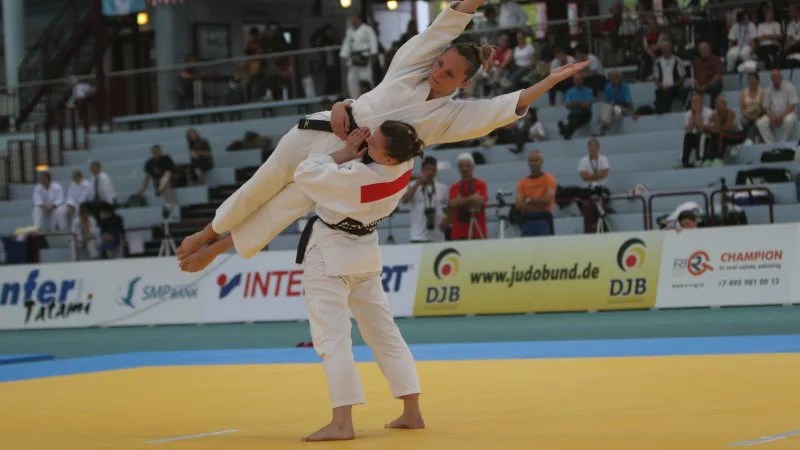
Origins of the Terms Uke and Seme
The terms Uke and Seme are derived from practices of Japanese martial arts such as Judo, Aikido, and Kendo, where “uke” refers to the defender who receives an attack, and “seme” is the attacker who initiates the attack.
The Uke has the responsibility to learn to defend themselves properly, in order to avoid injuries and improve their combat skills. The Seme has the responsibility to apply techniques correctly and pressure the Uke, in order to create opportunities for attack.
The terms Uke and Seme were adopted in the Yaoi (Boys’ Love) universe during the 1970s and 1980s, when the genre began to gain popularity in Japan.
The use of these terms reflects the adaptation of concepts from Japanese martial arts to describe the dynamics of power and the roles played by male characters in Yaoi relationships.
The adoption of these terms and concepts from Japanese martial arts likely arose due to the influence of Japanese culture and the aesthetics of martial arts in the manga and anime of the Yaoi genre.

Stereotypes and Variations of Uke and Seme
Although the roles of Uke and Seme are often associated with certain personality and appearance stereotypes, it is important to note that not all Yaoi characters fit perfectly into these categories.
Some authors and artists explore more complex and dynamic relationships, where the roles of Uke and Seme may be less defined or even reversible.
Additionally, there are variations and subcategories of these roles, such as:
- Reversible (リバ, Riba): A relationship in which the characters can alternate the roles of Uke and Seme, challenging typical conventions of dominance and submission.
- Seke (攻受, Kōju): A term that describes characters who do not clearly fit into the roles of Uke or Seme and may exhibit characteristics of both.
- Tachi (立ち): A term that can also be used to describe the dominant character, similar to the Seme. Tachi is more frequently used in the context of Yuri (relationships between female characters) to represent the dominant role, but can also be found in Yaoi.
Leave a Reply