

How does elderly care work in Japan? We might imagine that due to the elderly having a good life expectancy, they must be well cared for. The estimate is that by 2055 at least 40.5% of the Japanese population will be elderly, over 65 years old.
The concern in these data is that the older they are, the more care they will need because with age come limitations. The Japanese government has projects regarding this so that they can age peacefully. Unfortunately, not all elderly have family to take care of them.

Table of Contents
Tradition
The average of elderly people in Japan currently is over 30%. Treating them with respect is a tradition that has lasted for years and starts in childhood. Surely while watching anime, you must have noticed how the elderly are treated; they are respected, many are clan/family leaders and regarded as masters and sources of wisdom.
In Japan, there is even a holiday for elderly people! Respect for the Elderly Day is celebrated on the third Monday of September. In celebration of this day, it is common for Japanese people to go out for outdoor activities.
Japan is one of the countries where the elderly enjoy life the most, after Sweden and Norway. As the population ages, the country is concerned that elderly care is comprehensive; they encourage exercise. This makes the elderly more active and consequently reduces the need for care, preventing overload on the public system.

Social assistance for the elderly
According to the Japanese Embassy in Brazil, many families that can provide elderly care are decreasing every year due to family patterns that now generally consist of parents and children, with grandparents, uncles, and cousins not always included. Therefore, the government has created ways for these elderly to be cared for through medical and social assistance, especially those who need special care.
All the benefits regarding elderly care are based on older laws that are the main ones: the Law on Social Assistance Services for the Elderly (Rojin Fujushi Ho), which came into effect in 1963. The provisions of the Law on Medical and Health Services for the Elderly (Rojin Hoken Ho). These assistances are administered by local government social assistance offices called fukushi jimusho.
To ensure that elderly care is done correctly, a mapping by region is conducted to understand the situation of each elderly person and the type of assistance they need; for this function, accredited social workers or shakai fukushi shuji come into action. The elderly can access daily care, nursing homes (kaigo rojin hoken shisetsu), special homes for elderly care (tokubetsu yogo rojin homu), and group homes for elderly with dementia (chihosei koreisha gurupu homu).
In 1989, the “Golden Plan” was developed and revised in 1994. This plan aims to improve the stay of these elderly, special care, and services such as meals and physical exercises. In 2000, the “Golden Plan 21” was launched with 6 plans: (1) improve the foundations of long-term care services, (2) promote support measures for elderly seniors, (3) promote measures to revitalize the elderly, (4) develop a community support system, (5) develop long-term care services that protect and gain the trust of their users, and (6) establish social bases to support the health and care of the elderly.

Technology in favor of the elderly
Japan is known for having some pretty crazy inventions, which are often of great utility, and they have used this characteristic in favor of the elderly to make their lives easier. BBC News highlighted 3 technological ways to help people in Japan. Let’s see what they are and how they can greatly assist elderly individuals.
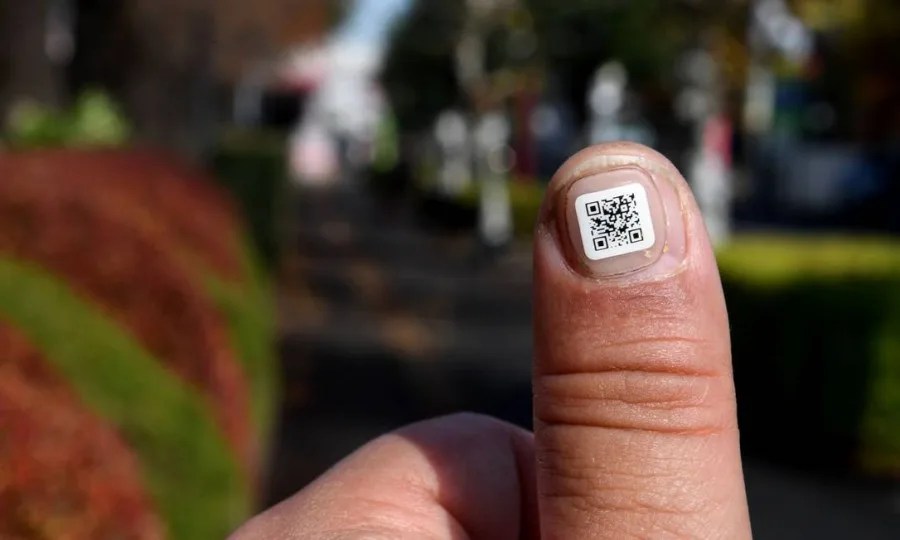
1 – QR Code on nails for those with memory problems
Most cell phones already come with a QR Code reader to access information more easily. In Japan, they combined this function with elderly individuals who suffer from memory problems.
In the city of Iruma, located north of Tokyo, residents with dementia are monitored through QR Codes that are installed on their fingers or toes. The idea was implemented in 2016.
The code contains information about the elderly person, such as their name, address, and phone number. The service is one of the forms of elderly care. However, the QR code only sticks to the person for up to two weeks and is waterproof, needing to be replaced.
2 – Golf carts
There are also golf carts used to facilitate the movement of the elderly. The service is automatic, free, and operates for 4 hours a day. This is a way to help reduce traffic accidents involving elderly drivers.
The cart has a sensor that allows movement up to 3 kilometers at speeds of 6 to 12 kilometers per hour. It has a hidden electromagnetic track. The carts have their own drivers and feature curtains for protection. The service does not operate at night.

3 – Robots
Japan is one of the countries that invests the most in robots to assist with elderly care. In 2013 alone, over 18 million dollars were invested in this type of elderly care. In 2006, the Riken Center for Emergent Scientific Research developed a nursing robot named “Ri-Man” with silicone arms to transport elderly individuals.
Another robot was created with the appearance of a seal called “Paro”; it serves to keep elderly individuals company. It was designed for people with Alzheimer’s and other types of dementia.

Leave a Reply