
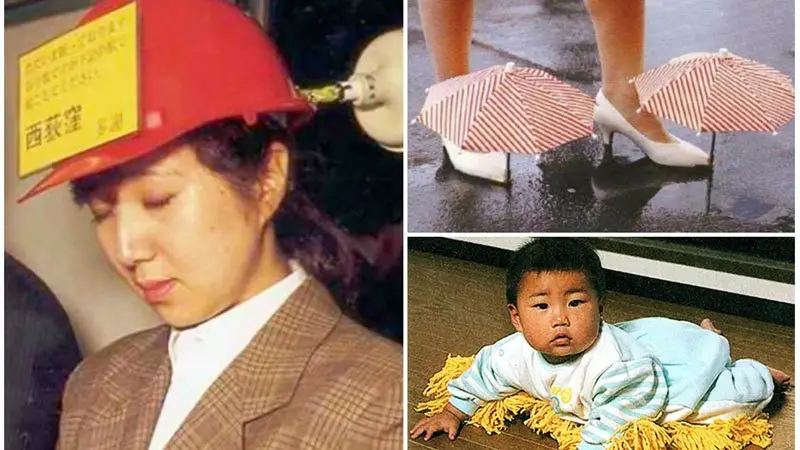
Japan is famous for precision, efficiency, and clever design. Even so, not every invention becomes a practical success. That is where Chindogu begins: objects that try to solve a real everyday problem, then become so awkward, excessive, or embarrassing that they end up almost useless.
When people search for useless Japanese inventions, this is usually what they mean. A real Chindogu is not just a random joke item. It starts from a sincere attempt to help, then pushes convenience so far that the result becomes unforgettable for all the wrong reasons.
Contents 11
What does Chindogu mean?
Chindogu (珍道具) is often explained as a strange tool or unusual device. The term is closely associated with inventor and former Mail Order Life editor Kenji Kawakami, who helped popularize these almost useful gadgets in Japan and abroad. Dan Papia later helped introduce the concept to English-speaking readers through books and magazine features.
The contradiction is the whole point. A Chindogu must address a recognizable problem, yet its solution creates a new kind of inconvenience. It protects your shoes from rain, for example, but only by making you walk around with tiny umbrellas attached to your feet.
How do you recognize a real Chindogu?
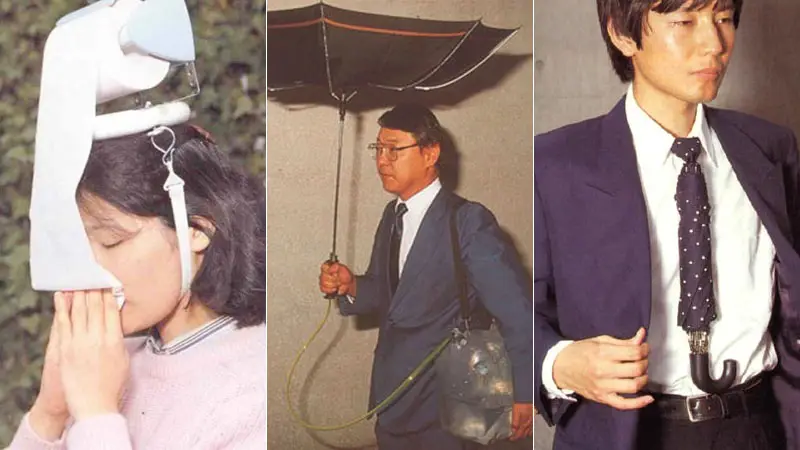
Different lists phrase the rules in different ways, but the spirit stays consistent. A real Chindogu usually follows these core traits:
- It is almost useless: the invention comes close to being helpful, but not quite.
- It must physically exist: a sketch or funny idea alone does not qualify.
- It tackles a real problem: the humor appears as a side effect, not as the only purpose.
- It is not meant to become a normal commercial product: once it turns into an ordinary item for sale, it loses part of its original spirit.
- Anyone should understand it at a glance: you should immediately see both the problem and why the solution feels excessive.
That is why Chindogu is different from pure nonsense. The best examples feel plausible for one second, then wonderfully impractical the next.
Famous examples of Japanese useless inventions
Many Chindogu became famous because the logic is clear right away, even when the object itself looks ridiculous.
Umbrella shoes
Small umbrellas attached to the tips of shoes are supposed to keep socks and leather dry on rainy days. The problem is real, but the social cost of wearing them outside may be worse than getting a little wet.
Noodle cooler
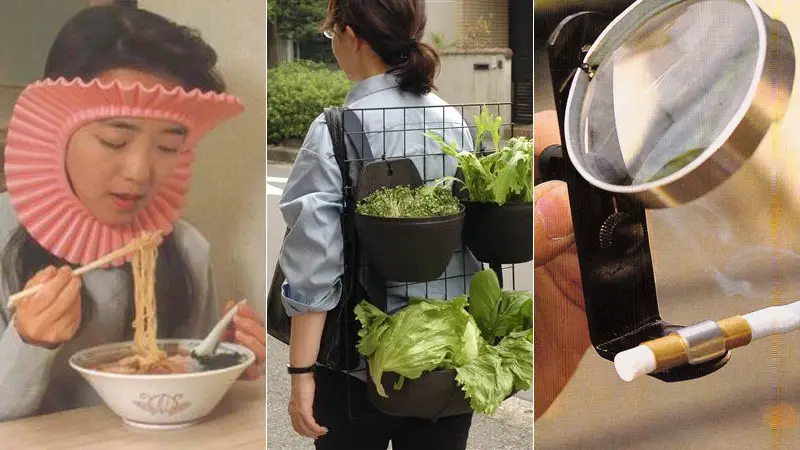
A miniature fan attached to chopsticks or a spoon cools ramen before it reaches your mouth. It solves the problem of hot noodles, but it also adds batteries, noise, and one more gadget to carry just to eat lunch.
Eyedrop funnel glasses
Putting eyedrops in accurately can be annoying, so funnel-shaped glasses guide each drop straight into the eye. The idea sounds practical in theory and deeply awkward in practice, which is exactly why it fits the category.
Cat mop
This invention turns your cat into a furry cleaning tool by attaching soft mop material to its paws or body. It stays memorable because it combines household laziness with a solution that no cat would politely accept.

Commuter sleeper support
Some versions use a wearable support to stop sleepy passengers from falling over on the train. It addresses a common commuting problem, but it also turns a quiet nap into a public performance.
Why Chindogu still fascinates people
Chindogu survives because it does two things at once. It makes people laugh, and it reveals how often modern life tries to optimize tiny inconveniences with increasingly elaborate products. The joke works because the frustration behind it feels familiar.
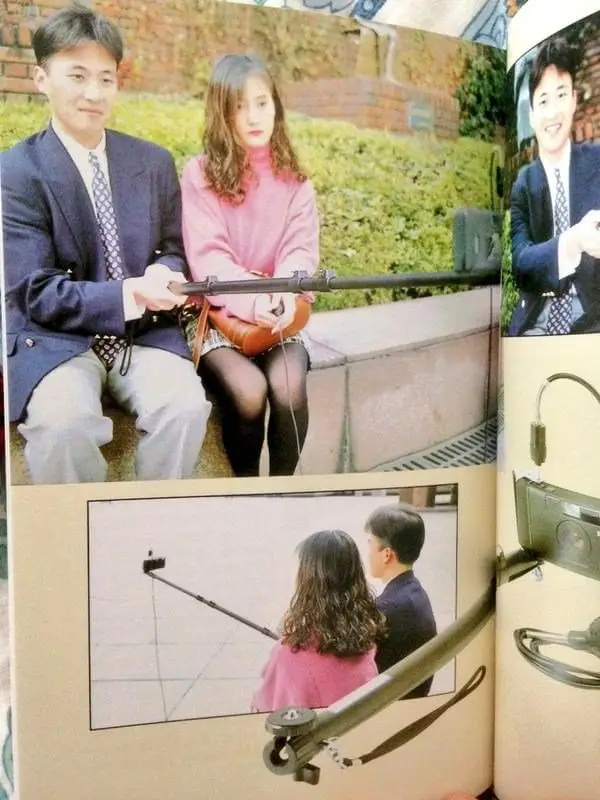
There is also a cultural appeal to these inventions. Many of them look like they are one small step away from becoming real products. That thin line between clever design and overdesigned nonsense is what makes the concept so easy to share in books, exhibitions, and online videos.
Is Chindogu just a joke?
Not exactly. Pure nonsense without a recognizable purpose is simply absurd. Chindogu works because it begins with something ordinary: hot food, wet shoes, tired commuters, messy chores, or the desire to avoid small annoyances. The invention stretches that ordinary frustration until the answer becomes stranger than the problem.
That is also why the concept remains useful as a way of thinking about design. It reminds us that creativity does not always need to be efficient or marketable to be memorable.
Conclusion
Chindogu is the name for Japan's most charming almost useful inventions: clever ideas that solve real problems in the most impractical way possible. Once you understand the concept, it becomes easy to see why umbrella shoes, noodle coolers, and commuter sleeping gadgets continue to fascinate people around the world.
If you enjoy the strange edge where humor, design, and daily life meet, Chindogu is one of the most entertaining corners of Japanese culture to explore.



Community
Comments
0 comments
There are no published comments in this language yet.
Send comment