
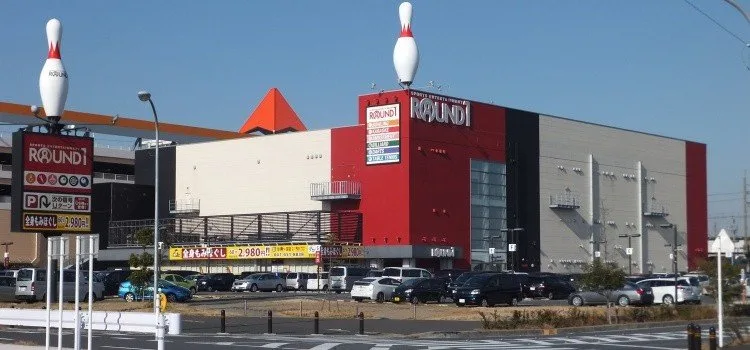
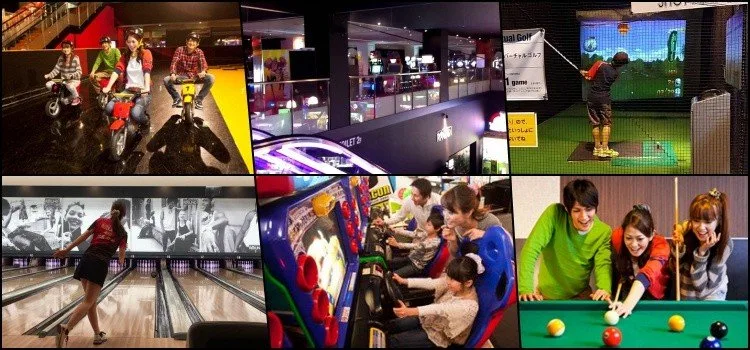
In Japan there is a chain of entertainment centres called Round1 (ラウンドワン), where you can find bowling, karaoke, video games, billiards and table tennis. The stores also exist in other countries, but the real entertainment centre is in Japan, in an area called Spocha. First-time visitors often imagine just another arcade. In fact, Spocha is a sports park inside the building, where a time fee lets you use as many stations as you can fit in.
Contents 6
What Round1 is
The story begins in 1980 in Osaka Prefecture. A roller-skating rink opened in Izumiozu, and from it the present chain grew; the first bowling lanes arrived in 1982, with more added in 1988. The head office is now in Namba SkyO in Osaka. What started as a local leisure business became a national network: according to the company, by July 2025 there were 99 stores in Japan, 57 in the United States and four in China under the name Langwan. The US subsidiary Round One Entertainment was founded back in 2003.
The offer is broad: bowling in every store, plus billiards, table tennis, karaoke, arcade machines and food. The larger locations, marketed as Stadium stores, also have Spocha. That distinction matters, because not every branch offers the sports area.
What Spocha means
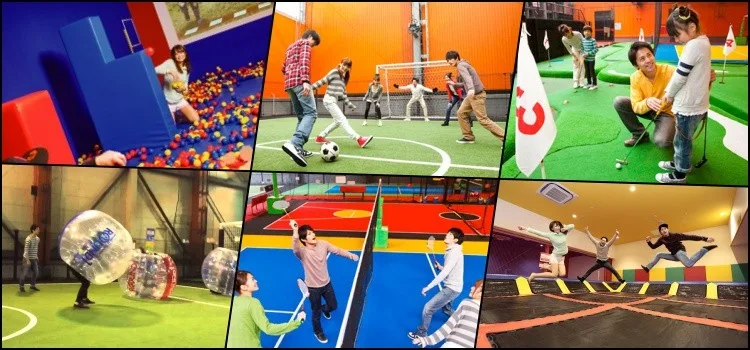
SpoCha is short for "Sports Challenge". It is a separate area with many small sport and skill stations that you use without paying per ride. You buy a time slot or a day pass, get a wristband and can move between stations as often as you like within that time. The principle is close to an amusement park, except that the attractions are indoors and you operate them yourself.
The difference from a normal arcade lies in the payment model. Arcade machines eat coins one by one, while Spocha charges once and lets you use the stations as much as you want. Stay two hours and you have already played more than an arcade budget would allow. That is why Spocha is popular with students who have little money but plenty of time.
Stations vary by branch. The basics include batting cages for baseball, basketball, volleyball, tennis, futsal and a golf driving range. Larger stores add mini golf, archery, an obstacle course, trampolines, roller skates, bubble football, table tennis, badminton and squash. Skill games such as darts or throwing games are part of it too. If you are looking for a specific station, check the branch website before you go.
How a visit works
Admission is charged by time. One to three hours or a day pass are common; prices depend on the branch, the day of the week and the hour. Weekday evenings are usually cheaper than weekends. Some stations require clean sports shoes or socks, and trampolines or climbing walls have their own safety rules. Lockers are available so you do not have to carry a jacket and bag through the park.
One advantage is the mix: you can bowl for an hour, move to the Spocha area afterwards and finish with karaoke without leaving the building. Many stores have a drinks bar and a rest area with armchairs, manga and light novels. If you stay longer, plan a break, because the stations are physically demanding.
Food and drink are allowed in most stores, but not at every station. Many branches have their own cafe or snack counter with fries, onigiri and drinks; some allow you to leave for a meal outside and come back later. With a day pass you lose no time, only the walk.
Where to find Spocha
An easily reachable store with Spocha is in DiverCity Tokyo Plaza in Odaiba, Tokyo. In Osaka, a large store sits near Namba Station, right in the centre. In another city, the simplest search is the city name plus the word Spocha. What matters is the difference between regular branches and Stadium stores: only the latter have the full sports area, while regular stores often have just bowling, karaoke and arcade.
For groups the concept is practical, because nobody has to agree on one activity. One person plays baseball, another basketball, a third sits in the rest area. Families use the stations with children, groups of friends compete, couples pick the quieter games. On rainy days Spocha is therefore one of the most reliable options in Japan.
What to expect
Anyone expecting a quiet arcade will be surprised: at Spocha people run, throw, shout and laugh. The equipment is used but maintained, and the stations are designed for quick rounds. Wear comfortable clothes and do not come with a full stomach. There are separate areas for children, and staff explain the rules at the stations.
One fair point: the clock keeps running while you wait at a station. Weekends can get busy, especially in the rain. If you come on a Saturday, either arrive early or buy a day pass so the pressure does not keep rising. During school holidays it is worth checking online whether a reservation is possible.
Why it is worth it
Spocha is not a museum or an attraction with a queue, but a place where you become active yourself. The appeal lies in the mix of sport, play and a sense of time: you pay once and try whatever you like. For many travellers in Japan, an afternoon there is a break from temples and shopping streets without losing the day.
If you are in Tokyo, you can combine the visit with Odaiba. More about the artificial island is in the article about Odaiba, and if you would rather sing than throw, the text about karaoke in Japan is the place to start.



Community
Comments
0 comments
There are no published comments in this language yet.
Send comment