
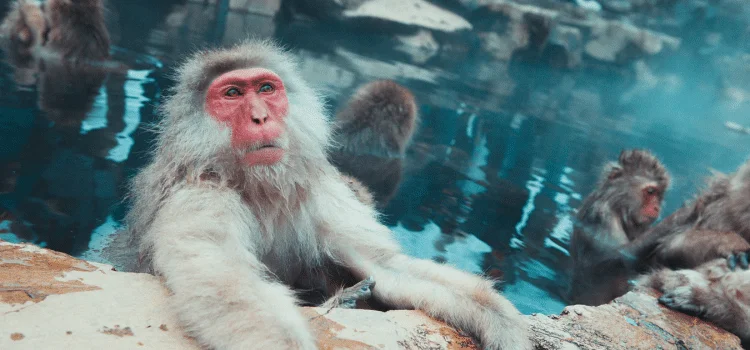
The Jigokudani Park is a famous hot-spring area near Nagano. The name Jigokudani (地獄谷, or "Hell Valley") comes from the steam and boiling water that rise from the ground in this cold mountain landscape.
It is known for wild Japanese macaques, often called snow monkeys, that descend from the surrounding forest and cliffs to gather near the warm pool. They are not performers or zoo animals: the park lies in their natural habitat, which is what makes the encounter memorable.
Contents 3
What to expect at Jigokudani Park
Jigokudani Yaen-koen is an observation park rather than a hot spring for people. Visitors come to watch macaques going about their social lives in the valley, with the mountain setting doing as much work as the famous bath itself.
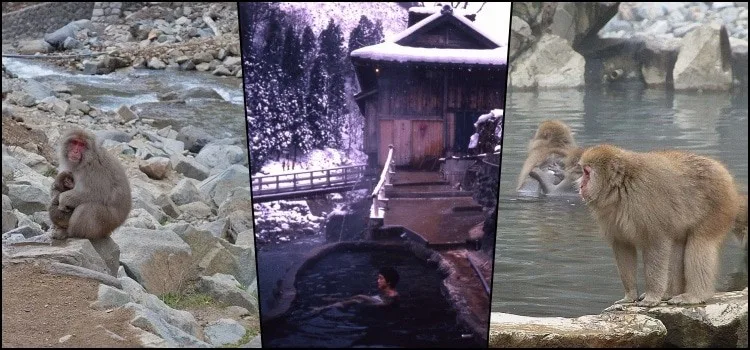
The park is home to nihonzaru (日本猿), the Japanese macaque. It sits in Yamanouchi, close to the onsen towns of Shibu and Yudanaka, in the forests around the Jigokudani valley.
A man-made hot-spring pool is where the macaques often gather. The animals are free to come and go, however, so no visit can promise a sighting. The park's own guidance notes that appearances can be sporadic, especially in autumn, and that bathing is not a constant all-year activity.
The monkeys of Jigokudani Park
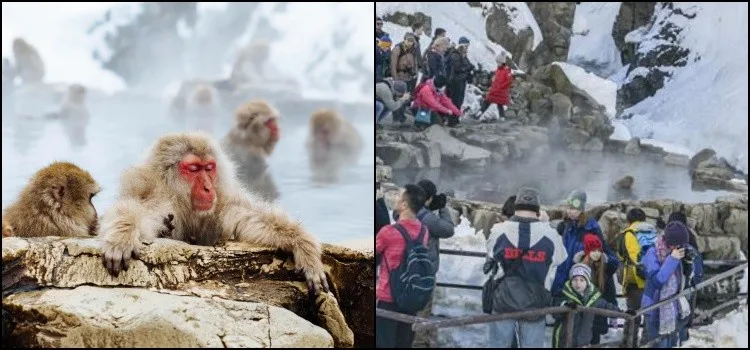
The park is open throughout the year, but the best-known photographs come from winter, when snow settles over the valley. Snow is commonly part of the scene from December to March, and January and February are often the months visitors have in mind when they picture the snow monkeys.
Winter does not turn the park into a guaranteed postcard. The macaques use the warm water to cope with the cold, but their timing is their own. Staff use a regulated feeding routine to encourage visits during opening hours, while the animals remain wild.
Accustomed to people, the monkeys often ignore their human guests, which makes quiet observation more rewarding than trying to get their attention. Keep a respectful distance; do not touch or feed them. You may also meet macaques along the approach, where their interactions within large social groups can be as interesting as the pool.
For another encounter with Japanese macaques in a different landscape, see this guide to Arashiyama's bamboo forest and monkey mountain.
How to reach Jigokudani Park
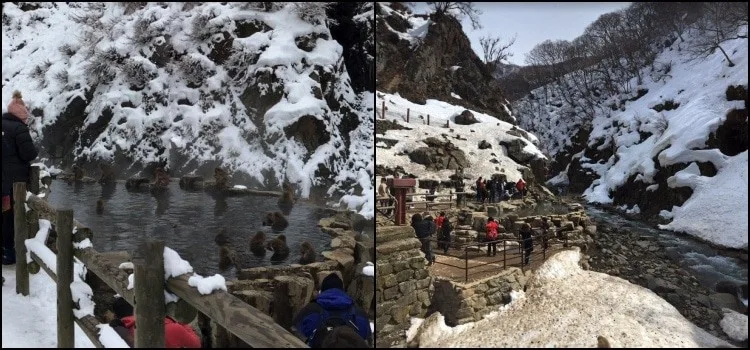
The final approach is part of the visit, so check the official timetable and trail information before leaving Nagano. From Nagano Station, one option is an express bus toward the Snow Monkey Park stop, followed by a walk of roughly 35 minutes. Another route uses the Nagano Dentetsu line to Yudanaka Station, then a local bus and the same walk into the park.
Drivers can use the dedicated free parking at Kanbayashi Onsen and walk about 30 minutes on the Yumichi Natural Trail. In warmer months, a closer paid parking area can shorten the walk to about 15 minutes, but the narrow road from Shibu Onsen is closed in winter and is not suitable for large vehicles.
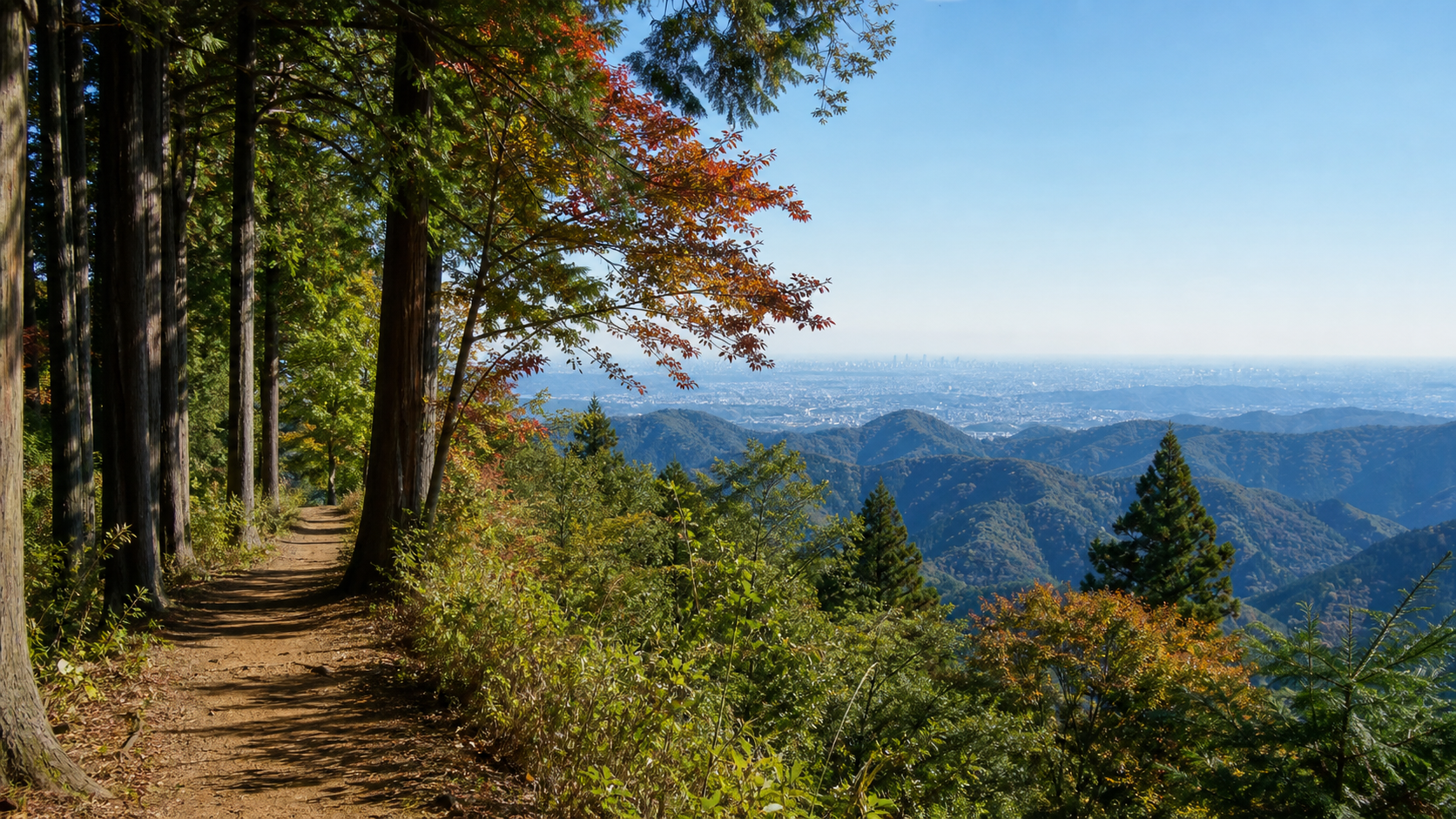
Neither approach is paved all the way. The official park guidance warns of uneven ground, steps and unpaved sections, so wheelchairs and carts cannot use these routes. In snowy weather, sturdy footwear matters more than a hurried schedule; if winter travel is part of your wider itinerary, this guide to Hokkaido, Sapporo and Hakodate may also help with cold-weather planning.



Community
Comments
0 comments
There are no published comments in this language yet.
Send comment