

Nihon Shoki [日本書紀] is the second oldest book in Japanese classical history. This book, which literally means Chronicles of Japan, has proven to be an important tool for historians, as it contains the most complete record of ancient Japan.
The Nihon Shoki was completed in 720 under the editorial supervision of Prince Toneri and with the assistance of Ō no Yasumaro, dedicated to Empress Gensho. The book is also called Nihongi [日本紀], which means Japanese Chronicles.
The Nihon Shoki begins with the Japanese creation myth, explaining the origin of the world and the first seven generations of divine beings (starting with Kuninotokotachi), and continues with various myths, just like the Kojiki, but carries its account through events of the 8th century.
It is believed to accurately record the last reigns of Emperor Tenji, Emperor Tenmu, and Empress Jito. The Nihon Shoki focuses on the merits of virtuous rulers as well as the mistakes of bad rulers. It describes episodes from mythological times and diplomatic contacts with other countries.
The Nihon Shoki was written in classical Chinese, as was common in official documents of the time. The Nihon Shoki also contains numerous transliteration notes informing the reader how words were pronounced in Japanese.
Collectively, the stories of this book and the Kojiki are referred to as the Kiki stories. The tale of Urashima Tarō is developed from the brief mention in Nihon Shoki (Emperor Yūryaku, year 22) that a certain son of Urashima visited Horaisan and saw wonders.

Writing of the Nihon Shoki
The compilation of the Nihon Shoki arose when Emperor Tenmu ordered 12 people, including Prince Kawashima, to edit the old history of the empire. The process was carried out until part of May 720.
Prince Toneri had been compiling Nihongi under the orders of the emperor; he completed it by submitting 30 volumes of history and one volume of genealogy. The compilation process is generally studied through the stylistic analysis of each chapter.
Although written in Literary Kanji, some sections use styles characteristic of Japanese editors. The Nihon Shoki is a synthesis of older documents, specifically regarding the records that were continuously kept at the Yamato court since the 6th century.
It also includes documents and folklore presented by clans serving the court. Before the Nihon Shoki, there were Tennōki and Kokki compiled by Prince Shōtoku and Soga no Umako, but as they were stored in the Soga residence, they were burned during the Isshi Incident.
The collaborators of the work refer to various sources that do not exist today. Among these sources, three documents from Baekje (Kudara-ki, etc.) are cited mainly for the purpose of recording diplomatic matters.
Records possibly written in Baekje may have been the basis for the citations in the Nihon Shoki. Textual criticism shows that scholars fleeing the destruction of Baekje to Yamato wrote these stories, and the authors of the Nihon Shoki relied heavily on these sources.
This should be taken into consideration regarding statements related to the ancient historical rivalries between the ancient Korean kingdoms of Silla, Goguryeo, and Baekje. The use of place names from Baekje in the Nihon Shoki is further evidence that shows the history used by the documents of Baekje.
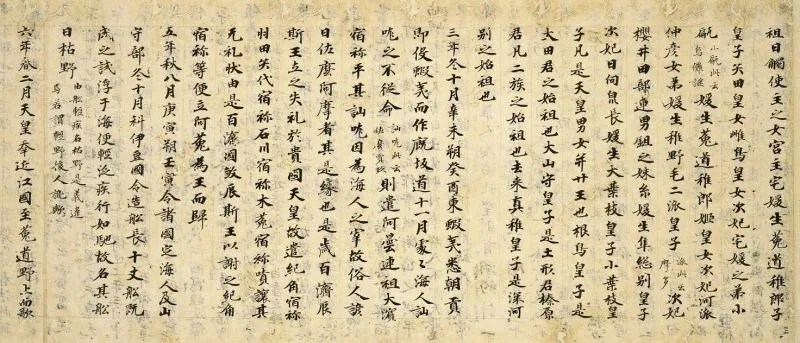
Chapters of the Nihon Shoki
- Chapter 01: Kami no Yo no Kami no maki;
- Chapter 02: Kami no Yo no Shimo no maki;
- Chapter 03: (Emperor Jimmu) Kan’yamato Iwarebiko no Sumeramikoto;
- Chapter 04:
- (Emperor Suizei) Kamu Nunakawamimi no Sumeramikoto;
- (Emperor Annei) Shikitsuhiko Tamatemi no Sumeramikoto;
- (Emperor Itoku) Ōyamato Hikosukitomo no Sumeramikoto;
- (Emperor Kōshō) Mimatsuhiko Sukitomo no Sumeramikoto;
- (Emperor Kōan) Yamato Tarashihiko Kuni Oshihito no Sumeramikoto;
- (Emperor Kōrei) Ōyamato Nekohiko Futoni no Sumeramikoto;
- (Emperor Kōgen) Ōyamato Nekohiko Kunikuru no Sumeramikoto;
- (Emperor Kaika) Wakayamato Nekohiko Ōbibi no Sumeramikoto;
- Chapter 05: (Emperor Sujin) Mimaki Iribiko Iniye no Sumeramikoto;
- Chapter 06: (Emperor Suinin) Ikume Iribiko Isachi no Sumeramikoto;
- Chapter 07:
- (Emperor Keikō) Ōtarashihiko Oshirowake no Sumeramikoto;
- (Emperor Seimu) Waka Tarashihiko no Sumeramikoto;
- Chapter 08: (Emperor Chūai) Tarashi Nakatsuhiko no Sumeramikoto;
- Chapter 09: (Empress Jingū) Okinaga Tarashihime no Mikoto;
- Chapter 10: (Emperor Ōjin) Homuda no Sumeramikoto;
- Chapter 11: (Emperor Nintoku) Ōsasagi no Sumeramikoto;
- Chapter 12:
- (Emperor Richū) Izahowake no Sumeramikoto;
- (Emperor Hanzei) Mitsuhawake no Sumeramikoto;
- Chapter 13:
- (Emperor Ingyō) Oasazuma Wakugo no Sukune no Sumeramikoto;
- (Emperor Ankō) Anaho no Sumeramikoto;
- Chapter 14: (Emperor Yūryaku) Ōhatsuse no Waka Takeru no Sumeramikoto;
- Chapter 15:
- (Emperor Seinei) Shiraka no Take Hirokuni Oshi Waka Yamato Neko no Sumeramikoto;
- (Emperor Kenzō) Woke no Sumeramikoto;
- (Emperor Ninken) Oke no Sumeramikoto;
- Chapter 16: (Emperor Buretsu) Ohatsuse no Waka Sasagi no Sumeramikoto;
- Chapter 17: (Emperor Keitai) Ōdo no Sumeramikoto;
- Chapter 18:
- (Emperor Ankan) Hirokuni Oshi Take Kanahi no Sumeramikoto;
- (Emperor Senka) Take Ohirokuni Oshi Tate no Sumeramikoto;
- Chapter 19: (Emperor Kinmei) Amekuni Oshiharaki Hironiwa no Sumeramikoto;
- Chapter 20: (Emperor Bidatsu) Nunakakura no Futo Tamashiki no Sumeramikoto;
- Chapter 21:
- (Emperor Yōmei) Tachibana no Toyohi no Sumeramikoto;
- (Emperor Sushun) Hatsusebe no Sumeramikoto;
- Chapter 22: (Empress Suiko) Toyomike Kashikiya Hime no Sumeramikoto;
- Chapter 23: (Emperor Jomei) Okinaga Tarashi Hihironuka no Sumeramikoto;
- Chapter 24: (Empress Kōgyoku) Ame Toyotakara Ikashi Hitarashi no Hime no Sumeramikoto;
- Chapter 25: (Emperor Kōtoku) Ame Yorozu Toyohi no Sumeramikoto;
- Chapter 26: (Empress Saimei) Ame Toyotakara Ikashi Hitarashi no Hime no Sumeramikoto;
- Chapter 27: (Emperor Tenji) Ame Mikoto Hirakasuwake no Sumeramikoto;
- Chapter 28: (Emperor Tenmu) Ama no Nunakahara Oki no Mahito no Sumeramikoto, Kami no maki;
- Chapter 29: (Emperor Tenmu) Ama no Nunakahara Oki no Mahito no Sumeramikoto, Shimo no maki;
- Chapter 30: (Empress Jitō) Takamanohara Hirono Hime no Sumeramikoto;
Leave a Reply