

Gore anime is a fan label for series that put blood, dismemberment, and bodies on screen. The label covers psychological horror, vampire action, and zombie survival, so two shows on this list can feel almost unrelated. If you are sensitive to blood, this guide deserves a warning. I am not a fan of violence for its own sake, and I tend to skip anything that feels like a contest to shock the audience. Readers keep asking for a list like this, so I chose eleven series where the violence has a purpose beyond the next kill.
The table below gives the basics: year, episode count, studio, and source material. The sections that follow explain what each series does well, where it goes too far, and which ones I would recommend first.
Contents 19
Gore anime at a glance
| Series | Year | Episodes | Studio | Source |
|---|---|---|---|---|
| Elfen Lied | 2004 | 13 plus OVA | Arms | Manga by Lynn Okamoto |
| Higurashi: When They Cry | 2006 | 26; Kai 2007: 24 | Studio Deen | Visual novel by 07th Expansion |
| Hellsing | 2001 | 13; Ultimate 2006 to 2012: 10 OVAs | Gonzo; OVA by Satelight, Madhouse, and Graphinica | Manga by Kouta Hirano |
| Another | 2012 | 12 | P.A. Works | Novel by Yukito Ayatsuji |
| Claymore | 2007 | 26 | Madhouse | Manga by Norihiro Yagi |
| Tokyo Ghoul | 2014 | 12; Root A 2015: 12; :re 2018: 24 | Studio Pierrot | Manga by Sui Ishida |
| Parasyte -the maxim- | 2014 to 2015 | 24 | Madhouse | Manga by Hitoshi Iwaaki |
| Deadman Wonderland | 2011 | 12 | Manglobe | Manga by Jinsei Kataoka and Kazuma Kondou |
| Highschool of the Dead | 2010 | 12 plus OVA | Madhouse | Manga by Daisuke Satō and Shōji Satō |
| Berserk | 1997 | 25; 2016 to 2017: 24 | OLM; 2016 by Gemba and Millepensee | Manga by Kentaro Miura |
| Attack on Titan | 2013 to 2023 | 89 | WIT Studio and MAPPA | Manga by Hajime Isayama |
The years and episode counts refer to the anime. When a series has several seasons or OVAs, the table lists the first version and the main continuation; the sections below explain the rest.
Elfen Lied: the series that gave the label its reputation
Elfen Lied is usually the first title people mention when the subject is gore anime, and for good reason. Lynn Okamoto's manga ran in Weekly Young Jump from 2002 to 2005 and was collected in 12 volumes. The 2004 anime by Arms runs for 13 episodes and has an OVA, and it remains one of the most explicit series to air on Japanese television in the 2000s.
The story follows Lucy, a Diclonius with horns and invisible arms called vectors. After an escape from a research facility, she loses her memory and lives as Nyu with Kouta and his cousin Yuka in Kamakura. The flashbacks explain how a mistreated child became a killer, and the series ties the violence to prejudice, abuse, and revenge.
The gore is direct. Bodies are cut apart with vectors, and the first episode alone leaves little to the imagination. Don't let the cute little faces in the image below fool you. The series also shows violence against children and animals, which is where many viewers draw the line. Fans still bring up Elfen Lied when someone says anime is for kids. The manga goes further than the anime, and the endings differ because the anime caught up with the unfinished manga.

Higurashi: When They Cry, a village festival with a body count
Higurashi began as a sound novel by 07th Expansion, written by Ryukishi07. The first anime, from Studio Deen, aired 26 episodes in 2006. The second season, Kai, added 24 episodes in 2007 and answers the mysteries of the first. The story takes place in June 1983 in Hinamizawa, a fictional village modeled on Shirakawa in Gifu Prefecture.
Keiichi Maebara moves to the village and befriends Rena, Mion, Rika, Satoko, and later Shion. The local Watanagashi festival is followed by murders and disappearances, and the friends become paranoid, violent, and sometimes murderous. The original visual novel is built on question arcs and answer arcs, and the anime works best when you watch the two seasons in order.
The violence is often sudden: a knife, a baseball bat, a friend who stops acting like herself. The horror comes from the suspicion that the person next to you has snapped. Kai explains the Hinamizawa syndrome and the loop structure, so starting with Kai is a mistake. This is the slow-burn option on the list.

Hellsing: vampires, ghouls, and an organization with a license to kill
Hellsing is the creation of Kouta Hirano. The manga ran from 1997 to 2008 and was collected in 10 volumes. The 2001 television series by Gonzo has 13 episodes and follows its own story. Hellsing Ultimate, the 10-part OVA released between 2006 and 2012, stays closer to the manga and is the version most fans recommend.
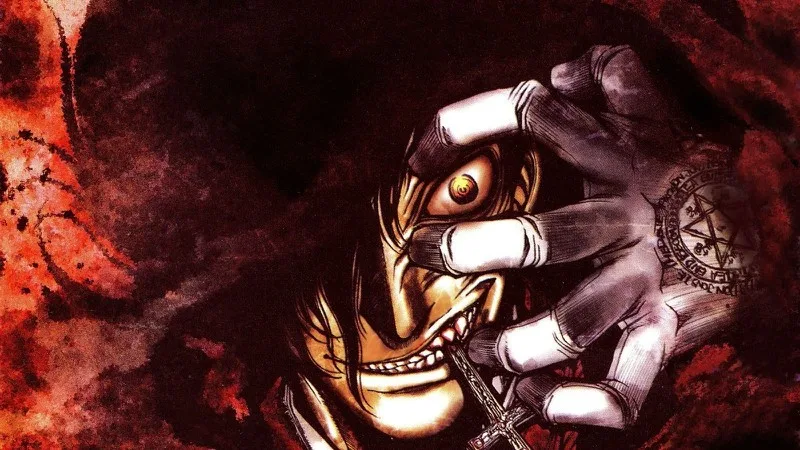
The Hellsing Organization protects England from vampires, ghouls, and other supernatural threats. Alucard is its most powerful weapon, a vampire who takes obvious pleasure in destroying his own kind. You don't have to be a genius to know that these evil beings always choose to give their victims macabre deaths. Seras Victoria, Integra Hellsing, and the soldiers of Millennium fill out a story that turns London into a battlefield. If you want more options in the same vein, the list of the best vampire anime covers the wider genre.
The violence is stylish and excessive: bodies explode, blood sprays, and Alucard regenerates in ways that would kill anyone else. The manga is finished, so there is no reason to wait for a continuation. Start with Ultimate if you want the complete story, and watch the 2001 series afterward if you are curious about a different take.
Another: the curse of class 3-3
Another comes from a novel by Yukito Ayatsuji. The 2012 anime by P.A. Works has 12 episodes and is set in Yomiyama, a town inspired by Toyama Prefecture. In 1972, a student named Misaki died during the school year, and the class decided to pretend she was still alive. The decision left a curse that returns every few years.
In 1998, Kōichi Sakakibara transfers into class 3-3 and meets Mei Misaki, a quiet girl with an eyepatch who draws alone. Students and their relatives begin to die in accidents that look impossible. The series finds danger in everyday places: an umbrella, a staircase, a hospital corridor.
Another is a mystery first and a gore series second. The deaths are gruesome, but the tension comes from trying to work out who is dead and why. If you want a short, self-contained horror story, this is the easiest entry on the list.

Claymore: warriors on the edge of becoming monsters
Claymore is based on Norihiro Yagi's manga, which ran from 2001 to 2014 and was collected in 27 volumes. The 2007 anime by Madhouse has 26 episodes and follows Clare, a warrior with the Organization's silver eyes and a sword that can cut through yoma.
The Claymores are women who have been altered to fight monsters. They heal quickly, move faster than humans, and risk becoming the very creatures they hunt if they lose control. When that happens, another Claymore is sent to kill them. It is ironic, as they live to kill monsters that are partly their destiny if they do not control their power. The series builds its tragedy on that irony, and Clare's search for the person who saved her gives the violence a direction.
The anime diverges from the manga after a certain point, so readers who want the full story should go back to the source. The action is bloody, but the series is more somber than the other entries. It is a good choice if you want a tragedy with sword fights.

Tokyo Ghoul: hunger, identity, and a divided fan base
Tokyo Ghoul is Sui Ishida's manga about Ken Kaneki, a college student who survives an encounter with a ghoul and wakes up as a half-ghoul. Ghouls look human but can only eat human flesh, so Kaneki has to find a way to live between two species that fear each other.
The first anime season by Studio Pierrot aired in 2014 with 12 episodes and is a solid adaptation. The second season, Root A, took an original route in 2015. The :re adaptation arrived in 2018 and covered the sequel manga in two 12-episode seasons. Fans argue about the later seasons because the pacing and the adaptation choices leave out material from the manga. The Tokyo Ghoul facts guide goes deeper into the differences.
The gore is part of the premise: bodies are eaten, kagune tentacles tear through flesh, and Kaneki's transformation is painful to watch. The first season is still the best place to start, and the manga is the version to read if the story grabs you.

Parasyte -the maxim-: the parasite in the right hand
Parasyte is Hitoshi Iwaaki's manga from the late 1980s and 1990s. The 2014 to 2015 anime by Madhouse, titled Parasyte -the maxim-, has 24 episodes and is one of the best adaptations on this list.
Shinichi Izumi is a high school student whose body is invaded by a parasite. The creature fails to reach his brain and takes over his right hand instead. Shinichi and Migi, the parasite, have to cooperate to survive other parasites that can reshape human bodies into weapons.
The violence is creative and often disturbing. Heads split open, bodies twist, and the parasites treat humans as food. The series also asks what separates a person from a parasite, and Migi's cold logic makes a good counterpoint to Shinichi's fear. This is my favorite anime on the list, and the one I would recommend to someone who wants a complete story with a clear ending.

Deadman Wonderland: blood as a weapon
Deadman Wonderland is a manga by Jinsei Kataoka and Kazuma Kondou, serialized from 2007 to 2013 and collected in 13 volumes. The 2011 anime by Manglobe has 12 episodes and adapts the first 21 chapters, which means it ends before the manga does.
Ganta Igarashi is a normal student until his classmates are murdered and he is blamed for the crime. He is sent to Deadman Wonderland, a prison that doubles as a theme park, and discovers that he can control his own blood as a weapon. The other prisoners have similar powers, and the man who really killed his classmates is known as the Red Man.
The anime is short and ends on a cliffhanger. The violence is constant, with blood bullets, brutal arena fights, and a prison full of people who have nothing to lose. If you want the full story, read the manga after the anime.

Highschool of the Dead: zombies, fan service, and a very 2010 anime
Highschool of the Dead is based on a manga by Daisuke Satō and Shōji Satō. The series ran from 2006 to 2013 and was left unfinished when Daisuke Satō died in 2017. The 2010 anime by Madhouse has 12 episodes and an OVA, and it adapts the first four volumes.
It happened suddenly: the dead began to rise, and Japan was thrown into total chaos. Takashi Komuro is a high school student who kills his best friend Hisashi after a zombie bite. He promises to protect Rei Miyamoto, Hisashi's girlfriend, and joins a group of survivors trying to escape the school. The story moves from the school to the city, with the usual stops: a mall, a bridge, and a house that only looks safe.
The series mixes zombies, blood, and fan service without apology, including a scene where a bullet is fired between a character's breasts to hit a zombie. That mix is either the appeal or the reason to skip it. The anime covers only part of the manga, and the manga has no ending. For more undead options, see the guide to zombie anime.
Berserk: the dark fantasy benchmark
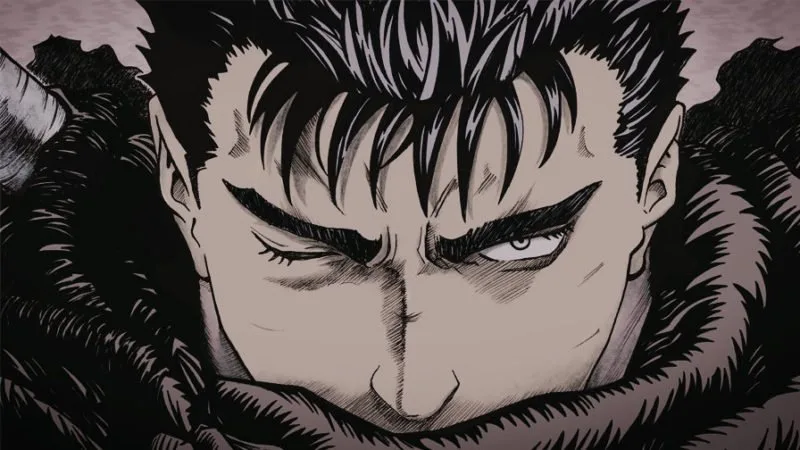
Berserk is Kentaro Miura's manga, serialized from 1989 until his death in 2021. The story follows Guts, a mercenary with a huge sword, and Griffith, the leader of the Band of the Hawk. After a betrayal, Guts is branded and hunted by demons every night, and the series becomes a long story about revenge, friendship, and survival.
The 1997 anime by OLM has 25 episodes and covers the Golden Age arc, which is the usual starting point. A second anime from 2016 to 2017 has 24 episodes and mixes 2D and 3D animation, with a mixed reception. The 2022 Memorial Edition reedited that material. The manga continued after Miura's death with Studio Gaga, and the story is still being completed.
Berserk is the heaviest series on this list in every sense. The violence is graphic, the themes are dark, and the Eclipse is one of the most infamous sequences in anime. It is a heavy watch, and it is essential for anyone interested in dark fantasy.
Attack on Titan: the most popular entry
Attack on Titan is Hajime Isayama's manga, serialized from 2009 to 2021 and collected in 34 volumes. The anime aired from 2013 to 2023, with 89 episodes split between WIT Studio and MAPPA. This is one of the most popular animes of all time.
The story begins in Shiganshina, a town at the outer edge of Wall Maria, the outermost of the three walls that protect humanity from the Titans. When a Colossal Titan breaks the wall, Eren Yeager loses his mother and joins the Survey Corps with Mikasa and Armin. The three military branches, the Survey Corps, the Garrison, and the Military Police, each have a different role in the war.
Attack on Titan is less splatter-focused than the other entries. The violence serves a war story about freedom, propaganda, and the cost of revenge, and the later seasons turn the conflict into something much larger than giant monsters. The ending divides fans, but the series is still the easiest recommendation for someone who wants a long, ambitious story.

More anime with violence and gore
Unfortunately, it is not possible to mention all the Gore animes in this article. Some of the titles below are pure splatter, while others are thrillers or action shows with a few brutal scenes. I have grouped them by mood so you can choose based on what you want.
Psychological horror
- Mirai Nikki
- Shiki
- School Days
- Umineko no Naku Koro ni
- King's Game (Ōsama Game)
- Gakkou Gurashi! (School-Live!)
- Re:Zero kara Hajimeru Isekai Seikatsu
- Neon Genesis Evangelion
Bloody action
- Psycho-Pass
- Blood+
- Black Butler
- Ninja Scroll
- Akame ga Kill!
- Devilman
- Afro Samurai
- Drifters
- Baccano!
- Basilisk
- JoJo's Bizarre Adventure
Short and nasty
- Corpse Party
- Btooom!
- Genocyber
- Murder Princess
- Pupa
Gore manga to read after the anime
Most of the series above started as manga, and the manga often goes further than the anime. Elfen Lied, Claymore, Tokyo Ghoul, Parasyte, Deadman Wonderland, and Attack on Titan all have complete manga versions. Berserk is the most detailed version of its story, and the deluxe editions are a good way to read it. Hellsing is complete in ten volumes, and the Ultimate OVA follows it closely.
Higurashi began as a visual novel, and Another began as a novel, so the source material is a different experience. If you want more titles in the same vein, the guide to heavy seinen manga and its anime adaptations is a good next stop.
Where to start
The right entry depends on what you can tolerate. Start with Elfen Lied or Deadman Wonderland if you want a short, brutal introduction. Another and the two seasons of Higurashi are the psychological horror picks. Hellsing Ultimate is the complete vampire action package. Attack on Titan is the safest bet for a long story with less splatter. Parasyte is the best all-around choice if you want a complete story and a clear ending.
Check the age rating before you start, and keep in mind that several of these series include sexual violence, animal cruelty, or violence against children. Use the list as a guide and stop when a series starts to feel cruel. If you want scares without the blood, the list of the 100 best horror anime is a good alternative.
Sources
Series data and production details were checked against Wikipedia entries for the titles in this guide, including Elfen Lied, Hellsing, and Higurashi: When They Cry.



Community
Comments
0 comments
There are no published comments in this language yet.
Send comment