
Do you know about Kadomatsu? The kadomatsu is a traditional Japanese decoration. It is usually placed in front of houses, or to the left and right of the entrance paths of a building or store.
They are placed after the Christmas celebration and remain until around January 15th. Their purpose is to welcome the ancestral spirits of the harvest season and to bless the establishment in the following year.
This decoration is basically made of 3 pieces of bamboo cut diagonally, in three different sizes. Pine branches are also tied together with a straw rope.
Each item has a meaning: bamboo represents strength and prosperity, while pine represents long life. The 3 sizes of bamboo represent heaven (the tallest), humility (the medium).
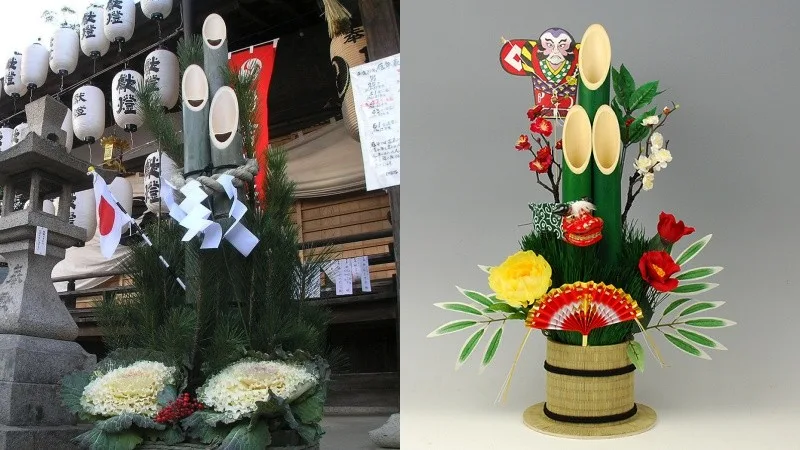
Kadomatsu is made of 3 pieces of bamboo cut diagonally in different sizes and pine or ume branches tied with a straw rope.
Each kadomatsu item has a spiritual meaning: bamboo is a symbol of strength and prosperity, and pine symbolizes long life. Additionally, the 3 bamboo pieces represent heaven (the tallest), humanity (the medium), and earth (the smallest).
Origin and assembly of kadomatsu
The origin of the traditions and practices of Kadomatsu is Chinese. The use of this decoration dates back to before the 7th century. In Japan, it began to be used in the 8th century, brought from China.
Previously, Kadomatsu was made with pine and other related and simple materials. The materials that are common today began to be used around the 14th century.
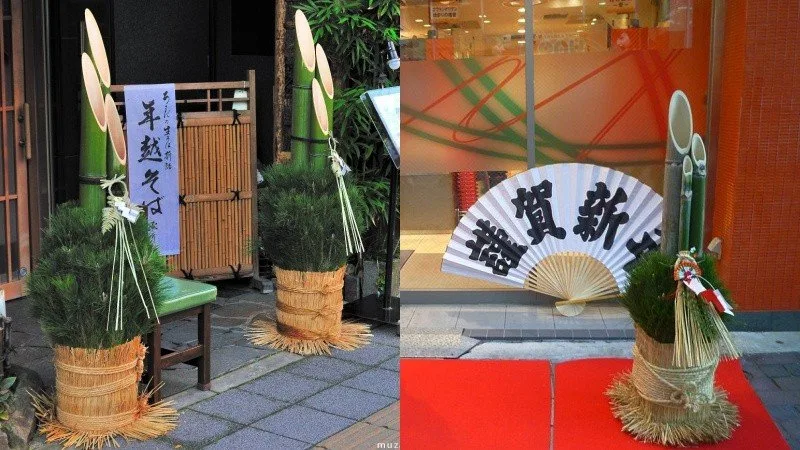
The assembly, as mentioned, is basically made of bamboo and pines. The center of the Kodamatsu is generally made of three bamboo shoots in three different sizes.
The shoots and the pines are joined with a straw or newly woven straw rope. After this simple assembly, the decoration is ready to be placed at the entrance of homes or stores.
Another important event occurs on January 15th, known as Dondoyaki. In this event, the kadomatsu and other New Year decorations are burned in a ritual. This is done inside a shrine, school, courtyard, or some open place.
The New Year decorations are stacked in a pyramid shape and set on fire. In this fire, mochi (rice cakes) are roasted. The belief is that whoever eats these mochis will remain healthy and have prosperity throughout the year.



Community
Comments
0 comments
There are no published comments in this language yet.
Send comment