
Soon, entering Japan will require a new digital step. The JESTA (Japanese Electronic System for Travel Authorization) is not a traditional visa, but a mandatory electronic authorization for travelers from 71 visa-exempt countries — including Brazil, the USA, and European nations.
Inspired by the American ESTA and the European ETIAS, the system arises as a response to overtourism that pressures locations like Mount Fuji and the historic neighborhoods of Kyoto. In 2024, Japan received 36.9 million tourists, and issues such as the invasion of private properties in Gion (to photograph geishas) and environmental degradation accelerated the creation of this "smart filter."
Contents 4
What Is JESTA and Why Did Japan Create It?
JESTA is a pre-screening system that analyzes traveler data before boarding. Its goal? To identify risks of illegal immigration or tourist overload. Unlike a visa, its approval is quick (within 72 hours) and electronically linked to the passport.
Why now? The Japanese value omotenashi (hospitality), but recent events forced a rebalancing:
- In Ginzan Onsen, century-old hot springs limited access to non-guests after 8 PM due to noisy tourists;
- In 2024, 15% of irregular stays in the country came from visa-exempt travelers;
- The government seeks to protect heritage sites like Kiyomizu-dera, where visitors eat in sacred areas;
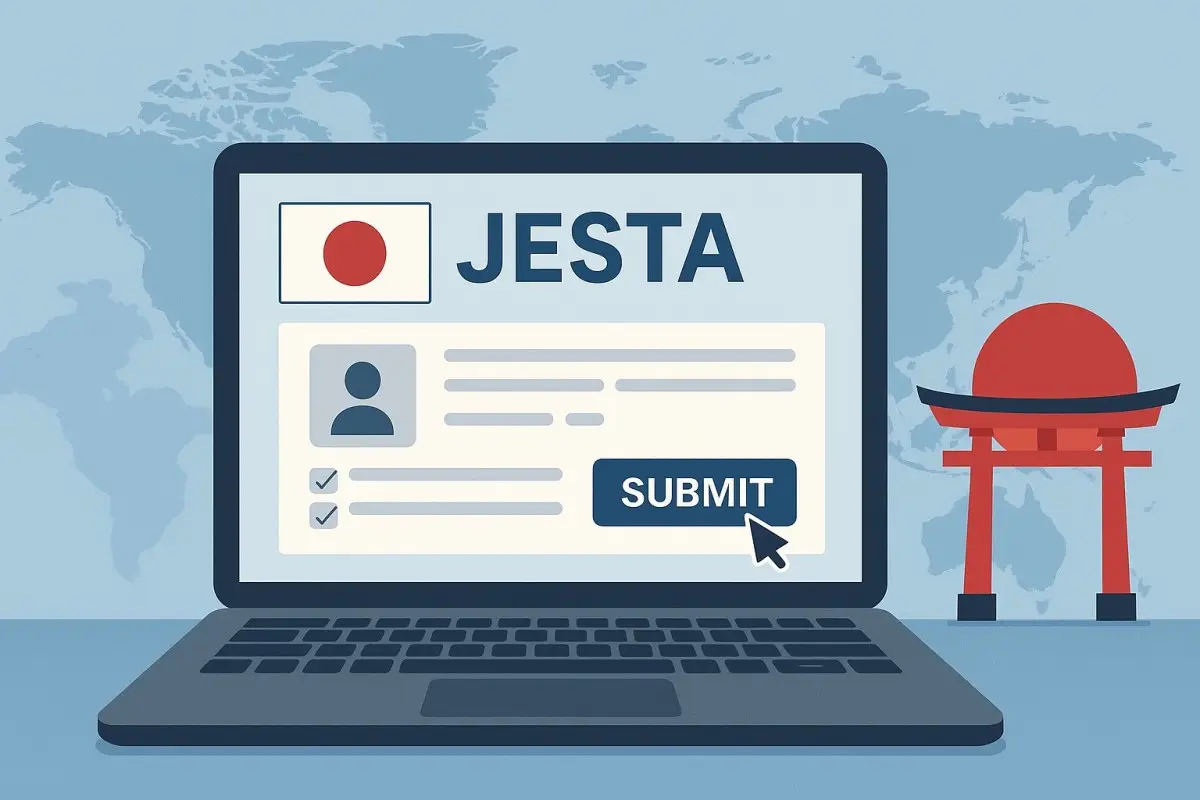
Step by Step: JESTA in Practice
When mandatory, you will need to follow these steps:
- Online filling: A digital form will collect personal data, itinerary, and address in Japan.
- Automated analysis: Systems will cross your information with global security databases.
- Result: If approved, you will receive an e-confirm; if denied, you will need to apply for a consular visa.
Tourists from countries outside this list (e.g., China, India) will continue to require a physical visa. The validity will be 90 days per entry, for use in tourism, business, or transit — never for work.
Here’s an irony: while JESTA arises to control flows, Brazilians gained visa exemption in 2023 as part of the 115 years of Japanese immigration in Brazil, which created a new difficulty and cost for Brazilians.
Privacy vs. Security
JESTA requires sensitive details: travel history, contacts in Japan, and even social media. The government assures that the information will be anonymized and encrypted, but NGOs like the Electronic Frontier Foundation warn: "Such systems create juicy databases for hackers."
And there’s another risk: algorithmic bias. In 2024, tests with similar systems in Europe denied 40% more authorizations to citizens from African and Middle Eastern countries. Will JESTA repeat this pattern?
Preparing for the JESTA Era
As the system enters testing in 2025, you can prepare:
- ✅ Check your passport: It must be electronic and issued after 2011;
- ✅ Document your trip: Have updated hotel reservations and round-trip tickets;
- ✅ Monitor official sources: Japanese [Immigration] and consulate websites will have updates.
And most importantly: study Japanese etiquette. In Kyoto, there are already signs in Portuguese saying: "Do not photograph geishas without permission." Remember: JESTA is not just a procedure — it is a pact of mutual respect.





Community
Comments
0 comments
There are no published comments in this language yet.
Send comment