
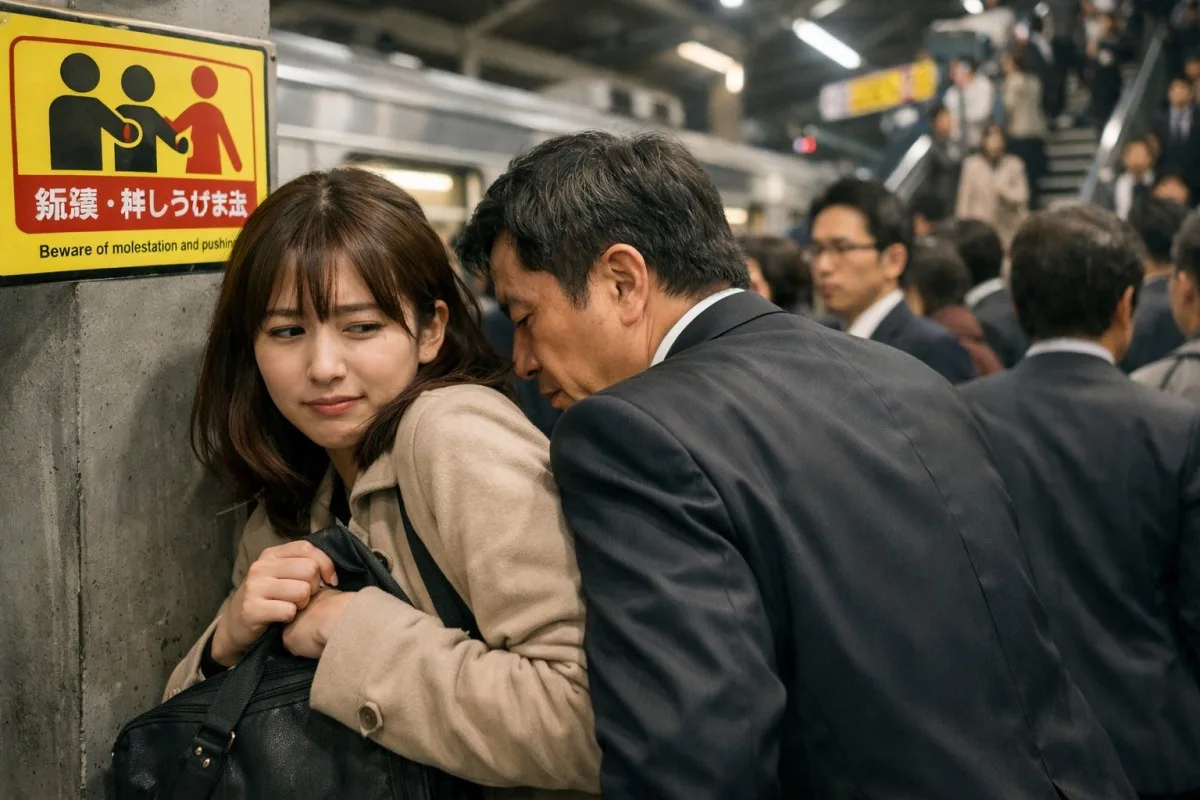
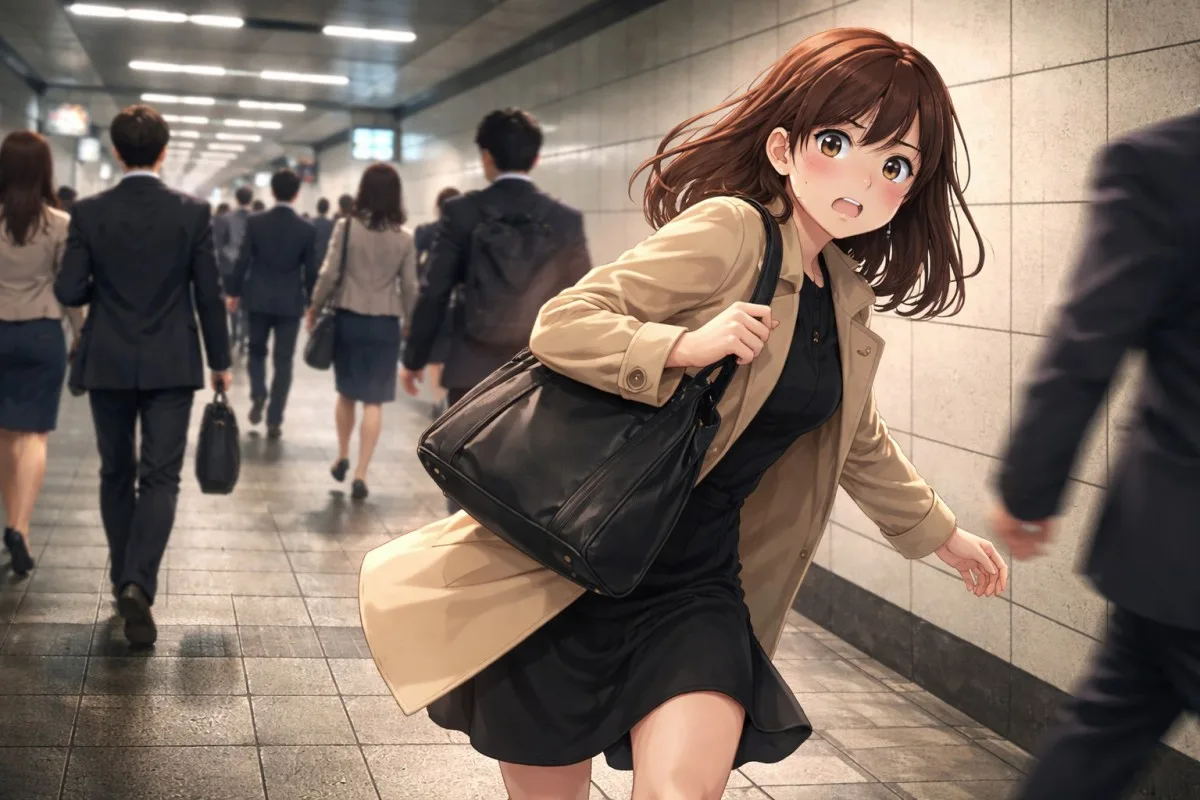
Butsukari Otoko is a term that has gained real traction in Japan in recent years, especially among young women who use public transportation every day. You may have already come across it on Japanese social media or in international reporting. It describes a specific, silent, and disturbing behavior: men who intentionally push or bump into women in crowded stations and trains. Understanding what lies behind the word is one of the clearest windows into the tensions hiding under the surface of urban life in Japan.
In the next few minutes, you will get a clear picture of what Butsukari Otoko really is, why it happens, how Japanese society is responding, and what the legal picture looks like for anyone affected by it.
Contents 6
What does Butsukari Otoko mean, after all?
The word Butsukari Otoko (ぶつかり男) can be literally translated as "man who collides" or "man who bumps into." The translation, however, does not tell the whole story. In everyday use, the term refers to men who deliberately bump into or push women, usually in tight spaces like train platforms, escalators, or corridors inside large train stations.
It is not an accident. It is not a lack of space. The pattern repeats itself: the man adjusts his body, picks up his pace, and angles the impact. Many victims describe hard pushes to the shoulder, the back, or the chest. In some cases, the aggressor simply keeps walking, as if nothing had happened.
The most unsettling detail? There is almost never eye contact, almost never a word. Silence is part of the act.
Why does this happen in Japan?
This is the question many people ask. Japan is internationally associated with order, politeness, and respect for public space. How does a behavior like this fit that picture?
Specialists in social behavior and gender studies point to a combination of factors that tend to reinforce each other:
- Repressed emotions: Japanese culture places a strong value on self-control. Negative feelings are rarely expressed openly, and they tend to find other outlets.
- Quiet misogyny: A push becomes a form of aggression with no immediate consequence, in a society that actively avoids confrontation in public.
- Urban anonymity: Large stations create the perfect setting. Nobody knows anyone, everything moves fast, and the chance of being recognized is very low.
- Power imbalance: Many victims stay silent out of fear of reacting, especially younger women, tourists, or anyone who already feels less safe in public spaces.
There is no single profile of a Butsukari Otoko. Some wear suits, others casual clothes. Some are young, others clearly older. That very unpredictability is part of what makes the problem so hard to pin down.
How does Japanese society respond?
The response is changing, even if slowly. TV programs, newspapers, and the Japanese police have all addressed the topic publicly. Several stations have installed visual warning signs explicitly cautioning against intentional pushing, something that would have been almost unthinkable a few years ago.
At the same time, broader anti-harassment campaigns on public transport are placing Butsukari Otoko next to better-known issues like chikan, or sexual groping.
The debate, however, is far from settled. Part of society still minimizes the behavior, treating it as a daily nuisance. Other voices, especially women's voices, push back: this is neither normal nor acceptable.
Chikan and the legal landscape
Legally, Butsukari Otoko is not always treated as a separate offense. In most cases, the act falls under general assault, coercion, or public harassment. The bar for filing a report, however, is high. A quick push rarely leaves visible marks, witnesses are uncommon, and many victims hesitate to involve the police or their employer.
Japanese criminal law does contain specific provisions against chikan, the unwanted sexual touching or groping that takes place on trains. Butsukari Otoko is different in nature: there is no groping, only a deliberate bodily impact whose power comes from anonymity and the public setting. Both phenomena, though, point to the same underlying difficulty: how do you prosecute everyday aggression in dense urban transport, where evidence, witnesses, and willingness to speak up are all scarce?
Tips for affected people and travelers
If you live in Japan or are traveling through it, a few small habits can lower the chances of ending up in this kind of situation, even though any aggression is never the victim's fault:
- Wear your backpack on your front: A backpack against your chest acts as a small physical barrier against pushes and unwanted contact.
- Avoid peak hours when you can: If your schedule allows, skip the morning rush and travel at off-peak times.
- Stay close to other women: During rush hour, women-only carriages exist on many Japanese urban lines, and the risk drops noticeably there.
- Document what happens: Note the date, time, station, and line, even if you decide not to file a report. Over time, patterns become visible.
- Ask for help: If you are being harassed, contact station staff or call the police (110) rather than enduring the situation in silence.
One point still matters more than any tip: Butsukari Otoko is not a minor offense. It is a form of gender-based aggression that depends on the cover of anonymity. Naming the behavior is one of the most effective ways of taking that cover away.
What this tells us about modern Japan
Butsukari Otoko exposes a contradiction that is easy to miss on a first look at Japan. An extremely organized country can still hide deep tensions below the surface. The silence that is often praised as a cultural virtue can, in moments like these, become a shield for abusive behavior.
If you are interested in Japan, it is worth looking past the images from anime, dramas, and travel guides. Butsukari Otoko shows a real Japan, complex, full of nuance, and dealing with very contemporary social challenges. It does not fit the idea of a country where "everything works perfectly," because that view tends to leave out the experience of people who run into these situations in public space on a regular basis.
That is exactly the value of the term: it makes visible a behavior that long went unnamed, and it gives those affected a shared language to describe what is happening to them, and to demand that it be taken seriously.



Community
Comments
0 comments
There are no published comments in this language yet.
Send comment