
A number can be useful, but it can also create a lazy picture. Japan is often reduced to the idea that everyone is short; a crowded station or a compact shop seems to confirm it at a glance. The national figures tell a narrower story: they describe an average, not a rule for every person you meet.
For adults aged 20 and over, Japan's 2023 National Health and Nutrition Survey puts the average height at 168.2 cm for men and 154.8 cm for women. Younger adults in the same survey are taller on average, which is why a school student, a person in their twenties, and an older adult should not be folded into one imaginary “Japanese height.”
Contents 6
Average height of adults in Japan
In Japanese, height is 身長 (shinchō). The official health survey records height by age group, which is why a careful answer begins by saying who is being counted. For the 2023 survey's adult population, the broad averages were:
- Men aged 20 and over: 168.2 cm (about 5 ft 6.2 in)
- Women aged 20 and over: 154.8 cm (about 5 ft 1 in)
These numbers are not a threshold for being “tall” or “short” in Japan. They are a midpoint across a large population. Plenty of people sit above or below it, and a comparison only becomes meaningful when it uses the same age range and the same method of measurement.
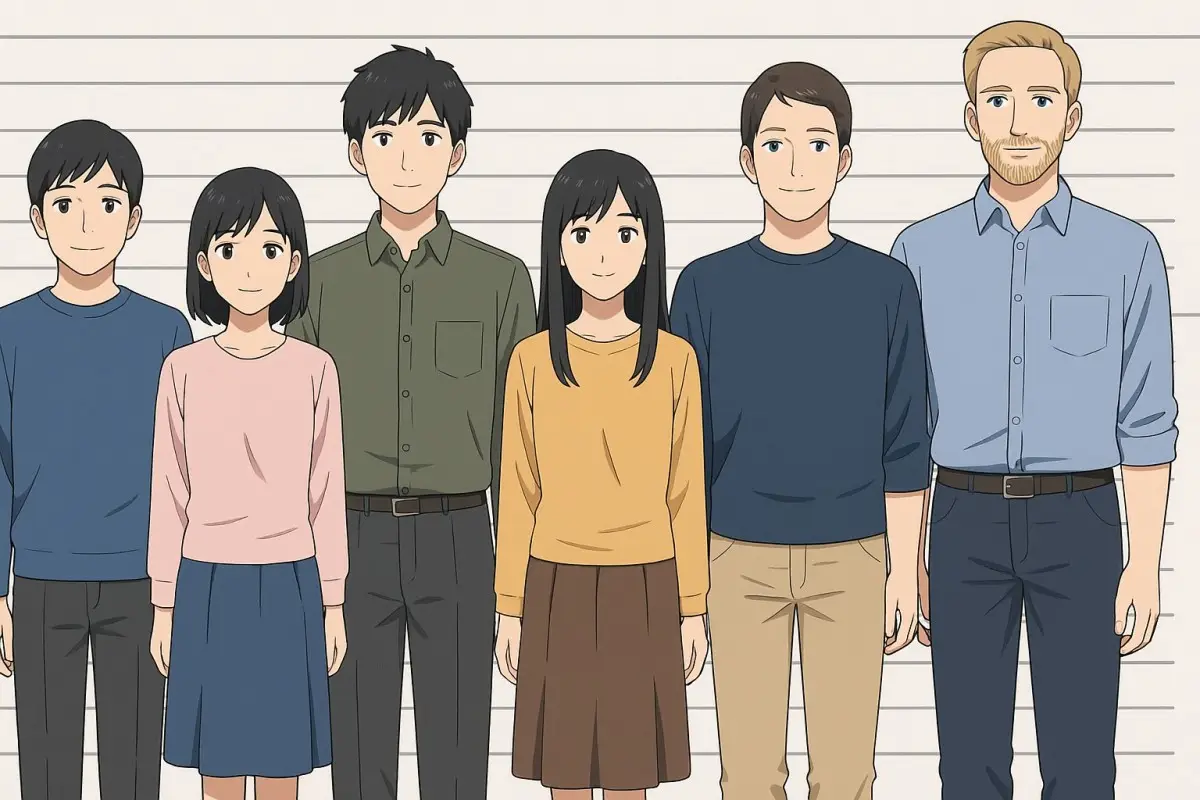
Why age makes a difference
It is tempting to quote one number and stop there, but averages shift between generations. Japan's National Health and Nutrition Survey publishes age-group tables precisely because an adult population includes people who grew up in very different decades.
For example, the same 2023 survey gives averages of 170.3 cm for men aged 20–29 and 157.6 cm for women aged 20–29. That does not replace the adult average; it explains why a figure near 170 cm and 158 cm is often repeated when the question is really about younger adults.
School data offer another useful comparison, although they answer a different question. Statistics from the Ministry of Education show that in 2024 the average 17-year-old boy was 170.8 cm and the average 17-year-old girl was 158.0 cm. That is not an adult average and should not be presented as one. It does show why age labels matter when someone asks about height in Japan.
The long view is striking. The same school records show that 17-year-olds became substantially taller over the twentieth century, while the rapid rise slowed around the mid-1990s. Changes in childhood nutrition, health, living conditions, and the makeup of each generation are often discussed together, but no single cause can explain every person's height.
Does Japan have a “standard” body size?
Not in the way a stereotype suggests. Averages are useful for clothing brands, public-health research, and broad comparisons, but they do not turn a country into one size. Tokyo contains people from every prefecture and many countries; so do schools, workplaces, sports clubs, and families.
For visitors, the practical question is usually clothing rather than statistics. Japanese labels often use centimetres for garment measurements, so checking the waist, inseam, shoulder, or chest measurement is more reliable than assuming that a familiar S, M, or L will fit the same way. This is especially useful for trousers and fitted jackets, where a label alone says little about the cut.
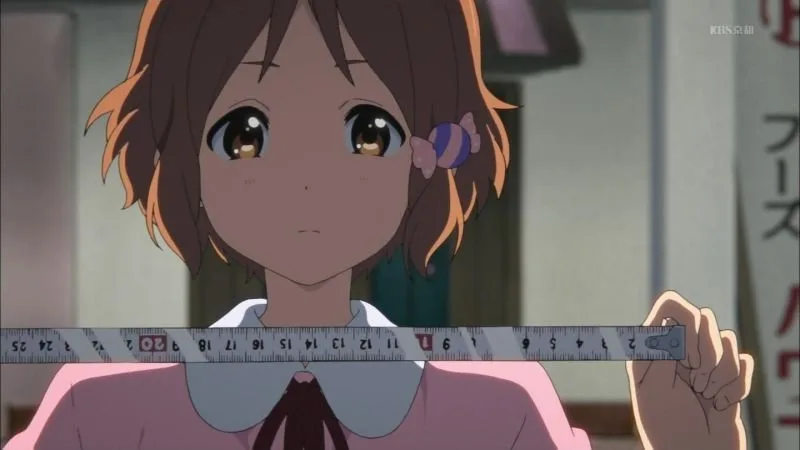
Height in Japanese schools and sports
Height is recorded regularly during school health examinations, so students and parents are used to seeing it as one item in a larger health record. The process is less about ranking children than tracking growth over time; the result only becomes useful when read alongside age and individual development. Our guide to the school health check in Japan explains the wider routine.
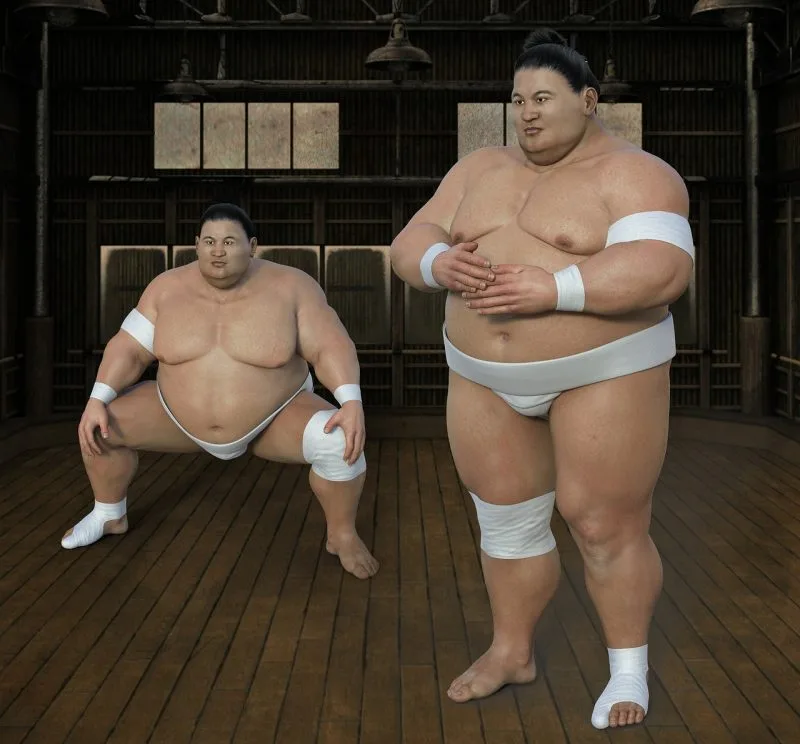
Sports make the limits of an average obvious. Basketball rewards exceptional height, while sumo brings together athletes with very different builds. Height can help in some situations, but technique, strength, training, and the demands of a sport are not reduced to centimetres.
How Japan compares with other countries
International comparisons need the same care. One country may report adults aged 20 and over, another may publish a younger group, and a third may rely on a different survey year. A small numerical gap can look larger than it is when the underlying groups do not match.
Japan's adult averages are lower than those often reported for parts of northern Europe and North America, but that does not support a conclusion about an individual's health, ability, or value. Height is one physical trait shaped over a lifetime. It is more accurate to use the figures as context than as a shortcut for judging people.
The useful answer to “Are Japanese people short?”
The careful answer is that Japan has national averages, not a single national body type. For adults in the 2023 survey, the reference figures are 168.2 cm for men and 154.8 cm for women; for people aged 20–29, they are 170.3 cm and 157.6 cm. Beyond that, age, family background, and individual variation matter more than a cliché.
If you are comparing your own height, shopping for clothes, or simply trying to understand what you notice while travelling, use the average as a starting point. The people around you will always be more varied than the number suggests.






Community
Comments
0 comments
There are no published comments in this language yet.
Send comment