If you study Japanese, you must have been curious about the expression NE (ね) that is often used in the same way as our né in Portuguese. The NE ending is usually used to give emphasis, agreement, a request for confirmation, etc. Just like in Portuguese, the Japanese né is equivalent to "isn't it?" or "right?".
Could it be related to the word in the Portuguese language? For what other purposes is NE (ね) usually used? In this article, we will try to understand the true origin and meaning of the expression NE (ね). The explanation of this word may seem simple, but in reality, it is more complex than it appears.
Naturally, NE (ね) is a particle that is often used at the end of sentences in the following forms: だよね / ですね / だね. It can be used both as confirmation or a question (already answered) without the use of the particle KA (か). This ending in Japanese sentences is so common that it is difficult to explain its use. Sometimes this expression even wants to indicate "hey; let's."
Contents3
The origin of NE in the Japanese language
Japan received a lot of influence from Portugal in its history. This makes one think that NE (ね) was one of the words that the Japanese learned from the Portuguese. The problem is that there are records of the NE (ね) particle being used since the Heian Period (794-1185), well before the Portuguese immigrated to Japan.
Others believe that the Japanese influenced Brazilians to use the expression "né," since it is not common in Portugal. However, this expression was also used before the Japanese immigrated to Brazil. All of this seems to be a complete coincidence. In Portuguese, it is easy to understand the expression "né," which comes from "não é." And in Japanese?
Before the existence of hiragana, the word ね was written with the kanji (祢) which currently means sanctuary and ancestor. This kanji is also pronounced NAI (ない), which you find at the end of sentences and verbs as a no or negative. Some claim that the expression NE originated exactly from the expression NAI. It makes perfect sense DOESN'T IT?
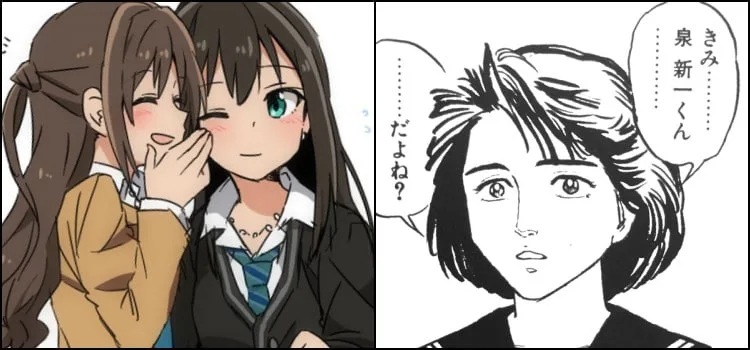
[caption id="attachment_19204" align="aligncenter" width="750"] Who hasn't been annoyed by: "Are you really Shinichi?", "Shinichi kun dayone?"[/caption]
Currently, ね has a much deeper meaning of direct and indirect use. The use of the word can be related to emotional involvement and sometimes even used indirectly. NE (ね) is so useful that it can be used to get attention, request confirmation, make a correction, make criticisms, show intimacy, and even teach children.
NE (ね) in the middle of sentences in Japanese
If it were just an ending, the article would have ended here. The big problem is that NE (ね) is often used in the middle of sentences, giving other inexplicable meanings. See the sentence below:
あのねぇ、今日はね、ひろとゆかは付き合い始めた。可愛いねぇ?
Anonee, kyou wa ne, Hiro to Yuka wa tsukiai hajimeta. Kawaii nee?
Hey, today, Hiro and Yuka started dating. Isn't it cute?
It's a bit complicated to explain why to use the Nee (ねぇ) elongated in the middle of these sentences. It's as if it were something natural and automatic; the Japanese know when to use it but cannot explain the reason. It's not like "isn't it?", it's more like an expression to emphasize the subject and grab the listener's attention.
It is common to find the NE (ね) elongated (ねぇ) at any moment in the sentence. Separately, Japanese people often say ねぇ ねぇ to get someone's attention, like "look at this" or "hey." Some use netteba (ねぇってば) where teba means annoyance, irritation, and emotional closeness.
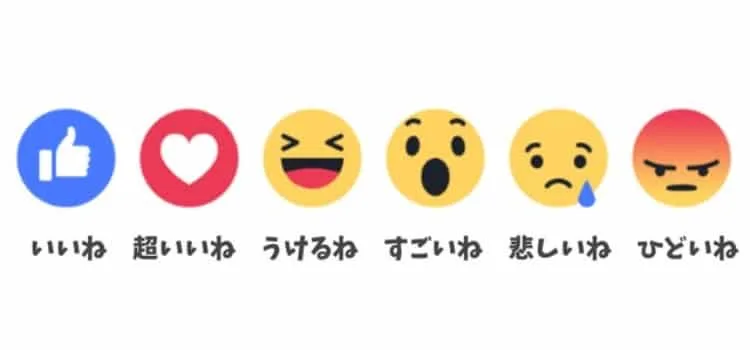
NE is often used together with YO after desu. Forming the expression desuyone (ですよね) where yo shows the speaker's strong conviction in their opinion, and ne expects the person to agree with them. It is worth remembering that iine (いいね) is a very common term that appears on social media instead of the famous like.
Examples of the use of NE (ね) in Japanese
To conclude the article, let's leave some example sentences for you to delve into the topic. I hope you enjoyed the article, and we appreciate the comments and shares. We will also leave some interesting articles for you to read below:
Kevin Henrique has written about the Japanese language, culture, anime, games, and travel since founding Suki Desu in 2014. He first visited Japan in 2016.
Community
Comments
0 comments
There are no published comments in this language yet.



 Who hasn't been annoyed by: "Are you really Shinichi?", "Shinichi kun dayone?"[/caption]
Currently, ね has a much deeper meaning of direct and indirect use. The use of the word can be related to emotional involvement and sometimes even used indirectly. NE (ね) is so useful that it can be used to get attention, request confirmation, make a correction, make criticisms, show intimacy, and even teach children.
Who hasn't been annoyed by: "Are you really Shinichi?", "Shinichi kun dayone?"[/caption]
Currently, ね has a much deeper meaning of direct and indirect use. The use of the word can be related to emotional involvement and sometimes even used indirectly. NE (ね) is so useful that it can be used to get attention, request confirmation, make a correction, make criticisms, show intimacy, and even teach children.
 NE is often used together with YO after desu. Forming the expression desuyone (ですよね) where yo shows the speaker's strong conviction in their opinion, and ne expects the person to agree with them. It is worth remembering that iine (いいね) is a very common term that appears on social media instead of the famous like.





Community
Comments
0 comments
There are no published comments in this language yet.
Send comment