
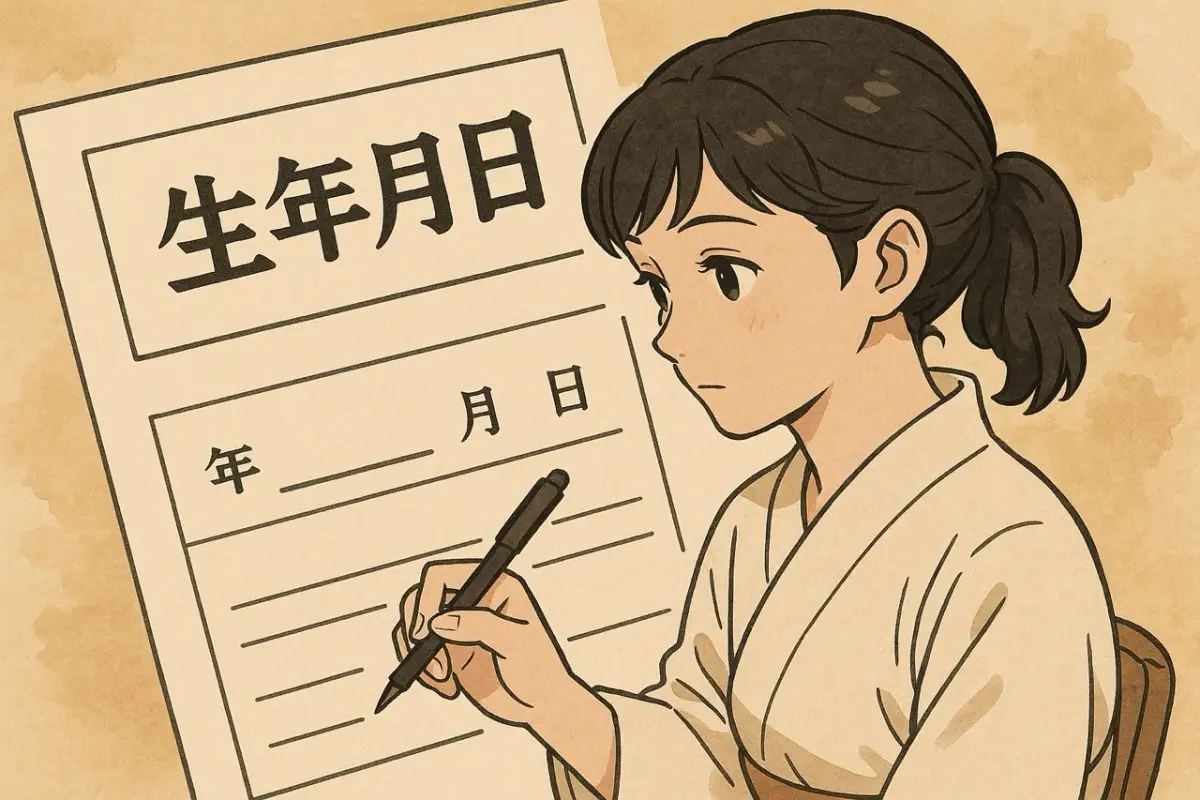
If you have ever needed to fill out a form in Japanese, you have probably come across a field with the expression 生年月日 (seinengappi). At first, this sequence of kanji may seem intimidating, but it appears in practically any official document or registration — and understanding its meaning along with other dates in forms such as 年齢 (nenrei), 日付 (hizuke), and 有効期限 (yuukoukigen) is essential for your survival in Japan.
The Japanese love formal and traditional structures, and this is reflected even in the ways dates are written and requested. In addition to 生年月日, there are other words related to time and dates that frequently appear in documents. In this article, we will explore the main terms related to dates in Japanese forms, explaining each one clearly, with romaji and practical tips to avoid mistakes.
Whether in a medical consultation, school enrollment, or bank account, mastering this vocabulary will save you time, avoid misunderstandings, and even ensure that your form is not rejected.
Contents 10
What does 生年月日 (seinengappi) mean?
The word 生年月日 can be divided into four parts:
- 生 (sei): birth
- 年 (nen): year
- 月 (gatsu): month
- 日 (hi): day
In other words, it literally means year, month, and day of birth — the direct equivalent of “date of birth”.
In Japanese forms, this date must be filled out in the local format:
YYYY年 MM月 DD日
1995年4月12日 (1995/04/12)
But be careful: in more formal forms, it may be necessary to use the Japanese era system (wareki), such as:
平成7年4月12日 (Heisei 7, 1995)
令和5年5月6日 (Reiwa 5, 2023)
If the form asks for 西暦 (seireki), use the Western calendar. If it indicates 和暦 (wareki), use the Japanese era. Knowing this difference avoids confusion and delays in data processing.
Words related to common dates in forms
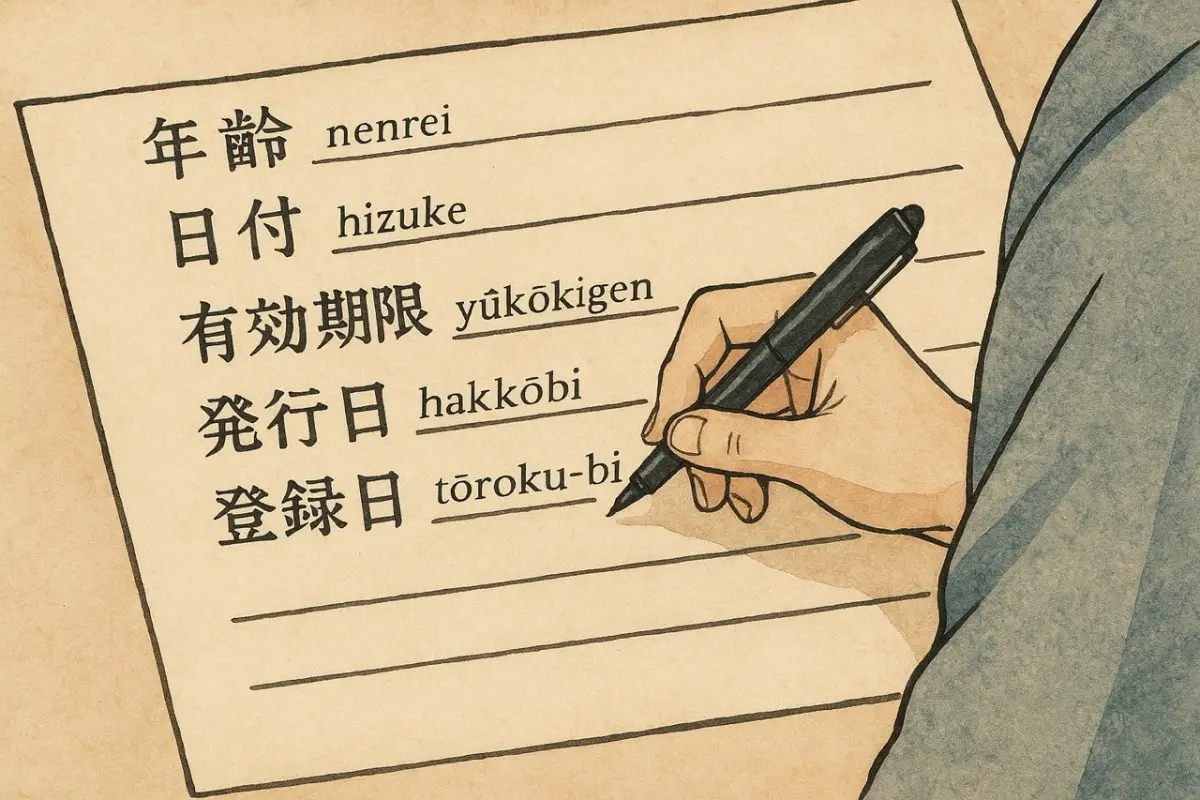
In addition to 生年月日, several other date-based terms frequently appear. Let's understand the main ones:
年齢 (nenrei) – Age
年齢 means "age". Some forms ask for the age in numbers, while others calculate it automatically from the seinengappi. It is worth remembering that in Japan, the official age considers the current year, not the exact month of the birthday.
Example:
If born in 1990, even without having had a birthday, your nenrei in 2025 will be 35.
日付 (hizuke) – Current date
日付 appears as a field to fill in the date of filling out the form.
Expected format:
2025年5月6日 or in a shorter style: 2025/05/06.
Some documents also ask for the time, using the word 時刻 (jikoku).
有効期限 (yuukoukigen) – Expiration date
Present in documents such as passports, visas, or residence cards. It literally means validity period.
Example of filling out:
有効期限: 2026年3月31日
発行日 (hakkoubi) – Issue date
You will see this word on identity cards or official documents. It indicates the date the document was issued.
It is common to see the pair:
- 発行日 (hakkoubi) – issue date
- 有効期限 (yuukoukigen) – validity
登録日 (touroku-bi) – Registration date
Whether for a bank account, health plan, or points system, this field records the date the registration was made.
Sometimes it appears as 記入日 (kiniu-bi), which is the date of filling out.
How to avoid mistakes when dealing with dates in Japanese
Filling out date fields correctly requires attention and a bit of practice. Here are some simple tips to avoid common mistakes:
- Confirm the required calendar: If it is 和暦 (wareki), use the Japanese eras. If it is 西暦 (seireki), use the Western calendar.
- Use complete numbers: Avoid using 2 digits for the year (e.g., “23” for 2023), unless the form allows it.
- Respect the format: Pay attention if the field requires 年 (nen), 月 (gatsu), 日 (hi). Do not mix slashes (/) with the kanji.
- Avoid kanji if you are not sure: In handwritten forms, writing numbers with Arabic numerals (e.g., 2025) is perfectly acceptable.
Complementary terms that may appear
Depending on the form, you may encounter more specific expressions related to time or chronology:
- 卒業年月日 (sotsugyou nen gappi) – graduation date
- 入社日 (nyuushabi) – date of admission to a company
- 開始日 (kaishibi) – start date (course, contract, etc.)
- 終了日 (shuuryoubi) – end date
These words are common in Japanese resumes (rirekisho) or work and study contracts.
Conclusion
The word 生年月日 (seinengappi) is just the tip of the iceberg when we talk about dates in Japanese. Learning to recognize and correctly fill out fields such as 年齢 (nenrei), 日付 (hizuke), and 有効期限 (yuukoukigen) can prevent many mistakes and make your life easier in Japan.
By filling out a form, you are not just writing — you are showing that you understand the cultural and linguistic structure of the country. Over time, terms like hakkoubi, touroku-bi and seinengappi become as familiar as “date of birth”.
So, how about practicing right now? Grab any form (real or fictitious) and practice writing your 生年月日. This not only helps to memorize but also prepares you for real situations.







Community
Comments
0 comments
There are no published comments in this language yet.
Send comment