
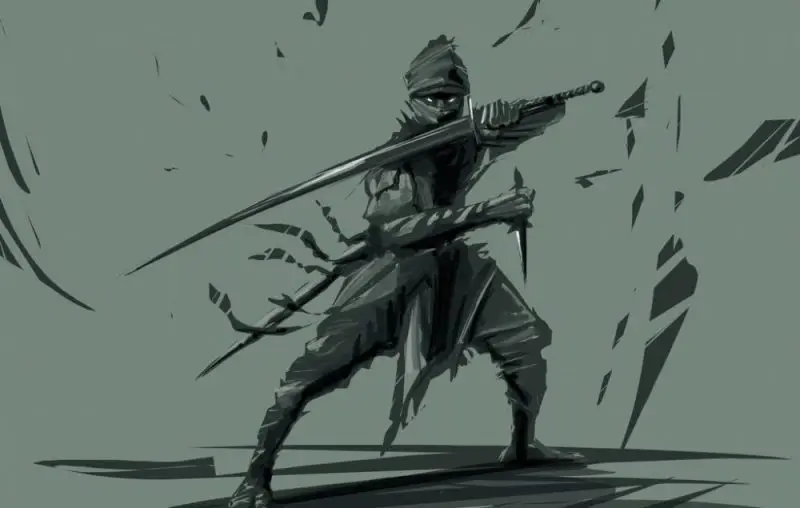
When people picture a ninja, the first props that pop up are rarely polite. A metal star in mid-flight. A short blade half-hidden in a sleeve. A chain that ends in a weight you would rather not meet in a dark corridor. The arsenal is the part of the legend that sells itself.
In feudal Japan, though, “weapon” often meant something less theatrical: a tool that could hide, climb, distract, or finish a job without announcing the whole neighborhood. The more useful (and, yes, sometimes deadly) the piece was, the better it fit a shinobi’s messy reality—not only the black-clad assassin of movies. Below are the names that stuck, the jobs they actually did, and the long list that never makes the poster.
Contents 8
Manriki-gusari (weighted chain)
The manriki-gusari—also called kusari-fundo—is a short chain with a weight at each end. The name roughly carries the idea of “ten-thousand power”: compact metal that could strike, whip, entangle a limb or weapon, or restrain someone without needing a full sword swing.
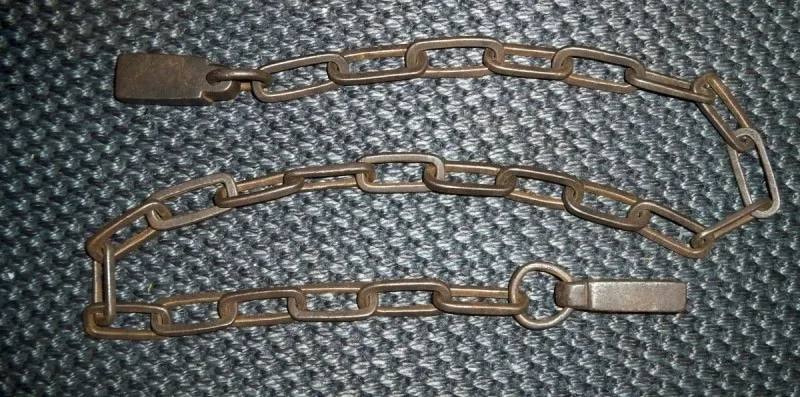
Sizes and weight shapes varied; there was no single factory standard. That flexibility made the chain easy to conceal in a sash or palm—and hard to classify as “just” a battlefield blade. In feudal Japan, chain weapons lived among police tools, martial schools, and later ninja folklore alike.
Kama (sickle)
The kama is a small sickle. Its silhouette still looks agricultural for a reason: the form grew out of farming tools used to cut grain. That everyday look was part of the point—something ordinary enough to carry, hide, or explain away when a full sword would draw attention.
It can be used alone or in pairs, and many martial arts still train with kama as a dedicated weapon. In the ninja imagination it is the sharp half of several chain-and-sickle hybrids; in practice it is a short, curved blade that rewards close control more than flashy distance work.
Kusarigama (chain-sickle)
If you have seen a film like Ninja Assassin, you have already met the mood of the kusarigama: a sickle joined to a chain that ends in a metal weight. Historically it is often described as a kama paired with a kusari-fundo, with roots traced to the Muromachi period and heavy use through later martial traditions—not a toy invented only for pop-culture ninja.
Typical tactics swing the weighted chain to entangle a sword or limb, then close in with the sickle. Range can shift from short to surprisingly long in one sequence, which is why the weapon looks so strange and so lethal on screen. It is also finicky: open space helps the chain; tight bamboo-style cover does not (a classic story has a kusarigama specialist beaten once the chain had no room to fly).
My favorite on this whole list is still the kusarigama—awkward silhouette, full toolkit in one hand-and-chain package.
Shuriken (throwing blades)
The most famous piece of the arsenal is the shuriken—literally a “hand-hidden blade.” Pop culture freezes it as a star, but historical forms split mainly into two families:
- Hira-shuriken / shaken — flat plates, often star- or multi-point shapes, sometimes with a center hole for carrying or flight balance.
- Bo-shuriken — straight spikes or darts, closer to a thick needle than a cartoon star.
They were usually supplementary weapons: distract, wound exposed areas, or create an opening before a primary tool came out. Silence and concealability mattered as much as raw “instant kill” fantasy. Anime like Naruto later exported the star to a global audience of kids and teens, which is why this one item outran almost every other shinobi tool in name recognition.
Kunai (tool first, weapon second)
Forget the idea that a kunai is only a “ninja throwing knife.” Historically it is closer to a multipurpose masonry or gardening trowel: leaf-shaped soft-iron blade, handle, often a ring on the pommel for rope. Digging, prying, climbing aids, and makeshift spears with a stick and cord all sit closer to its job description than pure assassination drama.
In skilled hands it becomes a stabbing or thrusting weapon; in fiction it is almost always a steel dagger thrown like a dart. Shapes range from short to long, narrow to wide. Naruto again did the marketing work—just remember the prop on screen is a stylized cousin of a work tool.
Poison and quiet methods
Poison is not a single object on a rack, but it belongs in any honest ninja-weapon talk. When a loud blade strike would announce the whole operation, coating edges, needles, or left-behind blades was part of the lore—and sometimes of real tactical manuals’ imagination around contamination and infection.
Discreet wounds, delayed effect, and the need not to be caught defined the method more than theatrical throat-cutting. Related curiosities on the site go even smaller: the kakute ring is one of those “weapon you almost miss” stories.
For the myth vs. history filter on shinobi themselves, start with myths about ninja and shinobi in feudal Japan.
List of ninja weapons and tools
Names pile up fast. Many items below are shared with broader Japanese martial culture; “ninja exclusive” is rarer than merchandise suggests.
- Bokken — wooden training sword
- Bō — long staff (~1.8 m)
- Fukiya — blowgun
- Fukumi-bari — small needles blown from the mouth
- Hanbō — short staff (~90 cm)
- Jitte — truncheon used against swords
- Kaginawa — rope with a grappling hook for climbing
- Kama-yari — staff with a sickle head
- Kama — small sickle, agricultural roots
- Kemuridama — smoke / flash device
- Kodachi — short curved blade, longer grip, little or no guard vs wakizashi style
- Kunai — trowel-like multipurpose tool / blade
- Kusari-fundo / manriki-gusari — chain with weights at both ends
- Kusarigama — kama plus chain and weight
- Kyoketsu-shoge — hooked blade with rope/chain
- Musubinawa — rope with a single hook for climbing
- Naginata — polearm with a curved blade
- Shaken — flat throwing plate / star form of shuriken
- Shikomi-zue — staff concealing a blade
- Shinobi-kumade — climbing rope with claw hook
- Shinobi-zue — staff concealing a chain
- Shinobigatana — curved sword associated with shinobi imagery
- Shuriken — throwing star or spike
- Tanbō — pair of short sticks for strike and defense
- Tantō — Japanese knife / short blade
- Te-yari — short spear with hook
- Tessen — iron war fan
- Tetsubishi / makibishi — caltrops scattered in pursuit
- Wakizashi — shorter companion sword to the katana
- Yari — spear (~2 m class)
- Yumi / ya — Japanese bow and arrow (kyūdō tradition)
Want the broader art these tools sit inside? See our guide to ninjutsu.
Which ninja weapon is yours?
I’ll keep choosing the kusarigama: range, tangle, and a blade in one awkward package. You do not have to pick from this list—there are more regional variants and school secrets than any single article can name. If a name is missing, it is probably hiding under another romanization or a farmer’s tool that never got a Hollywood close-up.






Community
Comments
0 comments
There are no published comments in this language yet.
Send comment